1993 SkyBox Simpsons Groening Sketch PSA 10 Sale
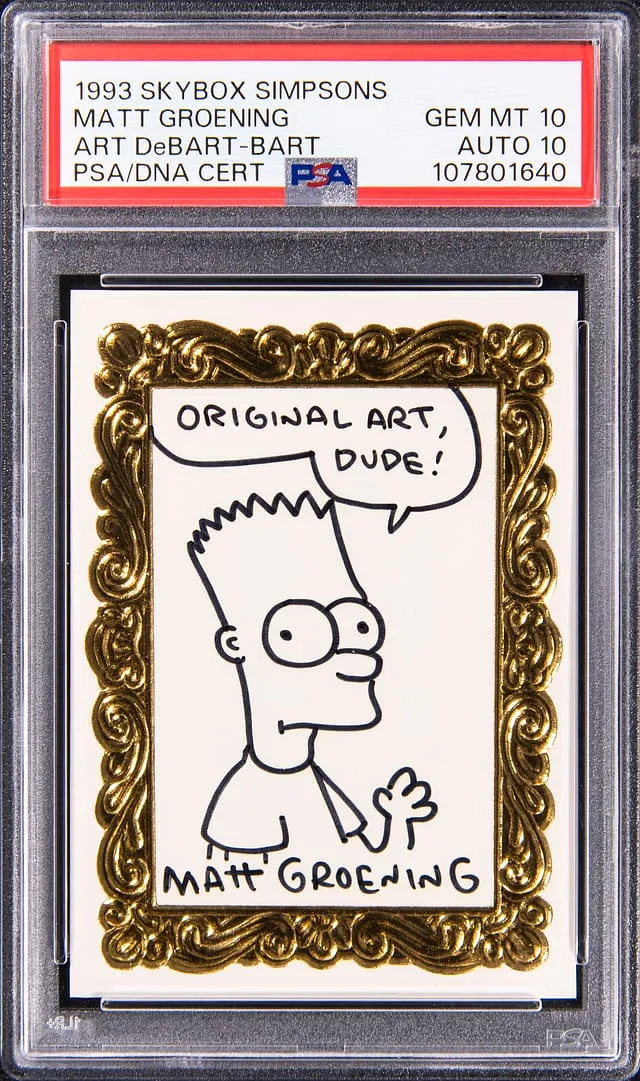
Goldin sold a 1993 SkyBox Simpsons Bart sketch by Matt Groening, PSA 10 with PSA/DNA 10 auto, for $35,685 on Feb 26, 2026. Here’s the market context.
Sold Card
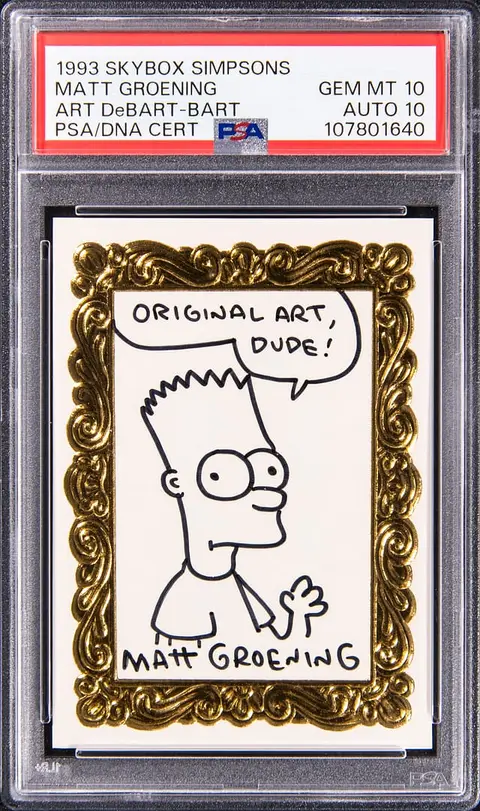
1993 SkyBox Simpsons Art DeBart Bart Simpson Sketch Card (#357/400) - Signed, Sketched by Matt Groening - PSA GEM MT 10, PSA/DNA GEM MT 10
Sale Price
Platform
Goldin1993 SkyBox Simpsons Art DeBart Bart Simpson Sketch Card (#357/400) – Signed, Sketched by Matt Groening – PSA GEM MT 10, PSA/DNA GEM MT 10
On February 26, 2026, Goldin closed the sale of a standout piece of Simpsons and non-sport hobby history: a 1993 SkyBox Simpsons "Art DeBart" Bart Simpson Sketch Card, hand-sketched and signed by Matt Groening, serial numbered #357/400, graded PSA GEM MT 10 with a PSA/DNA GEM MT 10 autograph. The card realized $35,685.
For trading card collectors who mainly follow sports, this sale is a useful reference point for how high-end non-sport and pop culture cards behave when all the key checkboxes line up: important IP, true sketch / original art, direct creator signature, limited print run, and top population grades.
The card at a glance
- Character: Bart Simpson ("Art DeBart" concept art)
- Franchise: The Simpsons
- Year: 1993
- Set: 1993 SkyBox The Simpsons (creator sketch subset)
- Card type: Hand-drawn sketch card, serial numbered
- Serial: #357/400
- Autograph: On-card, signed and sketched by Matt Groening
- Grading:
- Card: PSA GEM MT 10 (highest standard PSA grade, 10/10)
- Autograph: PSA/DNA GEM MT 10 (10/10 signature grade)
- Auction house: Goldin
- Sale date (UTC): 2026-02-26
- Sale price: $35,685
This card is not a rookie card in the traditional sense, but for many Simpsons and non-sport collectors, these early-1990s SkyBox creator sketch cards function as a key issue. They sit at the intersection of original art, autograph, and limited-run chase card from the early mass-market era of trading cards.
Why 1993 SkyBox Simpsons creator sketches matter
The 1993 SkyBox Simpsons release came during the heart of the original TV run, when The Simpsons had already cemented itself as a cultural touchstone. Within that set, the hand-drawn creator sketches by Matt Groening occupy a special lane:
- Early, pack-inserted creator art: These are not printed illustrations. Each card features original art drawn directly onto the card by Groening, then packed out by SkyBox. In trading card terms, that makes every copy a true one-of-a-kind piece of art, even if numbered within a run of 400.
- Serial numbered to 400: A print run of 400 was quite low by early-1990s standards, especially in a non-sport release that otherwise had mass-market distribution. That limited run underpins long-term scarcity.
- On-card autograph and sketch: The signature and the sketch are both on the physical card surface, in contrast to sticker autographs that are later applied. Many collectors prefer on-card autographs because they feel more integrated and personal.
- Cross-collecting appeal: Simpsons fans, animation art collectors, and traditional trading card hobbyists all intersect on this card. That wider audience is a major factor behind strong demand for top examples.
In hobby terms, this card sits in the early part of the "modern" era – post-vintage, but long before today’s ultra-modern, parallel-heavy environment. Condition-sensitive early-modern inserts and sketches from the 1990s are often harder to find in gem condition than their later counterparts, which helps explain the attention paid to PSA 10 copies.
Grading: PSA GEM MT 10 and PSA/DNA GEM MT 10
Two different grading labels apply to this card:
- PSA GEM MT 10 (card): This indicates a card that, under PSA’s standards, is nearly flawless in corners, edges, centering, and surface. For a 1993 release that started life as a sketch surface, pristine examples can be especially challenging.
- PSA/DNA GEM MT 10 (autograph): PSA/DNA grades the quality and presentation of the signature itself. A GEM MT 10 autograph typically means a bold, clean, well-placed signature, with no noticeable skipping, fading, or smudging.
For high-end collectors, this combination (10/10 card, 10/10 auto) is effectively the top of the population. Even if other copies share the same numeric grade, the market often treats true dual-gem examples as the premium tier.
When hobbyists talk about a card’s “pop report” (short for population report), they mean the grading company’s census of how many copies exist at each grade. While exact population numbers can vary and change over time as more cards are submitted, it’s safe to say that PSA 10 examples of a 1993 on-card sketch like this are not common.
Market context and price positioning
Goldin’s $35,685 result on February 26, 2026 places this card firmly in the top tier of non-sport sketch and creator autograph pieces.
When looking at “comps” (recent comparable sales of the same card or very similar versions), collectors typically examine several factors:
- Same card, different grade (e.g., PSA 9 vs PSA 10)
- Same artist and sketch series, different serial number
- Same franchise and era, different key insert or autograph
- Raw (ungraded) copies vs graded
Across public marketplaces and major auction archives, high-grade 1993 SkyBox Simpsons Groening sketch cards appear infrequently. Most known transactions involve:
- Raw or minimally graded copies, often with surface wear or minor handling damage.
- Grades below GEM MT 10, where the card is authentic and desirable but falls short in centering, corners, or small print flaws.
Prices for those lower-grade or ungraded examples, when they do surface, have historically been well below the figure realized here, reflecting the usual premium that top population cards command.
Because public data on dual GEM MT 10/10 copies of this specific numbered card (#357/400) is limited, it’s more accurate to treat the $35,685 price as a benchmark for:
- What the market is currently willing to pay for a truly elite-condition 1993 Groening sketch card.
- How collectors value the mix of original creator art, autograph, serial numbering, and grading at the highest level.
Rather than signaling a guaranteed trend, this result provides a reference point. It can help collectors calibrate expectations for other grades or similar pieces, but it should not be read as a promise that future sales will match or exceed it.
How this fits into non-sport and pop culture card trends
Several broader hobby trends help explain why this card resonated at auction:
Increased focus on non-sport and pop culture IP
Over the last several years, collectors have paid more sustained attention to franchises such as Star Wars, Marvel, and iconic animated series. As buyers look beyond traditional sports, truly early and limited-issue pieces from culturally important properties have attracted stronger bidding.Creator-centric collecting
Similar to comic books, where writer and artist signatures on key issues command premiums, trading card collectors are increasingly targeting cards signed or drawn by creators themselves (writers, artists, showrunners). Groening’s direct involvement on the card surface puts this piece in that lane.1990s nostalgia and the “early modern” window
The early 1990s occupy a sweet spot: old enough to be nostalgic and legitimately scarce in high grade, but modern enough to be compatible with today’s grading and auction infrastructure. That combination often leads to strong competition for top examples.Original art as a bridge between hobbies
For art and animation collectors, a hand-drawn Groening Bart sketch predates or parallels traditional production cels and concept art. For card collectors, it’s simultaneously an insert and an original artwork. This cross-category nature can deepen bidding pools at major events.
What this sale can signal to collectors
If you’re a collector, seller, or someone returning to the hobby, here are a few practical takeaways from the Goldin sale:
Top grades matter more when surfaces are fragile. Sketch cards and early-1990s card stock aren’t always friendly to gem-level preservation. A true PSA 10 with a 10 autograph can justify a large premium over lower grades.
Creator involvement can outweigh traditional rookie logic. In sports, rookie cards are often the main focal point. For non-sport, especially animation, the "rookie card" framework is less important than factors like: is the original creator involved, is the art unique, and is the run limited?
Auction houses help set reference points. Large auction platforms such as Goldin aggregate high-end demand. Their results are commonly used as pricing anchors by buyers, sellers, and grading submitters, especially when public data on a card is thin.
Non-sport is not a side category anymore. When a Simpsons card sells for over thirty-five thousand dollars, it underlines that pop culture cards can occupy the same financial and historical tier as many sports cards.
None of this guarantees that similar cards will see the same result, or that this exact card would fetch the same number if re-sold. Market conditions, timing, and bidder composition all play a role.
Tips for collectors considering similar cards
If you’re thinking about targeting 1993 SkyBox Simpsons Groening sketches or related pieces, here are a few points to keep in mind:
Verify authenticity and provenance.
For raw sketches and autos, reputable third-party grading and authentication (PSA, BGS, etc.) can reduce uncertainty. For high-end pieces, documentation of previous sales can also matter.Compare across grades, not just one headline sale.
A single high-end auction result is useful, but it’s more informative when viewed alongside:- Lower grades of the same card
- Different serial numbers from the same sketch run
- Comparable creator-signed inserts from the same era
Look closely at condition on ungraded copies.
Centering, surface scratches, and edge chipping are common on 1990s stock. For sketch cards, ink smudges and handling marks also appear. A careful review of high-resolution images is essential.Collect what you actually enjoy.
With pop culture pieces, personal connection to the character or franchise often matters more over time than short-term price moves. If The Simpsons or Groening’s art is meaningful to you, that can be just as important as tracking sales charts.
Final thoughts
The $35,685 Goldin sale on February 26, 2026 of the 1993 SkyBox Simpsons Art DeBart Bart Simpson Sketch Card (#357/400) — PSA GEM MT 10 with a PSA/DNA GEM MT 10 autograph — marks a notable moment for Simpsons collectors and the broader non-sport card market.
It highlights how a combination of limited serial numbering, original creator artwork, top-tier grading, and enduring pop culture relevance can converge into a true centerpiece card. For collectors across the spectrum — from long-time Simpsons fans to hobbyists newly exploring non-sport — this sale provides a clear, data-backed example of where the top end of this niche currently sits.
As always, it’s a single data point, not a promise. But it’s a meaningful one for anyone mapping the evolving landscape of pop culture and trading cards.