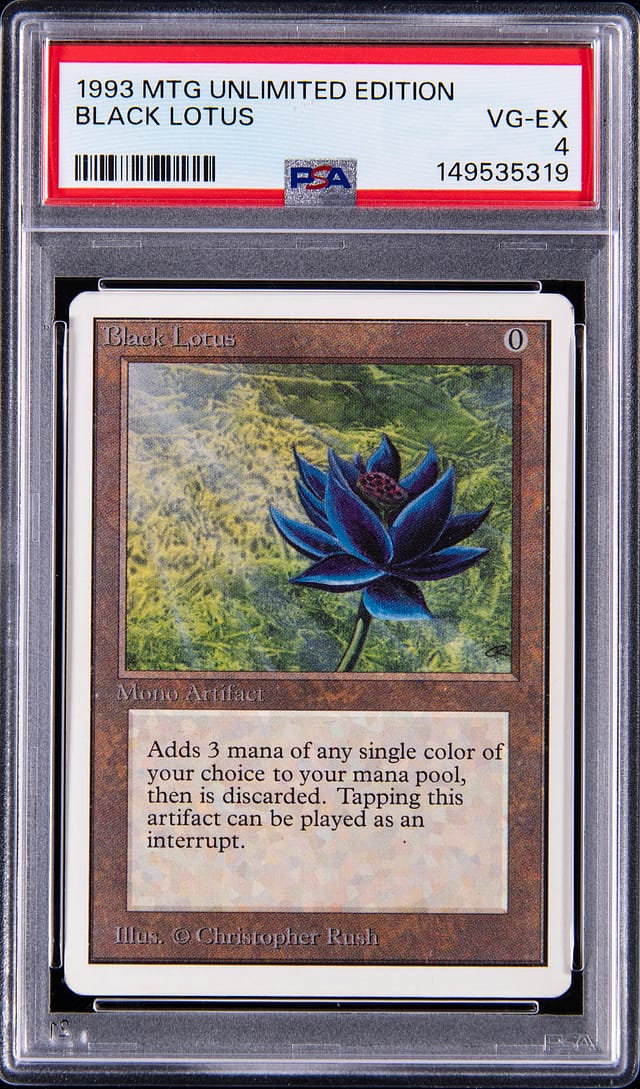
1993 MTG Unlimited Black Lotus PSA 4 Sells for $13.4K
Goldin sold a 1993 Magic: The Gathering Unlimited Black Lotus PSA 4 for $13,420 on May 18, 2026. See what this means for MTG and TCG collectors.
Sold Card
1993 Magic: The Gathering Unlimited Edition Black Lotus - PSA VG-EX 4
Sale Price
Platform
Goldin1993 Magic: The Gathering Unlimited Edition Black Lotus - PSA VG-EX 4 Sells for $13,420
On May 18, 2026, a 1993 Magic: The Gathering Unlimited Edition Black Lotus graded PSA VG-EX 4 sold at Goldin for $13,420. For many collectors, this is one of the most recognizable pieces in the entire trading card and TCG landscape, and sales like this help anchor expectations for the broader Magic market.
The Card at a Glance
- Card: Black Lotus
- Game: Magic: The Gathering (MTG)
- Year: 1993
- Set: Unlimited Edition (white-bordered third printing of early MTG)
- Edition details: Non-foil, base set, no serial numbering
- Rarity: One of the “Power 9” – the nine most powerful, restricted cards in early MTG
- Grading company: PSA (Professional Sports Authenticator)
- Grade: PSA 4 (VG-EX – Very Good to Excellent)
- Attributes: Non-autographed, no patch or variant – all value is in the card’s era, art, and play history rather than add-ons
Black Lotus is not a rookie card in the sports sense, but in Magic it functions like a “grail” key issue: original Alpha, Beta, and Unlimited printings are some of the most chased pieces in the hobby, both for gameplay history and early TCG nostalgia.
Why Unlimited Black Lotus Matters
Unlimited is the third early printing of Black Lotus, after Alpha and Beta. It’s easier to find than Alpha and Beta but still firmly in the vintage era of Magic. All three early versions share the same iconic Christopher Rush artwork and the same incredibly powerful effect: a zero-mana artifact that can be sacrificed for three mana of any one color.
Collectors care about Unlimited Lotus for a few reasons:
- Power 9 status: Black Lotus is the headliner of the Power 9, the group of early cards that defined high-powered play and became a shorthand for prestige in Magic.
- Vintage era: 1993 Unlimited sits squarely in the earliest phase of MTG. That era tends to have more condition issues due to casual early handling, so higher grades are much scarcer.
- Iconic artwork and design: Even non-players recognize the card image; it often appears in articles, videos, and retrospectives about the game’s history.
- Collector crossover: This card appeals to both TCG-focused collectors and traditional card collectors who are used to chasing key rookie cards and vintage staples.
In practice, Unlimited is the most accessible way for many collectors to own an early Black Lotus. Alpha and Beta examples, especially in higher grades, sit at price levels that are out of reach for much of the hobby.
Understanding the PSA 4 Grade
PSA’s VG-EX 4 grade indicates honest wear: noticeable surface, corner, or edge issues, but a card that still presents well overall. For a heavily played-era card like Unlimited Lotus, this is far from unusual.
A rough hierarchy for Black Lotus value, within the same printing, usually runs from PSA 1 (Poor) up through mid-grades like 4–6 and into high grades (8–10). Each step up the ladder typically reflects significant improvements in surface, corners, and centering.
For a vintage TCG card that was often shuffled, stored without sleeves, and played casually in the 1990s, a PSA 4 can still be a desirable “own the card” grade. Many collectors are comfortable with visible wear if it means securing an authentic, graded copy at a comparatively more approachable price.
Recent Market Context for Unlimited Black Lotus
When collectors talk about “comps,” they mean recent comparable sales – similar cards or grades that help set expectations. For Unlimited Black Lotus, comps often span a wide range due to condition differences, eye appeal, and auction timing.
While exact numbers move over time, the overall pattern around this sale shows:
- Lower-grade Lotus (PSA 1–3): Often sell meaningfully below mid-grade copies, reflecting heavy wear, creases, or damage.
- Mid-grade Lotus (PSA 4–6): Typically where many collectors focus; prices here can vary based on how strong the card looks relative to the label. Strong eye appeal in a 4 can nudge bids toward 5-level pricing, and vice versa.
- Higher-grade Lotus (PSA 7+): Generally command multiples of low- and mid-grade copies, with 9s and 10s existing in a different tier entirely.
The $13,420 result at Goldin for this PSA 4 lands within the broader band that collectors have seen recently for mid-grade Unlimited copies, though the exact positioning can shift with any given auction, macro hobby sentiment, and how the card looks in hand.
Historically, headline record prices for Black Lotus tend to involve Alpha or Beta printings in very high grade, sometimes autographed or with notable provenance. Those blockbuster sales live in a separate lane from an Unlimited PSA 4, but they still influence how the market views the card’s overall status and long-term importance.
What This Sale Suggests to Collectors
From a collector’s standpoint, this Goldin sale underscores a few themes:
- Stable importance, changing numbers: Black Lotus remains a central touchpoint for Magic and TCG history. Prices may move up and down over short periods, but the card’s place in the hobby is well established.
- Condition flexibility: The fact that a PSA 4 attracts healthy bidding reflects that many collectors are willing to trade perfection for access. Not everyone needs or expects a high-grade copy.
- Segmentation by printing: Alpha and Beta Black Lotus cards are increasingly operating as their own markets. Unlimited continues to fill the role of “attainable grail” for a larger base of collectors.
None of this should be treated as a prediction. Instead, it’s a snapshot of how one specific card and grade performed on a specific date at a major auction house.
Role of Auction Houses Like Goldin
Goldin has become a key venue for high-end sports cards, TCG cards, and other collectibles. For a card as important as Black Lotus, the platform can matter: wide visibility often helps establish a reference point that collectors watch closely when talking about value.
This May 18, 2026 sale fits into a pattern where major auction houses host notable MTG pieces alongside sports “grails.” That cross-category exposure continues to introduce Magic staples to a broader group of collectors.
Takeaways for New and Returning Collectors
If you are new to Magic or just returning to the hobby, here are a few practical observations you can carry away from this sale:
- Learn the printings: Alpha, Beta, and Unlimited Black Lotus look similar but command very different price levels. Understanding border color, print run differences, and set symbols goes a long way.
- Respect condition, but don’t fear wear: For iconic vintage pieces, a mid-grade copy can still be highly collectible. A PSA 4 won’t be perfect, but it is authenticated, graded, and historically significant.
- Use comps as context, not guarantees: Recent sales, like this $13,420 result at Goldin, tell you what one group of bidders agreed on at one point in time. They’re helpful for context, not promises about the future.
Figoca’s goal is to document these kinds of sales in a way that is understandable whether you’re building your first TCG collection or refining a high-end portfolio. The 1993 Magic: The Gathering Unlimited Edition Black Lotus in PSA VG-EX 4 is a reminder that even in less-than-perfect condition, true keystone cards remain at the center of the conversation.