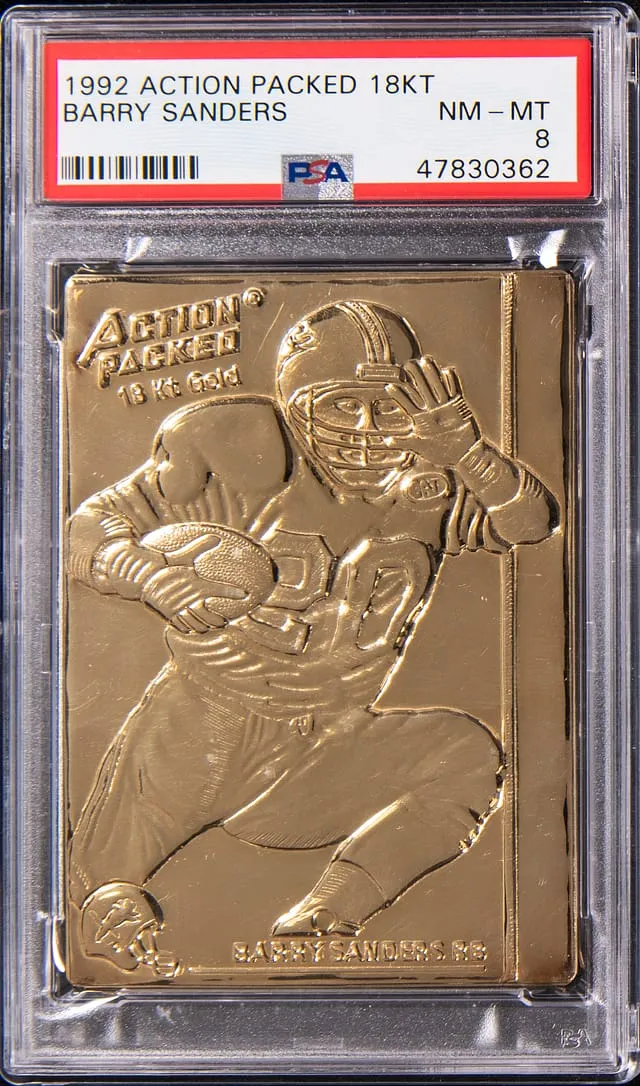
1992 Tiffany 18KT Gold Barry Sanders Sells for $12K
Goldin sold a 1992 Tiffany & Co./Action Packed 18KT Gold Barry Sanders #07/23 (PSA 8, Pop 1) for $12,322. Here’s what that means for collectors.
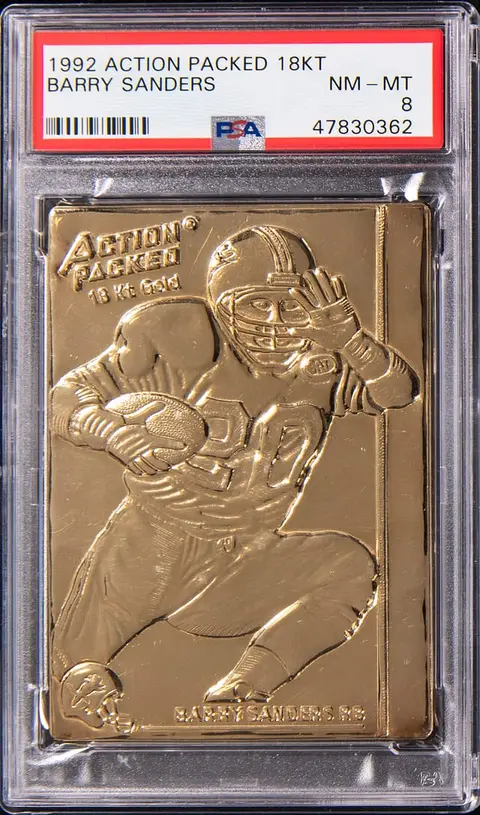
Sold Card
1992 Tiffany & Co./Action Packed 18KT Gold Barry Sanders (#07/23) - With Original Box - PSA NM-MT 8 - Pop 1 (Tiffany & Co. COA)
Sale Price
Platform
Goldin1992 Tiffany & Co./Action Packed 18KT Gold Barry Sanders Sells for $12,322 at Goldin
When most collectors think “junk wax era,” they picture mass-produced base cards and overstuffed binders. The 1992 Tiffany & Co./Action Packed 18KT Gold Barry Sanders is the opposite of that story: an intentionally premium, low‑print, precious‑metal oddball that sits at the edge of traditional football issues.
Goldin’s 15 March 2026 sale of a 1992 Tiffany & Co./Action Packed 18KT Gold Barry Sanders, serial‑numbered 07/23 and graded PSA NM‑MT 8, closed at $12,322. For a niche early‑1990s premium issue, that price and the card’s population data say a lot about how collectors are treating high‑end Barry Sanders and 90s football rarities right now.
Below, we’ll walk through what this card is, why it matters, and how this sale fits into the broader market.
Card overview: what exactly sold?
Let’s start with the basics of the card that sold at Goldin:
- Player: Barry Sanders (Detroit Lions, Hall of Famer)
- Year: 1992
- Brand / collaboration: Tiffany & Co. / Action Packed
- Card type: 18KT gold card
- Serial numbering: #07/23 (only 23 copies produced)
- Certification: Tiffany & Co. Certificate of Authenticity (COA)
- Grading company: PSA (Professional Sports Authenticator)
- Grade: NM‑MT 8 (Near Mint–Mint)
- Population: Pop 1 in PSA 8 with the noted configuration; extremely limited overall
- Extras: Comes with original Tiffany & Co. box
This is not a standard pack‑pulled trading card. It’s part of a small run of 18‑karat gold issues produced in partnership between Tiffany & Co. and Action Packed in the early 1990s. These were conceived as luxury collectibles right from the start, sitting closer to a high‑end commemorative than a mass‑market card.
While it’s not a rookie card (Barry Sanders’ rookies are from 1989 products like Score, Pro Set, and Topps Traded), it is a key premium oddball for player‑focused Sanders collectors and for hobbyists who chase scarce 90s football issues.
Why collectors care about this card
There are a few different collecting lanes that intersect in this card:
Barry Sanders, Hall of Fame icon Barry Sanders is one of the most popular running backs to collect, period. He retired early but left a huge on‑field legacy and a large, devoted collector base. His 1989 rookies are still the foundation, but serious Sanders collectors eventually move into:
- Low‑print inserts and parallels
- On‑card autographs
- Unusual premium issues like this Tiffany/Action Packed gold card
Early 1990s premium and oddball issues The early ‘90s are known for high production, but companies also experimented with:
- Embossed and raised‑surface cards (Action Packed’s hallmark)
- Precious‑metal or gold‑foil special editions
- Collaborations and non‑standard releases
The Tiffany & Co. partnership stands out because it brought a traditional luxury brand into the hobby well before the modern wave of metal cards and premium “chase” products.
True scarcity in a high‑print era A lot of 1990–1994 cardboard is plentiful. This is not. With only 23 serial‑numbered copies and a PSA population that remains tiny, this card behaves—on a supply level—more like a modern short print (SP) or even super short print (SSP) than like a typical junk‑wax insert.
When we talk about a “pop report” (population report), we mean the grading company’s public count of how many copies they’ve graded at each grade level. Here, the combination of:
- Extremely low serial numbering (23 total)
- Very few submissions to PSA
- A Pop 1 in PSA 8 for this example
makes the card meaningfully scarce, even compared to many modern numbered parallels.
Cross‑collectible appeal Because it’s 18KT gold, this piece also attracts:
- Collectors who like crossover items (cards that also function as a display piece or small art object)
- People who collect Tiffany & Co. collaborations and special editions
The original Tiffany box and Tiffany COA deepen that angle, helping it feel more like a complete, intact artifact from the era.
Market context and price: where does $12,322 sit?
The Goldin sale closed at $12,322 (hammer plus any buyer’s premium, as reported). To understand that number, it helps to look at three layers of context:
Comps for this exact card Direct, like‑for‑like “comps” (short for comparables—recent sales of the same key card) for the 1992 Tiffany & Co./Action Packed 18KT Gold Barry Sanders are limited. This is normal for:
- Ultra‑low serial‑numbered 90s issues
- Niche Tiffany/Action Packed collaborations
Public auction records for this exact configuration—PSA‑graded, 18KT, #/23 Barry Sanders with original Tiffany box and COA—are sparse. The card trades infrequently enough that each sale is more of a data point than part of a continuous curve.
Nearby items: similar grades and related issues Because of the lack of perfect 1:1 comps, collectors often look at related pieces, such as:
- Other Tiffany & Co./Action Packed 18KT gold football stars (e.g., similarly numbered legends from the same run)
- High‑end, low‑serial Barry Sanders inserts or precious‑metal‑themed issues from the 1990s and early 2000s
These tend to sell across a fairly wide range driven more by player preference and timing than by rigid price ladders. The general pattern: true 90s Barry Sanders scarcity can command four‑ and sometimes five‑figure prices, especially in strong grades.
Comparison with core Barry Sanders market For perspective, high‑grade Barry Sanders rookies in flagship sets usually sell for considerably less than this 18KT issue, because they are much more available.
That’s important. This Goldin price doesn’t mean “all Barry Sanders are worth five figures now.” Instead, it underscores that:
- When supply is extremely limited
- The piece has crossover appeal
- And it ties to a Hall of Famer with a long‑standing collector base
the market is willing to pay a notable premium.
How the grade and POP affect the result
This copy graded PSA 8 (Near Mint–Mint), which is a strong but not gem‑mint grade. In many ultra‑modern cards, a 9 or 10 is essential to top‑end pricing. For early‑1990s niche issues, the pattern can look slightly different.
Factors at play here:
Card construction and handling Precious‑metal and premium novelty cards from the 90s often show:
- Edge wear
- Surface marks
- Handling flaws from being stored more like a display piece than a pack‑fresh card
That can cap the practical peak grade and make a clean PSA 8 quite desirable.
Population scarcity With only 23 serial‑numbered copies of the card and a very low PSA population overall, collectors may be more willing to accept an 8 when opportunities to upgrade are rare. A Pop 1 in that grade further highlights how few have been submitted and encapsulated.
Complete presentation The presence of the original Tiffany box and Tiffany COA matters. For oddball and premium collaborations, many collectors think in terms of the full presentation rather than just the raw card. That can help support value even when the numerical grade stops short of mint‑gem levels.
Collector takeaways from this sale
For active collectors, returning hobbyists, and small sellers, here are a few practical observations:
Oddball doesn’t mean low‑value This card is outside the traditional rookie/flagship pathway, yet it realized over $12,000 at auction. That illustrates how:
- Unique collaborations
- Precious metals
- Extremely low serial numbering
can combine to create demand well beyond what you might expect from a typical early‑90s insert.
Era matters, but so does true scarcity The early‑1990s “junk wax” label is about total production volume, not a blanket rule. Within that era you’ll find:
- Mass‑produced base sets
- Short‑lived premium experiments like this Tiffany 18KT run
For research, it’s useful to:
- Check serial numbering on unusual 90s pieces
- Look up grading populations
- See how frequently (or infrequently) similar items appear at major auction houses
Pop reports plus eye appeal A low pop report can be helpful context, but it’s most useful when combined with:
- Solid visual appeal for the grade
- Original accessories (box, COA) for non‑standard issues
If you’re evaluating a similar piece, consider both the numerical grade and how complete the package is.
Auction visibility and timing The sale took place on 15 March 2026 at Goldin, a high‑visibility auction house for sports collectibles. That kind of platform tends to:
- Put rare items in front of the core audience most likely to care
- Produce sales that many collectors use as reference points for future pricing
For sellers, that’s a reminder that venue can matter a lot for niche, high‑end pieces. For buyers, it means these results often become the “headline comp,” even when the card trades only once every few years.
Where this card sits in the broader Barry Sanders landscape
Zooming out, this card occupies a specific niche in the Barry Sanders market:
- Not a rookie, but a premium, low‑print 90s issue
- More collectible novelty than everyday trading card
- Attractive for collectors who feel they’ve “finished” the main Barry Sanders checklist and want something tougher
As modern product lines continue to pile on parallels and inserts, some collectors are putting more attention into historically interesting, genuinely scarce 1990s items. This sale aligns with that trend: a focused collector pool, competing for a very limited supply, setting a strong but not sensational price.
If you’re new or just returning to the hobby, this doesn’t mean you need to chase five‑figure oddballs. It does highlight a useful collecting lesson:
- Learn the story behind any card you’re interested in.
- Check how many exist (serial numbers, pop reports).
- See how often they come to market.
The 1992 Tiffany & Co./Action Packed 18KT Gold Barry Sanders checks all of those boxes. The Goldin result from 15 March 2026 gives collectors one more data point—and a reminder that even in an era known for overproduction, true scarcity still stands out.