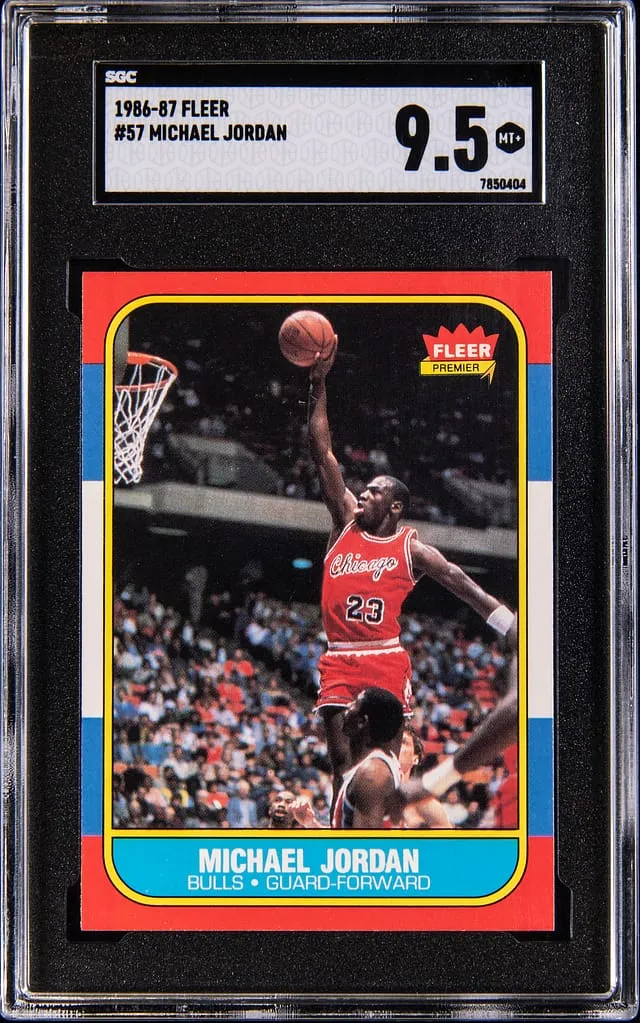
1986 Fleer Michael Jordan Rookie SGC 9.5 Sells at Goldin
Figoca breaks down the 1986-87 Fleer #57 Michael Jordan SGC 9.5 rookie card sale for $34,959 at Goldin on March 20, 2026, with clear price context.
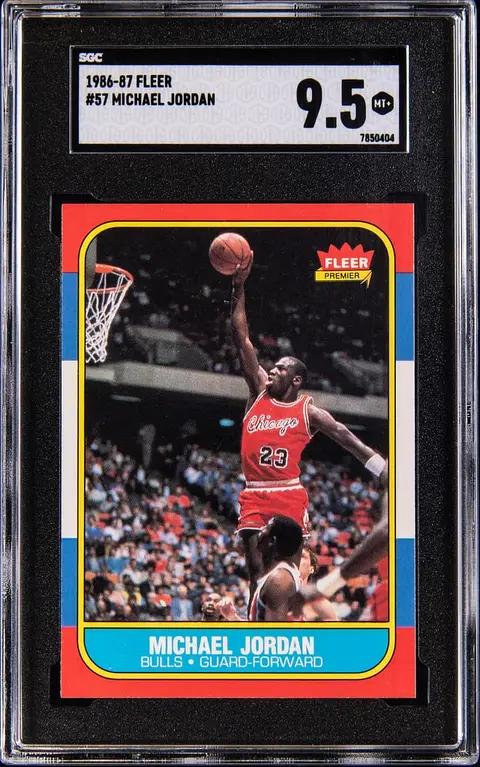
Sold Card
1986-87 Fleer #57 Michael Jordan Rookie Card - SGC MT+ 9.5
Sale Price
Platform
Goldin1986-87 Fleer Michael Jordan Rookie SGC 9.5 Sells for $34,959 at Goldin
On March 20, 2026, Goldin closed a notable sale for one of the hobby’s most recognizable modern-vintage cards: a 1986-87 Fleer #57 Michael Jordan Rookie Card, graded SGC MT+ 9.5, which finished at $34,959.
For many collectors, this card is the gateway into serious basketball collecting. Let’s break down what sold, why it matters, and how this price fits into the broader market for Jordan rookies.
The card: a modern-vintage cornerstone
- Player: Michael Jordan
- Team: Chicago Bulls
- Year / Set: 1986-87 Fleer Basketball
- Card number: #57
- Type: Flagship rookie card (widely regarded as MJ’s key pack-issued rookie)
- Grading company: SGC (Sportscard Guaranty)
- Grade: MT+ 9.5
- Attributes: Standard base issue (no autograph, no patch, no serial numbering)
Within Jordan’s rookie portfolio, the 1986-87 Fleer #57 is the hobby’s “flagship” card. There are earlier Jordan issues (like his 1984-85 Star Company cards), but the Fleer rookie is the one most collectors recognize from price guides, websites, and long-running hobby conversations.
The card comes from the first major NBA set Fleer produced after a long gap in mainstream basketball card manufacturing. That return, combined with Jordan’s status, is why this set is often described as a foundational modern basketball release.
Why the 1986-87 Fleer #57 matters
Several factors make this card central to basketball collectors:
Flagship rookie status
This is the key pack-issued Michael Jordan rookie distributed nationally in wax packs. When collectors refer to “the Jordan rookie,” this is almost always the card they mean.Era and condition challenges
The card is from the mid-1980s, a period often called “modern-vintage” in the hobby: not as old as 1950s–70s vintage, but predating the mass overproduction of the 1990s.The 1986-87 Fleer set is known for:
- Off-centering (left-right and top-bottom)
- Print defects (color dots, fish-eyes)
- Edge and corner chipping on the colored borders
These issues make true high-grade examples more difficult to find than raw card counts might suggest.
Cultural and collector significance
Jordan’s career—six NBA championships, five MVPs, global impact on the sport and culture—drives long-term interest. His key rookie is often one of the first “grail cards” collectors learn about when they re-enter the hobby.Set importance
The 1986-87 Fleer release also includes rookies of other stars (Karl Malone, Charles Barkley’s first mainstream Fleer, etc.), but Jordan’s card is the clear headliner and a bellwether for pricing across the set.
Understanding the grade: SGC MT+ 9.5
This copy received a grade of SGC MT+ 9.5 from SGC (Sportscard Guaranty). In hobby shorthand:
- SGC is one of the major third-party grading companies, along with PSA and BGS.
- 9.5 (Mint+) signals a card with sharp corners, strong edges, and clean surfaces, with only very minor flaws.
In market discussions, SGC 9.5s are often compared with PSA 9s and BGS 9.5s, but exact price relationships shift over time and can depend on eye appeal—how the card looks beyond the technical grade.
Market context: how $34,959 fits in
The final price realized at Goldin was $34,959 on March 20, 2026.
To place this in context, collectors usually look at “comps” (short for comparable sales): recent, publicly recorded prices for the same card in the same or similar grade.
Looking at recent patterns for this card and similar graded examples across major auction houses and marketplaces:
High-end benchmarks: PSA 10 copies of the 1986-87 Fleer Jordan rookie—considered the top of the population—have historically sold much higher, with notable peaks during the 2020–2021 boom. Those record-level numbers are well above current SGC 9.5 prices and serve more as historical reference points than direct comparisons.
Near-mint to mint tiers: PSA 9 and BGS 9.5 examples typically sit in a band below PSA 10s but above strong 8.5s. SGC 9.5s tend to trade in that same general neighborhood, with individual results influenced by centering and overall eye appeal.
Where this sale lands: This Goldin result in the mid–five figures aligns with the broader cooling and stabilizing of the Jordan rookie market that followed the sharp run-up earlier in the decade. For a high-grade example from a major auction house, the realized price fits within the range many collectors now recognize as a more normalized level for premium, but not population-top, Jordan rookies.
Because the card is graded by SGC rather than PSA, an exact one-to-one comparison with PSA-recorded sales isn’t perfect. However, the $34,959 result is consistent with the idea that strong copies in top-tier grades continue to attract serious buyers, even as prices have moved off their past peaks.
SGC vs. PSA vs. BGS for Jordan rookies
When collectors research Jordan rookies, they’ll often encounter:
- PSA (Professional Sports Authenticator) – Long-established market leader, especially for vintage and key rookies.
- BGS (Beckett Grading Services) – Historically strong in modern and 2000s-era cards, also handles 1980s basketball.
- SGC – Long history with vintage and pre-war cards and growing presence in 1980s–1990s and modern issues.
Price differences between grading companies are usually driven by:
- Brand perception at a given time
- Relative population (how many graded copies exist in each grade, often called the “pop report”)
- Eye appeal and subgrade-style factors, even when not formally subgraded
Collectors deciding between an SGC 9.5 and, say, a PSA 9 or BGS 9.5 often weigh:
- The look of the card in the holder
- Their personal trust and experience with each company
- Long-term collectability and liquidity in their own collecting circle
What this sale means for collectors
This Goldin sale reinforces several ongoing hobby themes:
Iconic cards retain attention
Even after the intense run-up and subsequent correction in the early 2020s, premium Jordan rookies in strong grades are still closely watched. They are used as reference points for other 1980s and 1990s basketball stars.Grade separation still matters
Differences between, for example, an 8.5, 9, and 9.5 can lead to meaningful price gaps. This SGC 9.5 result underscores that collectors continue to pay a premium for cards that present at the high end of the grading scale.Auction setting and timing
Major auction houses like Goldin provide good visibility and often attract multiple serious bidders for high-profile pieces. The March 20, 2026 closing date situates this sale in a period when the Jordan rookie market has had time to adjust from earlier volatility, offering a clearer snapshot of current demand.
Tips for collectors considering a Jordan rookie
If you’re thinking about buying, selling, or upgrading a 1986-87 Fleer Jordan rookie, here are a few practical points:
Study eye appeal, not just the grade
Centering and color can cause two cards with the same numerical grade to sell at noticeably different levels. Look closely at scan quality and request additional photos if you’re uncertain.Review multiple comps
When checking recent sales, compare:- The grading company and grade
- The auction house or marketplace
- The date of sale (older comps may not reflect current sentiment)
Understand set-level nuances
1986-87 Fleer has well-known print and centering issues. Knowing what a “strong” copy looks like for this specific card will help you evaluate whether a given example might attract a premium within its grade.Be clear on your goal
Some collectors want the best possible grade; others are content with a lower grade that still presents well. Both approaches are valid—your priorities and budget should guide your choice.
Final thoughts
The 1986-87 Fleer #57 Michael Jordan Rookie Card – SGC MT+ 9.5 closing at $34,959 at Goldin on March 20, 2026 is another data point in the ongoing story of one of the hobby’s most important modern-vintage cards.
For newcomers, this sale is a clear example of how condition, grading company, and auction platform shape the realized price of an iconic card. For experienced collectors, it offers another reference as they track how Jordan rookies continue to settle into a more mature, data-rich market environment.
As with any key card, careful research, thoughtful comparison of recent sales, and attention to eye appeal remain the most reliable tools for navigating this corner of the basketball card market.