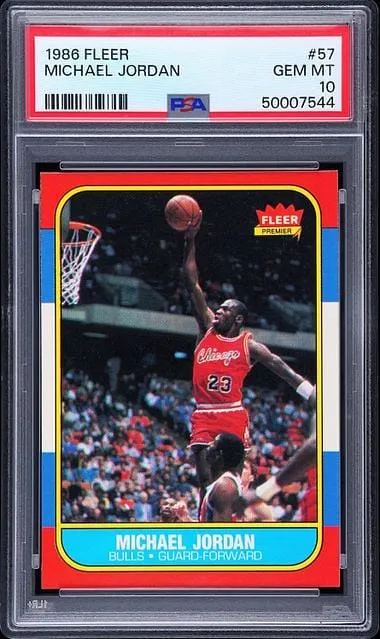
1986 Fleer Michael Jordan Rookie PSA 10 Sells for $268K
Deep dive on a 1986-87 Fleer #57 Michael Jordan Rookie Card PSA 10 that sold for $268,400 at Goldin on March 8, 2026, and what it means for the hobby.
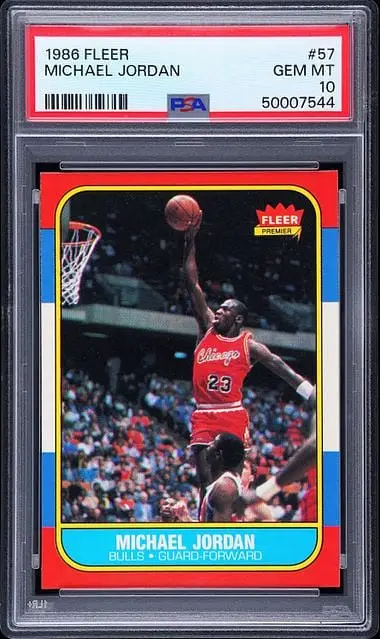
Sold Card
1986-87 Fleer #57 Michael Jordan Rookie Card - PSA GEM MT 10
Sale Price
Platform
Goldin1986-87 Fleer #57 Michael Jordan Rookie Card (PSA 10) Sells for $268,400 at Goldin
On March 8, 2026 (UTC), a 1986-87 Fleer #57 Michael Jordan Rookie Card graded PSA GEM MT 10 sold through Goldin for $268,400. For collectors, this is one of the defining cards in the entire basketball market, and PSA 10 copies continue to act as a bellwether for high-end 1980s cards.
In this breakdown, we’ll walk through what the card is, why it matters, and how this sale fits into recent market context.
The Card: 1986-87 Fleer #57 Michael Jordan Rookie, PSA GEM MT 10
Key details:
- Player: Michael Jordan
- Team: Chicago Bulls
- Year: 1986-87
- Set: 1986-87 Fleer Basketball
- Card number: #57
- Type: Flagship rookie card (widely treated as Jordan’s primary pack-issued rookie)
- Grading company: PSA (Professional Sports Authenticator)
- Grade: GEM MT 10 (Gem Mint)
- Attributes: Standard base issue (not a parallel, refractor, auto, or patch)
Jordan does have earlier cards (such as his 1984-85 Star issues), but for most collectors the 1986-87 Fleer #57 is the iconic Jordan rookie that anchors 1980s basketball collections.
Why the 1986-87 Fleer Jordan #57 Matters
A cornerstone of the modern basketball hobby
The 1986-87 Fleer release is viewed as the first mainstream, widely distributed NBA set after several quiet years for licensed basketball products. Within that checklist, Jordan’s #57 rookie is the headliner.
Collectors care about this card because it represents:
- Jordan’s hobby-defining rookie: It is the card most people picture when they think “Michael Jordan rookie.”
- A landmark set: 1986-87 Fleer also includes key rookie cards of other Hall of Famers, making it a foundational set for 1980s basketball.
- Bridging eras: It sits between vintage (pre-1980s) and the later “junk wax” era of heavy overproduction. The set isn’t ultra-rare, but truly top-grade examples are meaningfully scarce.
Condition sensitivity and PSA 10 scarcity
Even though a fair number of 1986-87 Fleer Jordan rookies were printed, they’re difficult to find in true gem-mint condition. Common issues include:
- Off-center front and back
- Edge and corner chipping on the colored borders
- Print dots and surface defects
A PSA GEM MT 10 grade means PSA judged the card to be essentially flawless to the naked eye: sharp corners, clean surfaces, strong centering, and no major print defects. While PSA’s population report (often shortened to “pop report,” a public count of how many copies exist in each grade) shows a significant total number of Jordan rookies graded, only a relatively small percentage reach PSA 10.
Because of that, PSA 10s function almost like a separate tier of the card in the market compared to PSA 8s and PSA 9s.
Market Context: How $268,400 Fits In
The realized price for this copy at Goldin was $268,400. Putting that into context requires looking at recent sales, keeping in mind that prices for this card have moved significantly over the past several years.
How this sale fits into recent PSA 10 prices
Over the last few years, publicly reported PSA 10 sales for the 1986-87 Fleer Jordan rookie have ranged from six figures to well into the mid-six-figure range, depending on:
- Overall sports card market sentiment at the time
- The specific auction house and marketing
- Eye appeal factors such as centering and color (even within the same numerical grade)
This $268,400 result at Goldin lands in the mid to upper portion of the more recent, post-surge range for PSA 10 sales, rather than at either extreme. It is not at the early-2021 peak levels, when a small number of sales pushed well above current prices, but it also sits clearly above the softest stretches that followed.
In other words, among modern comps (short for “comparables,” meaning similar recent sales), this price points to a stable, strong level of demand for top-tier copies without signaling an all-time record.
Comparing to lower grades and related versions
While this article focuses on the PSA 10, recent sales across other grades help frame the tiered demand for this card:
- PSA 9: Typically sells at a notable discount to PSA 10, often landing in a high five-figure to low six-figure range depending on market conditions and eye appeal.
- PSA 8 and below: These are more accessible for a wider pool of collectors, with prices stepping down as the grade decreases.
That steep curve between PSA 9 and PSA 10 is typical for iconic, condition-sensitive cards. For the Jordan Fleer rookie, the PSA 10 premium reflects how collectors treat true gem copies as a different class of asset than mid-grade examples.
There are also non-Fleer Jordan rookies, especially his earlier Star Company issues, but those follow their own grading standards and collector debates. For most hobby participants, the 1986-87 Fleer #57 remains the reference point card when discussing Jordan rookies and their price movements.
Collector Significance: Beyond the Dollar Figure
An anchor card for multiple types of collectors
This card shows up in a wide range of collections:
- Newer collectors often set it as a long-term “grail” card, even if they start with lower grades or reprints.
- Returning collectors who grew up in the late 1980s and 1990s see it as a nostalgia piece that connects childhood packs to today’s hobby.
- Active hobbyists and small sellers use it as a reference point when discussing the direction of the vintage and pre-modern basketball market.
Because the Jordan PSA 10 has a well-documented history of public sales, it functions as a useful barometer for high-end basketball sentiment. When a copy performs solidly in a major auction, it tends to be read as a sign of underlying stability in the segment.
Era and long-term context
The 1986-87 Fleer set is often grouped in the “pre-modern” or late-vintage/early-modern period, distinct from both the true vintage era and later ultra-modern issues with numerous parallels and serial-numbered inserts.
Some characteristics of this era that affect the Jordan rookie:
- Print volume: Higher than 1970s basketball, but far lower than the peak overproduction years that followed.
- Grading evolution: Many copies sat in collections for years before professional grading became standard, leading to a long tail of raw (ungraded) cards still entering the market.
- No modern-style inserts: There are no serial-numbered, patch, or autograph versions from the original 1986-87 release, so the base card itself carries the full weight of demand.
What This Goldin Sale Tells Us
The March 8, 2026 sale at Goldin confirms a few key points about the state of the card:
- PSA 10 demand remains deep: A $268,400 result suggests multiple serious bidders were willing to compete at a strong level for a top-grade example.
- The card continues to act as a benchmark: Collectors, dealers, and market observers regularly look to Jordan PSA 10 results when evaluating price trends in 1980s basketball and in high-end slabs more broadly.
- Stability in a mature market: While the explosive spikes of earlier years have cooled, this sale illustrates that the Jordan Fleer rookie in PSA 10 still commands a meaningful premium and retains its status as a core hobby icon.
Takeaways for Different Types of Collectors
- If you’re newer to the hobby: This card is a useful case study in how grading, population reports, and historical importance interact. Even if a PSA 10 is out of reach, studying its comps can help you understand how other key rookies might behave over time.
- If you’re a returning collector: The price spread between raw, mid-grade, and gem-mint copies highlights why condition matters so much today compared with the 1980s and 1990s.
- If you’re an active hobbyist or small seller: Tracking public auction results like this Goldin sale gives you context when pricing other 1980s and 1990s stars, especially their flagship rookies in higher grades.
As always, individual cards can vary based on eye appeal, provenance, and timing, and no single sale sets the entire market. But this $268,400 PSA 10 at Goldin is another clear datapoint that the 1986-87 Fleer #57 Michael Jordan Rookie Card remains one of the most important and closely watched cards in the basketball hobby.