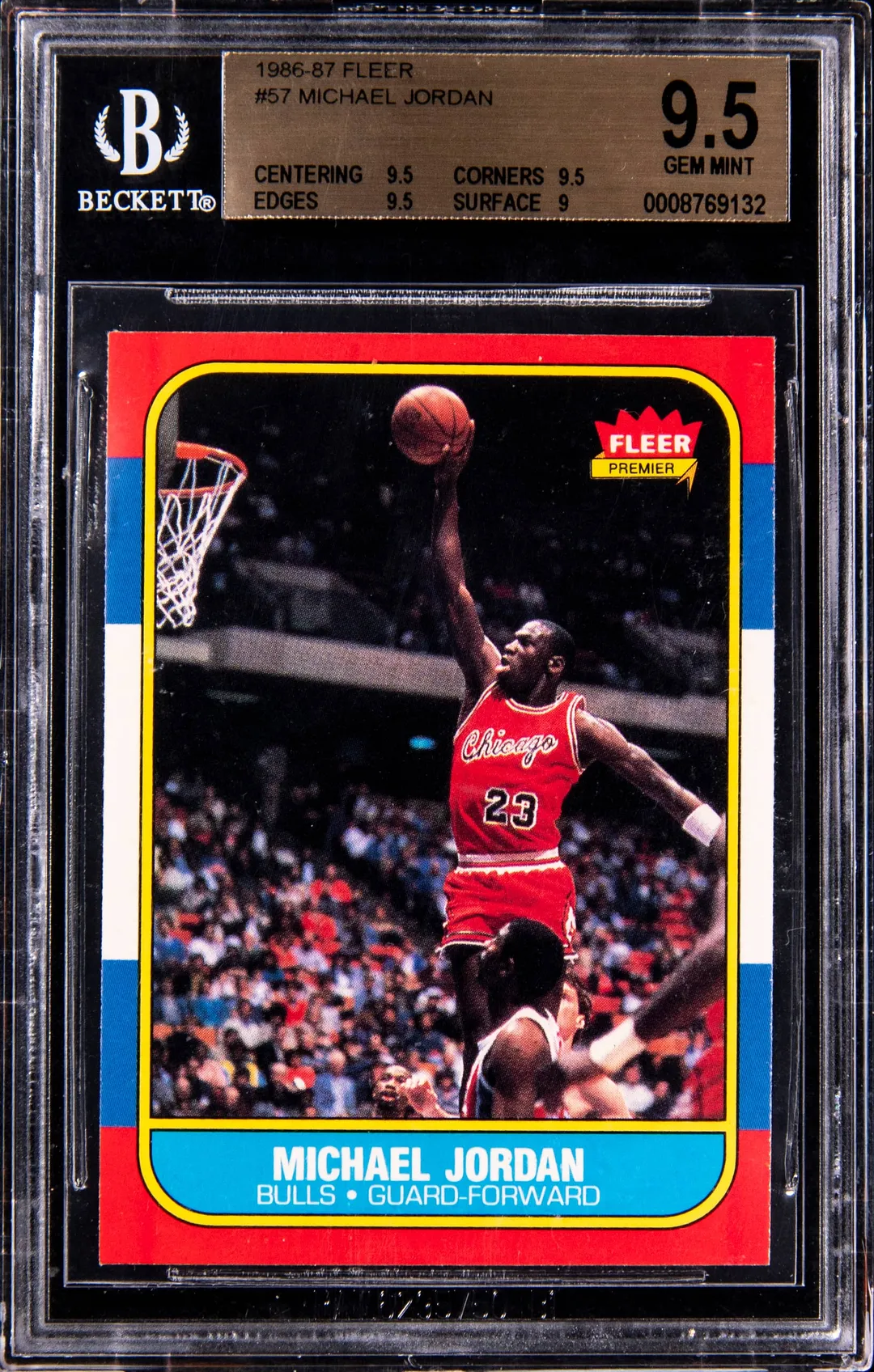
1986-87 Fleer Michael Jordan BGS 9.5 Sells for $40K
Goldin sold a 1986-87 Fleer #57 Michael Jordan rookie BGS 9.5 for $40,260. See how this result fits recent comps and the broader MJ market.
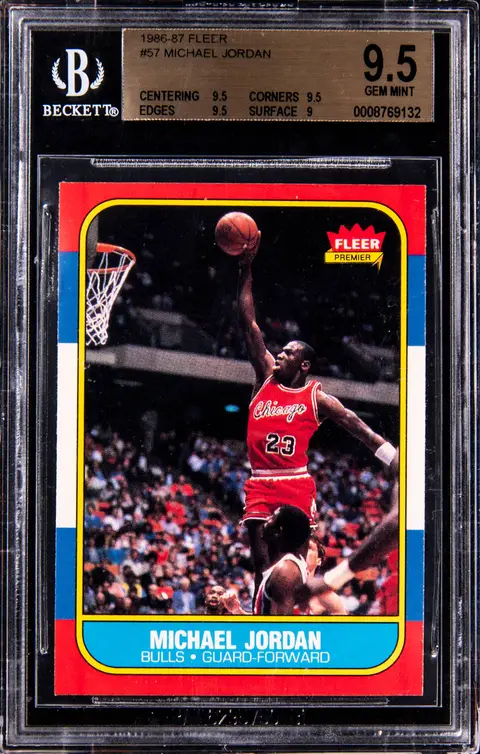
Sold Card
1986-87 Fleer #57 Michael Jordan Rookie Card - BGS GEM MINT 9.5
Sale Price
Platform
Goldin1986-87 Fleer #57 Michael Jordan Rookie Card (BGS 9.5) Sells for $40,260
On February 8, 2026, Goldin sold a 1986-87 Fleer #57 Michael Jordan Rookie Card graded BGS GEM MINT 9.5 for $40,260. For many collectors, this isn’t just another big Jordan sale—it’s a useful data point in understanding how the hobby is currently valuing one of the most important basketball cards ever made.
In this breakdown, we’ll cover what this card is, why it matters, and how this sale fits into recent market context.
The card at a glance
- Player: Michael Jordan
- Team: Chicago Bulls
- Year: 1986-87
- Set: Fleer Basketball
- Card number: #57
- Status: Widely regarded as Jordan’s flagship rookie card
- Grading company: Beckett Grading Services (BGS)
- Grade: GEM MINT 9.5
- Attributes: Standard base issue (no autograph, no patch, no serial numbering)
Collectors generally treat the 1986-87 Fleer #57 as Michael Jordan’s key pack-issued rookie card. While he has earlier XRCs and star issues, this Fleer card is the one that most people think of first when they hear “Jordan rookie.”
Why the 1986-87 Fleer Jordan matters
The 1986-87 Fleer set has become a cornerstone of basketball collecting:
- Era-defining release: It marked the return of a major, widely distributed NBA set after a gap in mainstream basketball products.
- Loaded rookie class: Beyond Jordan, the checklist features major rookies and early cards of several Hall of Famers.
- Iconic design: Bright borders, bold team colors, and an in-action MJ photo that has become instantly recognizable.
Within that context, card #57 is the face of the set. For many newcomers and returning collectors, it’s the card that anchors their mental picture of 1980s basketball cards.
Understanding the BGS 9.5 GEM MINT grade
BGS grades on a 1–10 scale, often with individual subgrades for centering, corners, edges, and surface. A GEM MINT 9.5 indicates a card that is extremely sharp in all key areas, with only very minor imperfections.
While PSA 10 copies of this card tend to headline record sales, BGS 9.5s usually sit a step below those in price, often offering high-end eye appeal at a lower cost than a true gem from PSA.
Key points about a BGS 9.5 Jordan rookie:
- It sits near the top of the condition pyramid for this issue.
- The card is from the mid-1980s, so centering and print quality can vary widely; strong copies are meaningfully scarcer than raw population suggests.
- For many collectors, a 9.5 represents the sweet spot between quality and price.
Market context: where does $40,260 fit?
The hammer price for this copy was $40,260 at Goldin on February 8, 2026.
When collectors talk about price context, they often use “comps”, short for “comparables” or “comparable sales.” These are recent sales of the same card (or very similar ones) used as reference points.
For the 1986-87 Fleer Jordan rookie, the broader context over the last few years has included:
- PSA 10 copies reaching very high six-figure sales at market peaks, then retracing as the overall hobby cooled.
- BGS 9.5 examples trading meaningfully below PSA 10 levels, with prices adjusting as demand, supply, and overall sentiment moved.
This $40,260 result sits in the range that recent BGS 9.5s have been trending toward in a more balanced market. It is well below peak-era pricing but still reflects that high-grade Jordan rookies remain among the most liquid and tracked cards in the hobby.
Relating BGS 9.5 to other grades
Looking across grades:
- PSA 10: Typically commands the highest premium, often used as the headline number in media coverage.
- BGS 9.5: Around the next tier down, with strong eye appeal but at a more accessible level relative to PSA 10.
- PSA 9 / BGS 9: Often treated as the “entry point” into graded Jordan rookies for many collectors.
The spread between these grades can shift over time as collectors adjust how they value subgrades, holder preference, and population counts.
Why collectors still care deeply about this card
Several factors keep steady attention on the 1986-87 Fleer Jordan:
- Cultural impact: Michael Jordan’s status in basketball and popular culture keeps demand broad, extending well beyond hardcore hobby specialists.
- Set importance: 1986-87 Fleer is a foundational basketball release, so owning a piece of it—especially the Jordan—is often a collecting goal in itself.
- Condition sensitivity: Off-centering and print defects are common, so true high-grade examples feel meaningfully special.
- Long hobby history: This card has been chased, traded, and graded in volume for decades. Collectors have a deep library of past auction results and population data to reference.
In hobby terms, this is a “flagship rookie”—the primary, pack-pulled rookie card most collectors associate with a player. Flagship rookies for all-time greats tend to hold a central role in many collections.
What this sale can (and can’t) tell us
This Goldin sale is best read as a data point in an ongoing story, not as a prediction.
What it suggests:
- Stable interest: Even in a more measured market environment post-peak, high-grade Jordan rookies continue to draw strong bidding at major auction houses.
- Mature price discovery: With years of auction history, it’s easier to compare a result like $40,260 against a deep pool of past comps instead of guessing.
What it doesn’t do:
- It does not guarantee future prices will rise or fall from here.
- It does not redefine the all-time ceiling or floor for this card.
For collectors, the key takeaway is that the card remains actively traded, well-tracked, and closely watched. That combination of liquidity (how easily something can be bought or sold) and familiarity is part of why this card is still a central reference point in basketball card discussions.
Takeaways for different types of collectors
New and returning collectors
The 1986-87 Fleer Jordan can serve as a good lens for understanding how the hobby thinks about:
- Grading tiers (BGS vs PSA, and 9 vs 9.5 vs 10).
- How past comps frame current prices.
- Why certain cards become long-term reference points.
You don’t need to own one to learn from it. Following auctions like this helps you get a feel for how the market behaves.
Active hobbyists and small sellers
If you deal in Jordan, 1980s basketball, or key Hall of Fame rookies, results like this are useful context when:
- Calibrating buy/sell expectations.
- Comparing condition, centering, and grading company when looking at raw copies or crossover candidates.
- Explaining to newer customers why certain grades command a premium.
Final thoughts
The $40,260 BGS 9.5 sale of the 1986-87 Fleer #57 Michael Jordan Rookie Card at Goldin on February 8, 2026 reinforces what the hobby has known for a long time: this card is still one of the central pillars of basketball card collecting.
Prices move, enthusiasm cycles, and new products arrive every season. But when a high-grade Jordan rookie surfaces at a major auction house, the hobby still pays attention—and that attention continues to shape how we understand the broader basketball card market.