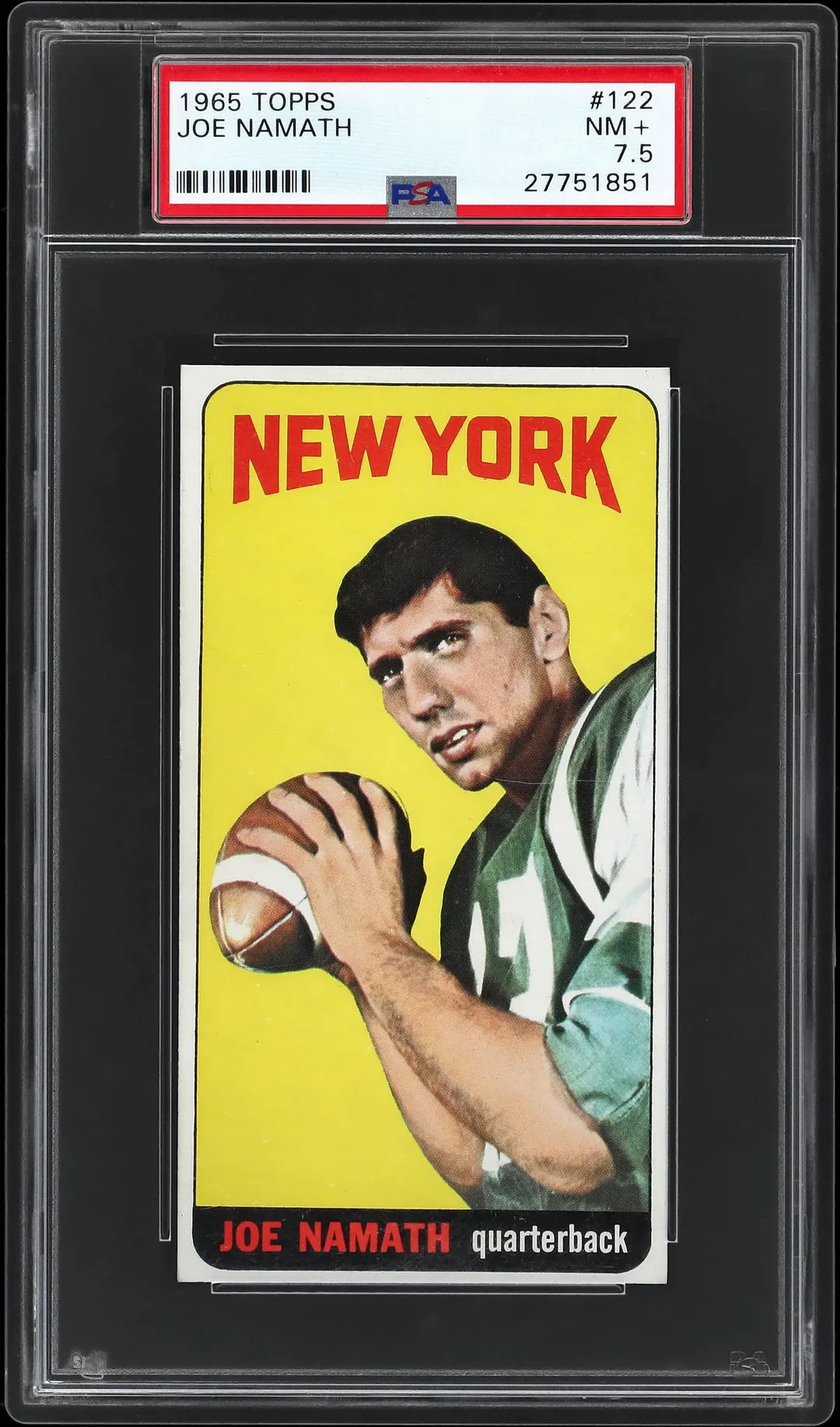
1965 Topps Joe Namath Rookie PSA 7.5 Sells for $12.5K
Goldin sold a 1965 Topps #122 Joe Namath rookie PSA 7.5 for $12,509 on Feb 22, 2026. See what this means for vintage football card collectors.
Sold Card
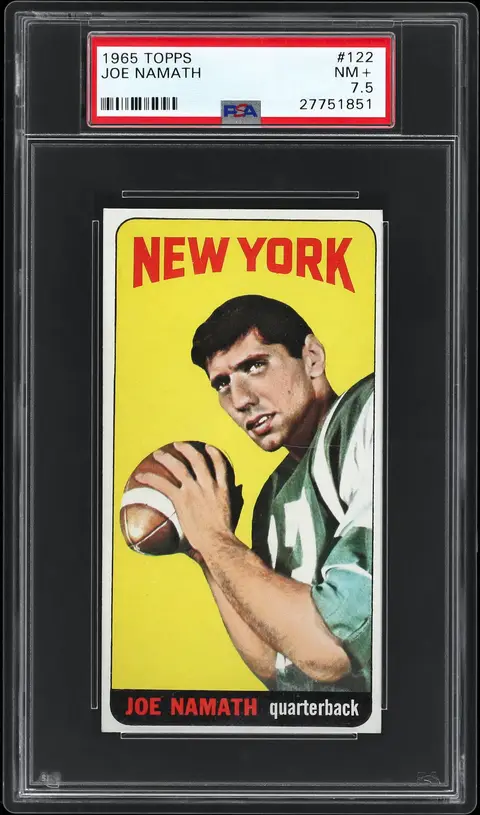
1965 Topps #122 Joe Namath Rookie Card - PSA NM+ 7.5
Sale Price
Platform
Goldin1965 Topps #122 Joe Namath Rookie Card in PSA NM+ 7.5 quietly remains one of the pillars of vintage football collecting. On February 22, 2026, Goldin sold a copy for $12,509, a result that fits neatly into the current price picture for this card and grade.
In this post, we’ll walk through what makes this Namath rookie so important, how a PSA 7.5 fits into the population and pricing landscape, and what this particular sale tells us about the broader Joe Namath and vintage football market.
The card at a glance
- Player: Joe Namath (Hall of Fame quarterback)
- Team: New York Jets (listed as New York Jets / AFL on the card)
- Year / Set: 1965 Topps Football, often called the “tall-boy” set
- Card number: #122
- Issue type: True rookie card, key HOF issue
- Grading company: PSA (Professional Sports Authenticator)
- Grade: NM+ 7.5
- Attributes: Standard base rookie (no autograph, no patch, no serial numbering – typical for the era)
The 1965 Topps football set is known for its oversized “tall-boy” format and bright, simple backgrounds. Within that set, Namath’s rookie is the unquestioned headliner and one of the essential vintage football cards, alongside early Jim Brown, Johnny Unitas, and Bart Starr issues.
Why the 1965 Topps Joe Namath rookie matters
A central card in vintage football
For football collectors, Joe Namath represents more than stats. He’s closely tied to:
- The AFL–NFL merger era
- New York sports history
- A broader pop‑culture image that made him one of the first true football celebrities
His guarantee and upset win in Super Bowl III cemented his place in football lore. Even collectors who focus on modern quarterbacks typically recognize the Namath rookie as a foundational vintage piece.
Importance of the 1965 Topps set
The 1965 Topps football release is:
- Oversized: Cards are taller than standard issues. That makes them harder to store, protect, and keep in top condition long‑term.
- Condition sensitive: Corners and edges show wear easily, and centering can be inconsistent. That matters a lot when thinking about why mid‑to‑high grades command such a premium.
- AFL‑anchored: The set features American Football League players, which historically had lower print runs and less mass appeal than NFL‑focused issues at the time.
Put together, those factors help explain why well‑centered, clean copies of the Namath rookie remain relatively tough in higher grades.
Grading, scarcity, and the PSA 7.5 lane
Understanding PSA 7.5 (NM+)
PSA’s NM+ 7.5 grade sits between Near Mint 7 and Near Mint–Mint 8. In practical collecting terms, it often captures:
- Cards that are a bit too sharp and clean to be a "typical" 7
- Cards that miss an 8 due to one or two notable issues (centering, a corner, or a print defect)
For vintage cards like the 1965 Namath, that half‑grade can matter. It frequently represents an appealing middle ground: well above average eye appeal without the steeper price jumps seen from strong 8s and 9s.
Population and supply
While exact PSA population numbers can move over time as more cards are submitted and regraded, the general pattern for this card is well‑established:
- Lower grades (1–5): More plentiful, often with creases, staining, or centering issues.
- Mid grades (6–7): A sweet spot for many collectors balancing condition and cost.
- PSA 7.5: Noticeably smaller population than straight 7s, sitting in a relatively thin band of supply.
- PSA 8 and above: Considerably tougher and priced at a significant premium due to condition scarcity.
Because the Namath rookie is so widely collected, even modest population counts in the 7–8 range can still feel tight relative to demand. Newer collectors often aim for this mid‑high grade range as an entry point into serious vintage football.
Pricing context: How does $12,509 fit in?
The Goldin sale on February 22, 2026, closed at $12,509. To understand that number, it helps to look at the broader pattern of recent sales (comps).
In the hobby, “comps” simply means comparable recent sales of the same card and grade, or as close as possible. While exact figures move over time with market conditions, the general structure around Namath rookies tends to look like this:
- PSA 6 range: Typically several thousand dollars, depending on eye appeal and centering.
- PSA 7 range: Steps up meaningfully from 6s; strong eye‑appeal 7s often command a premium.
- PSA 7.5: Usually priced above straight 7s, but meaningfully below solid 8s.
- PSA 8 and higher: Large jumps in price due to sharp scarcity and demand from condition‑focused collectors.
Within that ladder, a $12,509 result for a PSA 7.5:
- Sits comfortably above what many recent PSA 7 copies have realized
- Remains well below the levels seen for PSA 8s and above
- Makes sense in the narrow gap between strong 7s and entry‑level 8s
Individual auction outcomes will always depend on eye appeal, centering, and timing. But taken as a data point, this Goldin sale looks consistent with where a healthy vintage Namath market has been settling in recent years.
How this sale fits into Joe Namath’s broader market
Vintage football stability
Compared to more speculative modern and ultra‑modern cards (recent players, colored parallels, and low‑serial issues), vintage Hall of Fame rookies like Namath have tended to:
- Move more gradually in price
- React less sharply to short‑term news or performance swings
- Be collected for historical and aesthetic reasons as much as for upside
That doesn’t mean they are static; broader hobby cycles and shifts in collector focus do matter. But cards like the Namath rookie usually trade more on long‑term significance than short‑term headlines.
Occasional catalysts
Namath’s active playing days are long over, so the biggest spikes from on‑field performance are behind this card. Instead, market interest tends to be shaped by:
- Documentaries or media coverage revisiting the Super Bowl III era
- Renewed interest in vintage football generally
- Set‑building projects where collectors decide to chase the 1965 Topps run
In that context, this Goldin result reads as another data point reinforcing the steady demand for strong mid‑high grade copies.
Takeaways for different types of collectors
Whether you’re just getting familiar with vintage football or are actively tracking Namath rookies, this sale offers some useful lessons.
For newer collectors
- The 1965 Topps Joe Namath is widely recognized as his key rookie and a cornerstone card in football history.
- A PSA 7.5 is a meaningful upgrade from lower and mid grades, both in condition and cost.
- Auction results like this are helpful for learning how half‑grades (like 7.5) price relative to straight 7s and 8s.
For returning hobbyists
If you collected in the past and are re‑entering the market:
- The Namath rookie remains a flagship piece, similar in hobby stature to Hank Aaron or Willie Mays in baseball.
- Grading has become much more granular, and subtle differences in centering and eye appeal can create significant price spreads within the same numerical grade.
- Sales like this one provide a reference point as you re‑calibrate your sense of value in the vintage football lane.
For active hobbyists and small sellers
- A $12,509 result at Goldin on February 22, 2026 reinforces that demand remains healthy for properly graded, attractive copies.
- When assessing your own Namath rookies, eye appeal (centering, color, registration) can materially influence where a card lands within or even between grade bands.
- Tracking sales by grade and auction house over time can help you refine where and when to consign, or what to target if you’re upgrading.
Final thoughts
This 1965 Topps #122 Joe Namath Rookie Card in PSA NM+ 7.5 sale at Goldin on February 22, 2026 is less about fireworks and more about confirmation.
It confirms:
- The continued importance of Namath’s rookie as a foundational vintage football card
- The strength of demand in the mid‑high grade range, where eye appeal and affordability intersect
- That carefully graded, visually strong copies remain well‑supported by the market
For collectors building a vintage football portfolio or simply trying to understand how iconic Hall of Fame rookies behave over time, this result is another grounded, data‑backed marker on the timeline of one of the hobby’s most recognizable football cards.