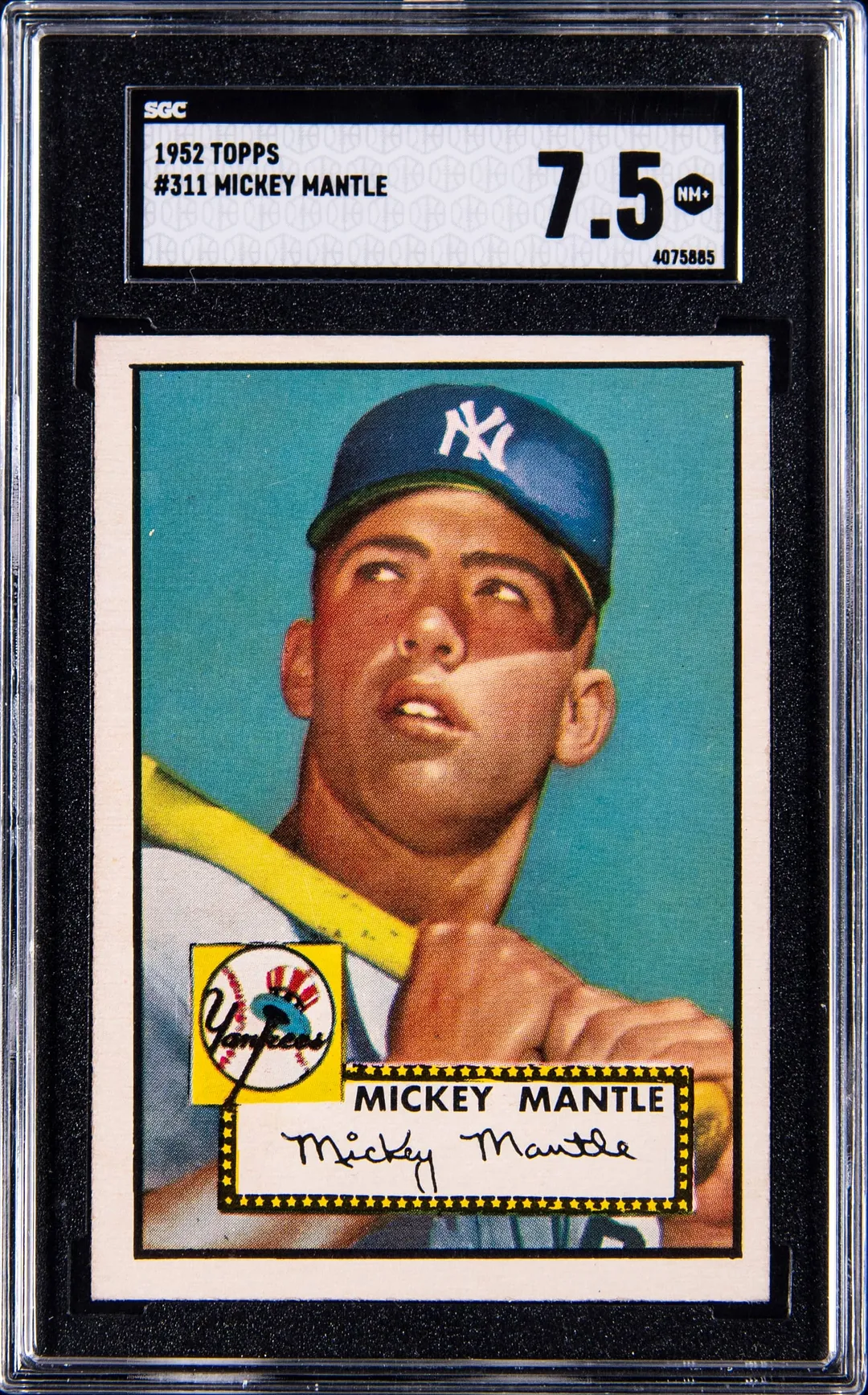
1952 Topps Mickey Mantle SGC 7.5 sells for $732K
Goldin sold a 1952 Topps #311 Mickey Mantle SGC NM+ 7.5 for $732,000 on Feb 22, 2026. See what this means for vintage baseball card collectors.
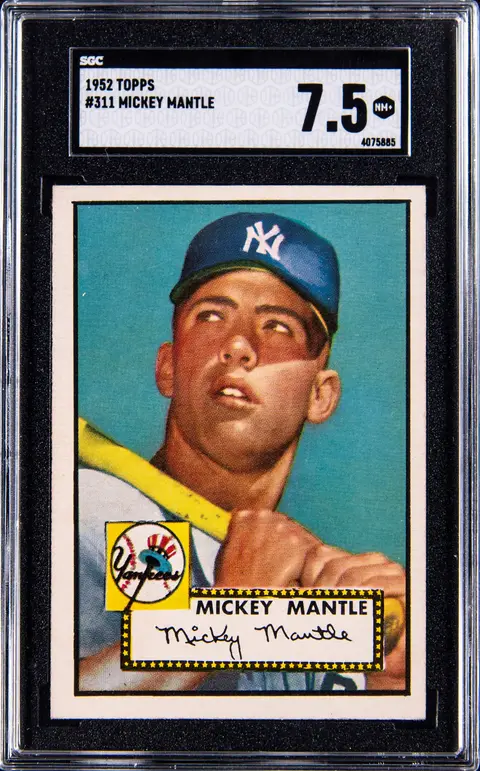
Sold Card
1952 Topps #311 Mickey Mantle - SGC NM+ 7.5
Sale Price
Platform
Goldin1952 Topps Mickey Mantle sales have become a kind of heartbeat for the entire vintage baseball market, and this latest result is another important data point.
On February 22, 2026, Goldin sold a 1952 Topps #311 Mickey Mantle graded SGC NM+ 7.5 for $732,000. For many collectors, this card is the defining post‑war baseball card, and mid‑to‑high grade copies like this one help set expectations for the wider vintage market.
Card overview: 1952 Topps #311 Mickey Mantle, SGC NM+ 7.5
- Player: Mickey Mantle, New York Yankees
- Year / Set: 1952 Topps Baseball
- Card number: #311
- Key issue: Widely regarded as Mantle’s most important card and the flagship card of the 1950s, though it is not his true rookie (that’s his 1951 Bowman).
- Era: Vintage (post‑war, early Topps era)
- Grading company: SGC (Sportscard Guaranty Corporation)
- Grade: NM+ 7.5 (Near Mint Plus)
- Attributes: Standard base card from the iconic high‑number series; no autograph or patch, all of the value is in the card’s originality, eye appeal, and condition.
Within the SGC scale, a 7.5 sits in a meaningful sweet spot: clearly above a straight NM 7, but short of the sharper, more investor‑targeted range of 8s and above. For many collectors, this is where eye appeal and relative affordability intersect on a card that is genuinely scarce in strong condition.
Why the 1952 Topps #311 Mantle matters
The 1952 Topps Mantle has a unique place in the hobby:
- Flagship Mantle issue: While not his earliest card, it is the most recognized Mantle card worldwide. For many non‑collectors, this is the vintage baseball card.
- High‑number series scarcity: Card #311 is part of the 1952 Topps high‑number run, which was infamously overproduced and then reportedly dumped into the ocean when it failed to sell. Surviving copies, especially in nice condition, are far scarcer than early‑series commons from the same set.
- Set significance: 1952 Topps is considered Topps’ first true flagship baseball release in modern card dimensions. The combination of design, player selection, and lore has made it a foundational set for vintage collectors.
- Mantle’s legacy: Mantle’s status as a New York Yankees legend and a symbol of the 1950s baseball era keeps demand remarkably stable over time. Hall of Fame status, multiple MVPs, and World Series success underpin long‑term collector interest.
Because of that mix of mythology and scarcity, serious vintage collectors often treat the 1952 Mantle as a bellwether. When prices move meaningfully in any grade band, people pay attention.
Market context: how does $732,000 fit in?
To understand this sale, it helps to look at comps, short for comparables – recent sales of the same card in the same or nearby grades.
In recent years, the 1952 Topps Mantle has set a series of headline numbers, especially at the very top of the grading scale (PSA 9s and SGC 9.5s). Those record breakers are outliers for most collectors, but they influence how mid‑grade and high‑mid‑grade copies are perceived.
For SGC and PSA examples in the 6 to 8 range, the pattern has generally looked like this:
- Prices climbed sharply during the 2020–2022 boom.
- As the broader market cooled, realized prices came down but tended to stabilize at a higher baseline than pre‑boom levels.
- Eye appeal – centering, color, print quality – increasingly drives premiums within the same numeric grade.
This SGC 7.5 at $732,000 sits in line with the idea that strong mid‑to‑high grade Mantles still command significant demand, even as the market has become more selective and data‑driven. It is well below the multi‑million‑dollar territory achieved by elite copies, but comfortably in the range where serious collectors and high‑end buyers compete.
Without relying on any single comp, this sale can reasonably be viewed as:
- Consistent with a mature, post‑boom market: Not a shock headline, but a firm number for a historically important card.
- Helpful for price discovery in the SGC lane: PSA has historically dominated Mantle pricing data, so every notable SGC result contributes to a clearer view of cross‑grade demand.
SGC NM+ 7.5: why this grade band matters
On a card like the 1952 Mantle, the grading scale isn’t just a number; it’s a series of collecting decisions.
- Mid‑grade (3–5): Often targeted by collectors who want authenticity and decent eye appeal without reaching into six figures (for many vintage grails).
- Upper mid / high‑mid (6–7.5): The zone where you begin to see stronger centering, cleaner surfaces, and sharper corners, but still some allowance for print or minor wear.
- High grade (8+): Scarce enough that each example is heavily scrutinized, and small improvements in centering or gloss can translate into large price swings.
An SGC 7.5 sits in that upper mid tier where the card still looks “clean” by most collectors’ standards. For a card that’s more than 70 years old, this is a level of preservation many longtime collectors would have dreamed of finding raw in the 1980s or 1990s.
Grade scarcity also matters. While population reports ("pop reports") – public counts of how many cards have been graded in each grade – are more often discussed for PSA, SGC’s pops tell a similar story: the higher you go on a 1952 Mantle, the fewer copies exist, and the more competition you see when one surfaces at auction.
What this sale signals for collectors
A single sale is never the whole story, but this $732,000 result at Goldin on February 22, 2026 adds a useful data point for anyone tracking the vintage market:
- Stability at the top of vintage: The Mantle remains a reference point. Continued six‑figure and seven‑figure results across grades reinforce its status as a cornerstone, not a passing trend.
- Respect for SGC‑graded vintage: Strong results for SGC‑slabbed iconic cards suggest that serious buyers are comfortable chasing high‑end vintage outside of PSA holders, especially when the card has strong eye appeal.
- Selectivity over blanket enthusiasm: Today’s bidders tend to be more careful than in the early‑2020s run‑up. When a Mantle like this achieves a healthy number, it’s usually backed by close inspection and comp checking rather than pure momentum.
For returning collectors who remember lower prices from earlier decades, these numbers can feel surreal. For newer collectors, they help frame why so much attention is paid to grading, centering, and provenance on key vintage issues.
Takeaways for different types of collectors
Whether or not you’re in the market for a Mantle of this caliber, there are practical lessons here:
- Learn the history of key cards. Understanding why 1952 Topps #311 is important will help you recognize similar “pillar” cards in other sports and eras.
- Use comps, but look beyond the number. When you compare sales, consider the grading company, the specific grade, and the visual quality of the card. Two 7.5s can look meaningfully different.
- Separate nostalgia from price action. Mantle carries enormous emotional weight in the hobby. It’s helpful to distinguish your personal connection from the market data when you buy, sell, or trade.
The role of major auction houses
Auction houses like Goldin play a significant role in setting visible market benchmarks. High‑end vintage cards often surface there rather than in fixed‑price marketplaces, which means:
- Bidders get a public, time‑bound chance to compete.
- The realized price becomes part of the hobby’s shared reference points.
- Future sellers and buyers look back at these numbers when setting expectations.
This February 22, 2026 sale will likely be one of the SGC 7.5 touchpoints collectors reference when evaluating upcoming Mantle offerings.
Final thoughts
The 1952 Topps #311 Mickey Mantle in SGC NM+ 7.5 that sold at Goldin for $732,000 is more than a headline. It’s another chapter in a long‑running story that connects post‑war cardboard to today’s data‑driven hobby.
For some, this card will always be out of reach; for others, it’s the centerpiece of a carefully built collection. Either way, its market journey helps everyone understand how history, condition, and collector sentiment combine to shape value in vintage sports cards.
As always, these observations describe recent sales and context, not predictions. Use them as one piece of your own research before making any collecting decisions.