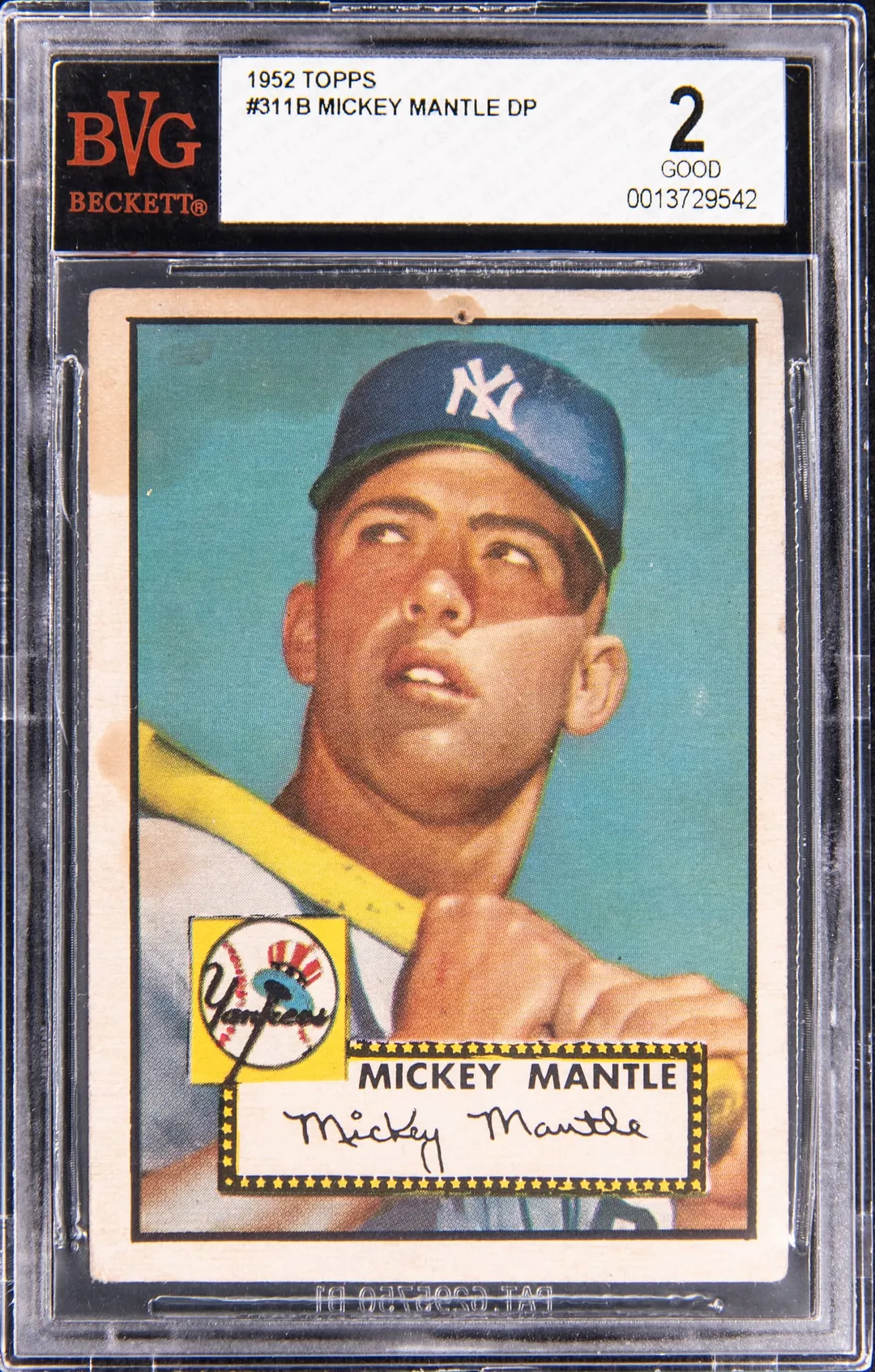
1952 Topps Mickey Mantle BVG 2 sells for $43,920
Goldin sold a 1952 Topps #311 Mickey Mantle BVG 2 for $43,920 on Feb 22, 2026. See what this vintage sale means for Mantle and the hobby.
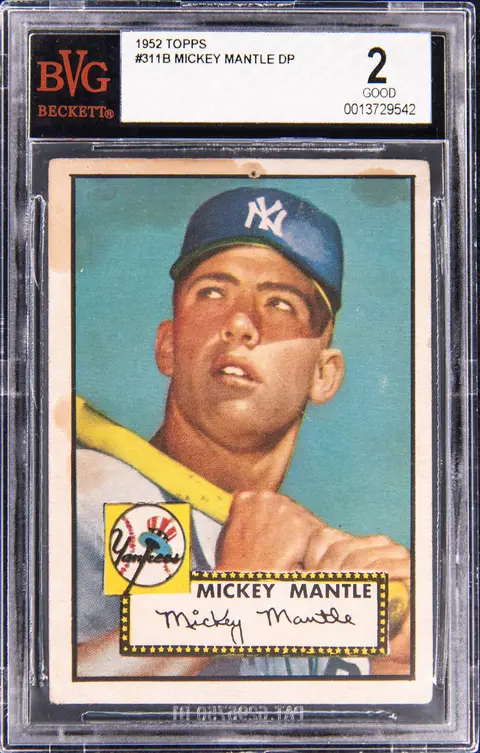
Sold Card
1952 Topps #311 Mickey Mantle - BVG GD 2
Sale Price
Platform
Goldin1952 Topps #311 Mickey Mantle is one of the small handful of cards that define the entire sports card hobby, and a recent BVG 2 example just changed hands in a notable vintage sale.
On February 22, 2026, Goldin sold a 1952 Topps #311 Mickey Mantle graded BVG GD 2 by Beckett Vintage Grading for $43,920. For a low-grade copy, that’s a meaningful data point for collectors tracking the Mantle market and the broader vintage baseball segment.
The card at a glance
- Player: Mickey Mantle
- Team: New York Yankees
- Year / Set: 1952 Topps Baseball
- Card number: #311
- Parallel/variant: Standard base (no parallel)
- Rookie status: Widely regarded as Mantle’s key Topps card and his most important hobby card, though not his true rookie (his Bowman rookie is 1951)
- Grading company: Beckett Vintage Grading (BVG)
- Grade: 2 (Good)
- Attributes: Iconic high-number short print from a landmark post‑war set
There’s no autograph, patch, or serial numbering here. The significance comes entirely from the combination of player, set, and hobby history.
Why 1952 Topps Mantle matters so much
For many collectors, 1952 Topps Baseball is the first truly modern, full‑color, mass‑distributed flagship baseball set. When people say “flagship,” they mean the main annual set a company releases that anchors its brand for that sport.
Within that flagship release, Mantle’s #311 is the hobby’s headliner:
- It’s part of the scarce high‑number series (cards #311–407), which had lower distribution and a now‑famous story of unsold stock being dumped into the ocean.
- The portrait artwork and design—Mantle against a sky‑blue background, bat on shoulder, Yankees cap front and center—has become one of the most recognizable card images in any sport.
- Mantle himself is a central figure in post‑war baseball history: a triple‑crown winner, multiple MVP, and a key star of the dynastic Yankees teams.
For those reasons, the 1952 Topps Mantle bridges advanced vintage collectors, investors, and nostalgic fans. Even in low grade, it is treated as a “grail” type card.
Understanding a BVG 2 grade
BVG (Beckett Vintage Grading) is Beckett’s grading arm focused on older cards. A 2 (Good) grade generally allows for:
- Heavy corner wear and rounding
- Noticeable creases or wrinkles
- Moderate surface soiling or discoloration
- Centering that can be well off
From a collector perspective, BVG 2 is considered a collector‑grade or entry‑level vintage copy—still authentic and complete, but with obvious flaws. With ultra‑iconic cards like this, even heavily worn examples remain highly liquid: they sell regularly, and there’s almost always demand.
Market context and recent comps
When we talk about “comps,” we’re referring to comparable recent sales—other examples of the same card (or very close equivalents) that help frame price expectations.
For the 1952 Topps #311 Mickey Mantle, there is a long track record of public auction results. Key context points for this sale:
- Graded 2 (Good) range: In recent years, PSA 2 and SGC 2 copies have tended to sell at a premium to BVG due to brand preference and registry demand, but all three grading companies usually trend in the same general range after accounting for eye appeal.
- Eye appeal premiums: Within any given numeric grade, Mantles with stronger color, better centering, or fewer distracting creases often sell for more than “average” looking copies. That can create a wide spread even within the same grade label.
Public records over the last few market cycles show that:
- Vintage Mantle pricing has been cyclical. During the peak of the 2020–2021 boom, even low‑grade Mantles saw aggressive bidding. In the years following, prices cooled off from those highs but remained well above pre‑boom levels.
- Headline record sales set the tone but don’t define every grade. A PSA 9 famously sold for multi‑million‑dollar figures, and high‑grade copies (PSA 8 and above) have drawn attention‑grabbing numbers. While those don’t directly dictate BVG 2 pricing, they reinforce the card’s blue‑chip status and keep demand flowing down the grade ladder.
Against that backdrop, the $43,920 BVG 2 result at Goldin on February 22, 2026 fits into the pattern of:
- A sustained premium for iconic vintage key cards, even in lower condition.
- Ongoing, steady demand from both seasoned collectors and newer entrants trying to secure any authentic 1952 Mantle they can reasonably afford.
Without relying on a single prior comp, the sale level is broadly consistent with the idea that collector‑grade Mantles continue to command strong five‑figure prices while tracking overall vintage market sentiment.
Vintage era, scarcity, and demand
The 1952 Topps Mantle is considered vintage—a term collectors use for older cards, especially pre‑1980 issues. Vintage cards differ from modern and ultra‑modern issues in a few key ways:
- Natural scarcity vs. manufactured scarcity: There were no serial‑numbered parallels, case hits, or short prints in the modern sense. Scarcity comes from original print runs, distribution quirks (like the high‑number series), and survival rate.
- Condition scarcity: High‑grade vintage is genuinely hard to find. Cards were handled by kids, stored casually, and often damaged, so top‑tier examples can be exponentially more valuable than well‑worn ones.
- Steady, history‑driven demand: Demand tends to be rooted in the player’s legacy and the card’s place in hobby history, rather than short‑term performance spikes or prospect speculation.
Mantle’s enduring popularity is tied to:
- His role as a post‑war Yankees legend and one of the faces of 1950s–60s baseball.
- Cross‑generational nostalgia: collectors who watched him play, their children, and now newer hobbyists discovering vintage through high‑profile content and record auctions.
- The 1952 Topps set’s status as a turning point in card design and production.
Even though Mantle’s on‑field career is long complete, hobby interest continues to be reinforced by documentary content, media coverage of big auctions, and the card’s starring role whenever vintage is discussed.
How this Goldin sale fits the bigger picture
The February 22, 2026 Goldin result doesn’t rewrite record books, but it does add another clear datapoint for anyone tracking the 1952 Mantle market:
- Confirms ongoing depth of demand for authentic copies across the condition spectrum.
- Reinforces BVG’s role as a respected option in the vintage grading space, especially for collectors who prioritize authenticity and price access over registry competition.
- Provides a reference level for future BVG 2 (and similar low‑grade) examples, with the usual caveats about eye appeal and timing.
For collectors and small sellers, the main takeaway isn’t that every Mantle will match this sale, but that:
- The card continues to trade actively at major auction houses.
- Prices can vary based on grading company, subgrades, centering, color, and surface issues.
- Well‑publicized auctions like Goldin’s help anchor expectations and give both buyers and sellers more transparent reference points.
What this means if you collect or sell vintage
While nothing in the hobby is guaranteed, the 1952 Topps Mantle serves as a useful case study:
- For newcomers: This is a prime example of how a card’s story—set history, player legacy, and hobby significance—can matter as much as the number on the slab.
- For returning collectors: If you left the hobby years ago, sales like this show just how much the top tier of vintage has matured and professionalized, with consistent auction reporting and grading standards.
- For active hobbyists and small sellers: Tracking marquee cards like Mantle can help you understand broader market sentiment. When the most iconic vintage pieces maintain healthy demand, it often signals underlying confidence in the category.
The $43,920 BVG 2 sale at Goldin on February 22, 2026 is another reminder that even well‑worn copies of historically important cards can remain centerpieces in serious collections—and that vintage, when documented through transparent auction results, continues to provide some of the clearest long‑term price history in the hobby.