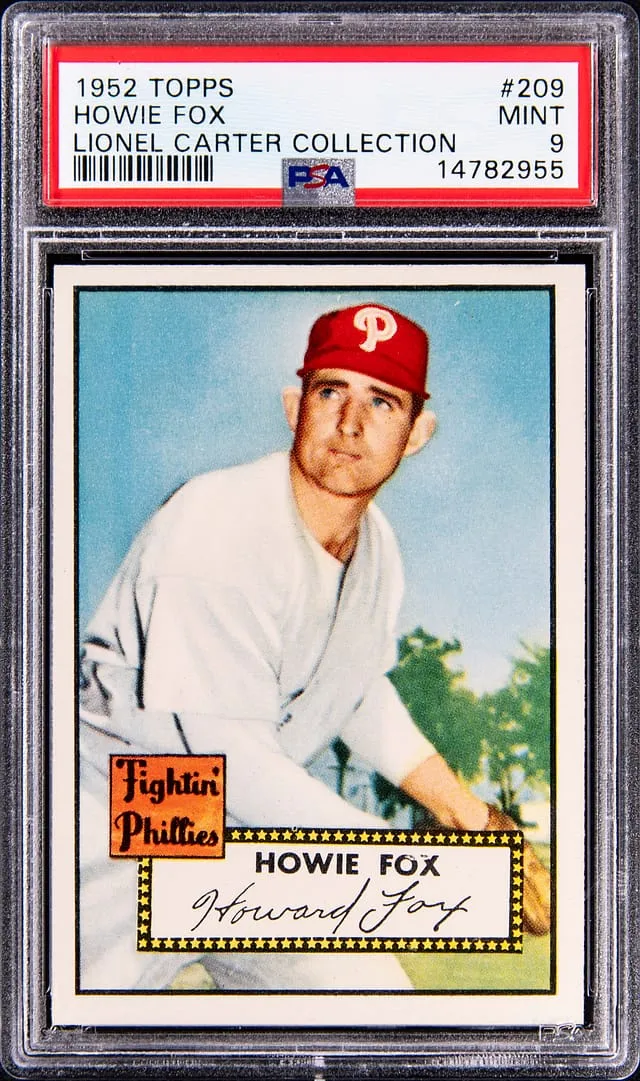
1952 Topps Howie Fox PSA 9 Carter Card Sells for $16K
Goldin sold a 1952 Topps #209 Howie Fox PSA 9 from the Lionel Carter Collection for $16,653 on Feb 22, 2026. Here’s what it means for vintage set builders.
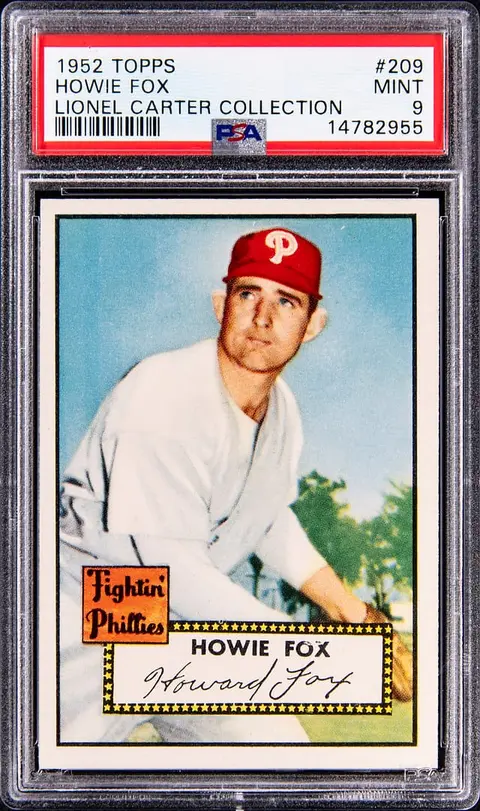
Sold Card
1952 Topps #209 Howie Fox - Lionel Carter Collection - PSA MINT 9 - Pop 6; Highest PSA Copy
Sale Price
Platform
GoldinA PSA 9 Howie Fox From the Lionel Carter Collection Just Closed at Goldin
On February 22, 2026, Goldin sold a 1952 Topps #209 Howie Fox from the famed Lionel Carter Collection for $16,653 in a PSA MINT 9 slab. With a PSA population of just 6 in this grade and none higher, this result offers a useful benchmark for collectors tracking mid‑series 1952 Topps in elite condition.
Card snapshot
- Player: Howie Fox (pitcher)
- Team: Philadelphia Phillies
- Year / set: 1952 Topps Baseball
- Card number: #209
- Parallel/variant: Standard base issue (no parallel)
- Rookie or key issue: Not a rookie, but a desirable mid‑series card from an iconic set
- Grading company: PSA (Professional Sports Authenticator)
- Grade: PSA 9 (MINT)
- Population: 6 copies in PSA 9; none graded higher at PSA ("Highest PSA Copy")
- Provenance: Lionel Carter Collection
Why 1952 Topps matters so much
The 1952 Topps set is widely seen as the hobby’s first truly modern flagship baseball release. It introduced:
- A larger card size and full‑color portraits
- Player bios and stats on the back
- A multi‑series print run that created natural scarcity, especially in later series
Even commons and semi‑stars from 1952 Topps command attention in high grade because of the era’s print quality issues, centering problems, and the way the cards were handled by kids at the time.
Where #209 Howie Fox fits in the set
Howie Fox is not a Hall of Famer, but #209 sits in the tougher mid‑series portion of the checklist. For vintage set builders and 1952 specialists, high‑grade examples of these mid‑series cards are essential and often harder to track down than more famous names in lower condition.
In lower grades (PSA 3–5), this card is generally a budget‑friendly vintage piece. The story changes once you reach the very top of the grading scale. The combination of a PSA 9 grade, low population, and pedigree makes this example fundamentally different from a typical mid‑grade copy.
The impact of the Lionel Carter Collection
Provenance – the documented history of where a card comes from – has become increasingly important in the hobby. The Lionel Carter Collection is one of the best‑known long‑term collections of vintage cards, assembled carefully over decades.
Cards from this collection are often recognized for:
- Strong eye appeal relative to their technical grade
- Long‑term, single‑owner storage
- Added trust and interest from advanced vintage buyers
The Carter name on the flip and in the auction description helps explain why collectors watch these sales closely, even for non‑star subjects like Howie Fox.
Population and scarcity
When collectors talk about a "pop report," they mean the grading company’s population report – a count of how many copies of a card exist in each grade.
For this specific card at PSA:
- PSA 9 (MINT): 6 copies
- PSA 10 (GEM MINT): 0 copies
That makes this copy tied for the best example known to PSA, which is why Goldin and the grading label can legitimately note it as the “Highest PSA Copy.” For collectors who chase set registries – PSA’s competitive system where people try to assemble the highest‑graded set – this kind of card can be a bottleneck.
Market context and recent pricing
This Goldin sale closed at $16,653. At the time of writing, public sales data for this exact card in PSA 9 is relatively thin, which is typical for a population‑6 vintage card. When a card surfaces only occasionally, each result carries extra weight but can also be more volatile.
Looking across related data points:
- Lower grades (PSA 3–6) of 1952 Topps Howie Fox typically sell for a small fraction of this price, reflecting both condition and the lack of star power.
- High‑grade mid‑series 1952 Topps commons and semi‑stars in PSA 9 often fall into the low‑to‑mid five‑figure range, depending on centering, color, and subject.
- Carter‑provenance examples can command a premium over similar non‑pedigreed copies, particularly when supply is thin.
Within that context, $16,653 sits in the expected band for a top‑pop, pedigreed 1952 Topps mid‑series card, without looking like an outlier “moonshot” result. It reinforces the idea that collectors are still willing to pay strong numbers for the best examples of even non‑Hall of Fame players when the set, condition, and provenance line up.
What this sale tells us about the vintage market
A few takeaways for collectors and small sellers:
Condition and pop often matter more than the player In ultra‑premium grades, the set and population can outweigh name recognition. A non‑star in PSA 9 from 1952 Topps with a pop of 6 and none higher can be more contested than some star cards in lower grades.
Provenance is a real factor Named collections like Lionel Carter’s can add demand because buyers feel more confident about authenticity, originality, and long‑term storage. That can show up in closing prices when supply is tight.
Thin data = wider price ranges With only a handful of PSA 9 copies and infrequent public sales, each auction can land a bit differently depending on who shows up to bid. This Goldin result gives the market a fresh reference point, but it’s still just one data point.
Set builders drive consistent demand 1952 Topps remains a priority for advanced set builders. When a top‑pop card like this hits the market, registry competitors and dedicated set collectors may be motivated to stretch more than a general vintage buyer.
How collectors might use this result
For active hobbyists and small sellers:
- As a seller: If you own high‑grade, mid‑series 1952 Topps cards (especially from known pedigrees), this sale is a reminder to check recent comps – short for “comparables,” or similar recent sales – rather than pricing only by player fame.
- As a buyer: This result can serve as a ceiling‑adjacent reference for PSA 9 examples of comparable mid‑series subjects, adjusting for eye appeal, provenance, and timing.
As always, this is price context, not a prediction. Vintage markets can move with broader economic conditions, new collections hitting the auction block, and shifts in collector focus.
Closing thoughts
The $16,653 February 22, 2026 Goldin sale of the 1952 Topps #209 Howie Fox PSA 9 from the Lionel Carter Collection is a useful snapshot of where high‑end 1952 Topps commons currently sit. It underscores how the combination of iconic set, top‑tier condition, low population, and respected provenance can elevate a non‑Hall of Famer into a five‑figure result.
For collectors building 1950s sets card by card, tracking these quiet but important sales can be just as informative as following the headline Mantle and Mays auctions.