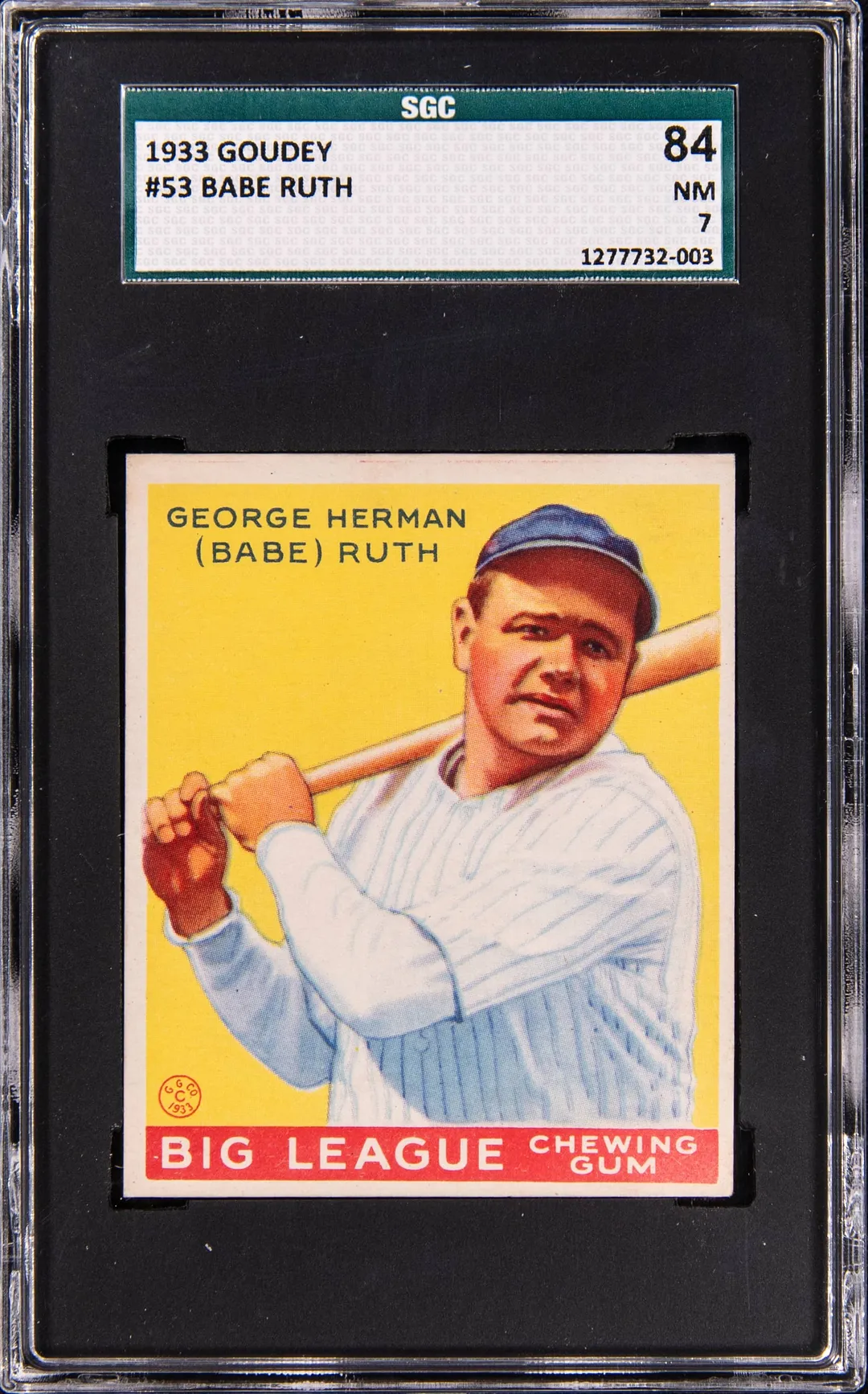
1933 Goudey #53 Babe Ruth SGC 7 sells for $124K
Goldin sold a 1933 Goudey #53 Babe Ruth SGC NM 7 for $124,440 on Feb 22, 2026. See how this six-figure result fits into the vintage market.
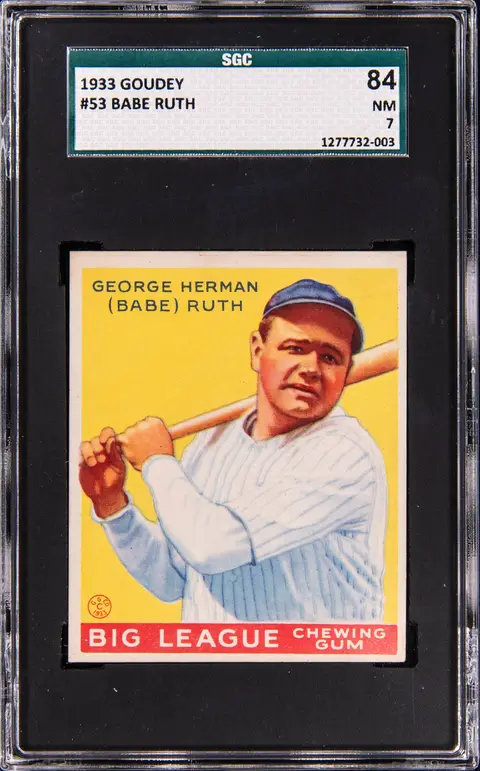
Sold Card
1933 Goudey #53 Babe Ruth - SGC NM 7
Sale Price
Platform
GoldinA 1933 Goudey Babe Ruth in SGC 7 Just Cleared Six Figures
On February 22, 2026, Goldin closed a notable vintage baseball sale: a 1933 Goudey #53 Babe Ruth graded SGC NM 7, which realized $124,440.
For Ruth collectors and vintage set builders, this is one of the hobby’s core icons. Below, we’ll walk through what this card is, why it matters, and how this sale fits into the broader market context.
What exactly is the 1933 Goudey #53 Babe Ruth?
• Player: Babe Ruth
• Team: New York Yankees
• Year: 1933
• Set: 1933 Goudey (R319)
• Card number: #53
• Parallel/variant: Standard base issue (no parallel era)
• Rookie card?: Not a rookie, but a pillar Ruth issue
• Era: Pre-war vintage
• Grading company: SGC (Sportscard Guaranty)
• Grade: NM 7 (Near Mint)
The 1933 Goudey release is one of the foundational gum card sets in baseball history. Goudey was an early gum company that helped turn baseball cards into a widely collected product, and 1933 is their flagship baseball set.
Babe Ruth appears four times in the set: #53, #144, #149, and #181. All four are heavily collected, but #53 is often treated as one of the key pieces of the run. The card features Ruth in a portrait pose with a bold background and is widely recognized even outside vintage-focused circles.
There are no modern-style parallels, serial numbers, or autographs here. Scarcity comes from age, survival rate, and condition, not from manufactured rarity.
Why collectors care about this card
Several factors keep 1933 Goudey Ruth cards near the center of the pre-war market:
Babe Ruth’s hobby stature
Ruth is the default answer when many collectors think "all-time great." His playing career, cultural relevance, and long-running demand make his key cards some of the most liquid and recognizable in vintage.Importance of the 1933 Goudey set
This set is a landmark release. For many collectors, 1933 Goudey sits alongside T206 and 1952 Topps as a foundational run. Building the set or chasing the four Ruths is a common long-term project for vintage-focused collectors.Condition scarcity
With pre-war cards, high-grade examples (typically defined as PSA/SGC 7 and above) thin out quickly in population reports—"pop reports" are the grading companies’ public counts of how many copies exist in each grade.Even without referencing exact pop numbers here, it’s safe to say that a straight, well-centered, original-surface SGC 7 from 1933 is not common. Eye appeal in this grade tier can drive significant variation in realized prices.
Set-building and type collecting
Some collectors try to complete the entire 1933 Goudey set; others are “type collectors” who want one representative card from each major pre-war set. In both cases, a Ruth from this run often sits at the top of the want list.
Putting the $124,440 sale in context
The Goldin sale at $124,440 for an SGC NM 7 lines up with how the market has tended to treat high-grade 1933 Goudey Ruths in recent years: as six-figure blue-chip vintage pieces when condition and eye appeal are strong.
When collectors talk about “comps,” they mean comparable recent sales of the same card (or very close versions) used to understand where a current result sits. For this card, useful comps include:
• Other 1933 Goudey #53 Ruths in SGC 7 or PSA 7
• Slightly higher/lower grades in SGC and PSA (SGC/PSA 6.5–8 range)
• The other 1933 Goudey Ruth numbers (#144, #149, #181) in similar grade tiers
Recent years have seen:
• SGC and PSA 6 copies regularly landing in the mid–five to low–six-figure range, depending on centering, color, and overall eye appeal.
• SGC and PSA 7 copies pushing well into six figures, with especially strong-centered or bright examples sometimes stretching above more average-looking ones.
• Higher grades (7.5, 8, and above) moving into notably higher price tiers when they appear, simply because there are fewer of them.
Within that general landscape, $124,440 is consistent with the behavior of a seasoned, high-end vintage market: strong but not unprecedented, and reflective of a buyer willing to pay a premium for a clean, graded, investment-grade (but still collector-first) example.
How auction venue and timing matter
This card sold at Goldin, a major auction house that regularly handles high-end sports collectibles. Venue can matter: established houses with a deep bidder base and focused marketing often achieve results closer to the top of the available range for important vintage pieces.
The sale date—February 22, 2026—places the result in a period where the broader vintage market has trended toward relative stability compared to some of the more speculative peaks seen in ultra-modern cards. Key pre-war icons like Ruth have tended to behave more like long-term, collector-driven assets than short-term hype plays.
While it’s impossible to tie any single result to specific news, Babe Ruth remains steadily relevant: his records, stories, and constant presence in baseball history content help keep demand steady among both long-time collectors and new entrants.
SGC 7 vs. other grading outcomes
For a card from 1933, SGC NM 7 represents:
• Strong corners, with only minor touches
• Relatively clean surfaces, without major staining or creasing
• Respectable centering for the era
Collectors sometimes cross-compare grades between companies. SGC has long-standing credibility in vintage, and many pre-war collectors are comfortable treating SGC and PSA vintage grades as broadly comparable, then adjusting for eye appeal.
In this range, the biggest driver within the same numerical grade is usually how the card actually looks in-hand: color, registration, centering, and how much the card “pops.” Two SGC 7s can sell at materially different levels if one is better centered and more vibrant.
What this sale might mean for collectors
For active hobbyists and small sellers:
• It reinforces that high-grade pre-war anchors—especially Ruth, Cobb, and key T206s—continue to draw serious attention and strong bidding.
• It underlines how much condition and grading matter. A step up from mid-grade vintage into high-grade can represent a large price jump.
• It highlights the role of established auction houses in placing important pieces in front of motivated bidder pools.
For newer or returning collectors:
• You don’t need a six-figure budget to participate in vintage. Lower-grade examples of iconic cards, or cards from the same set featuring other stars, often trade at more accessible levels.
• Studying comps (comparable sales) over time can help you understand how condition, grading company, and venue affect realized prices.
• Looking at population reports can give you a feel for how scarce a grade truly is, rather than judging only by a card’s age.
For long-term Ruth and Goudey collectors, a result like $124,440 for an SGC 7 is another data point: it confirms ongoing demand and shows where the market is currently clearing for strong-condition examples, without suggesting any sudden, speculative spike.
Key takeaways
• Card: 1933 Goudey #53 Babe Ruth, SGC NM 7
• Auction house: Goldin
• Sale date: February 22, 2026 (UTC)
• Price: $124,440
• Context: A six-figure result consistent with the long-standing status of this card as a cornerstone pre-war Ruth, where condition and eye appeal drive meaningful premiums.
For collectors tracking vintage benchmarks, this sale is a clear, recent reference point for where a strong SGC 7 example of the 1933 Goudey #53 Ruth currently sits in the market.