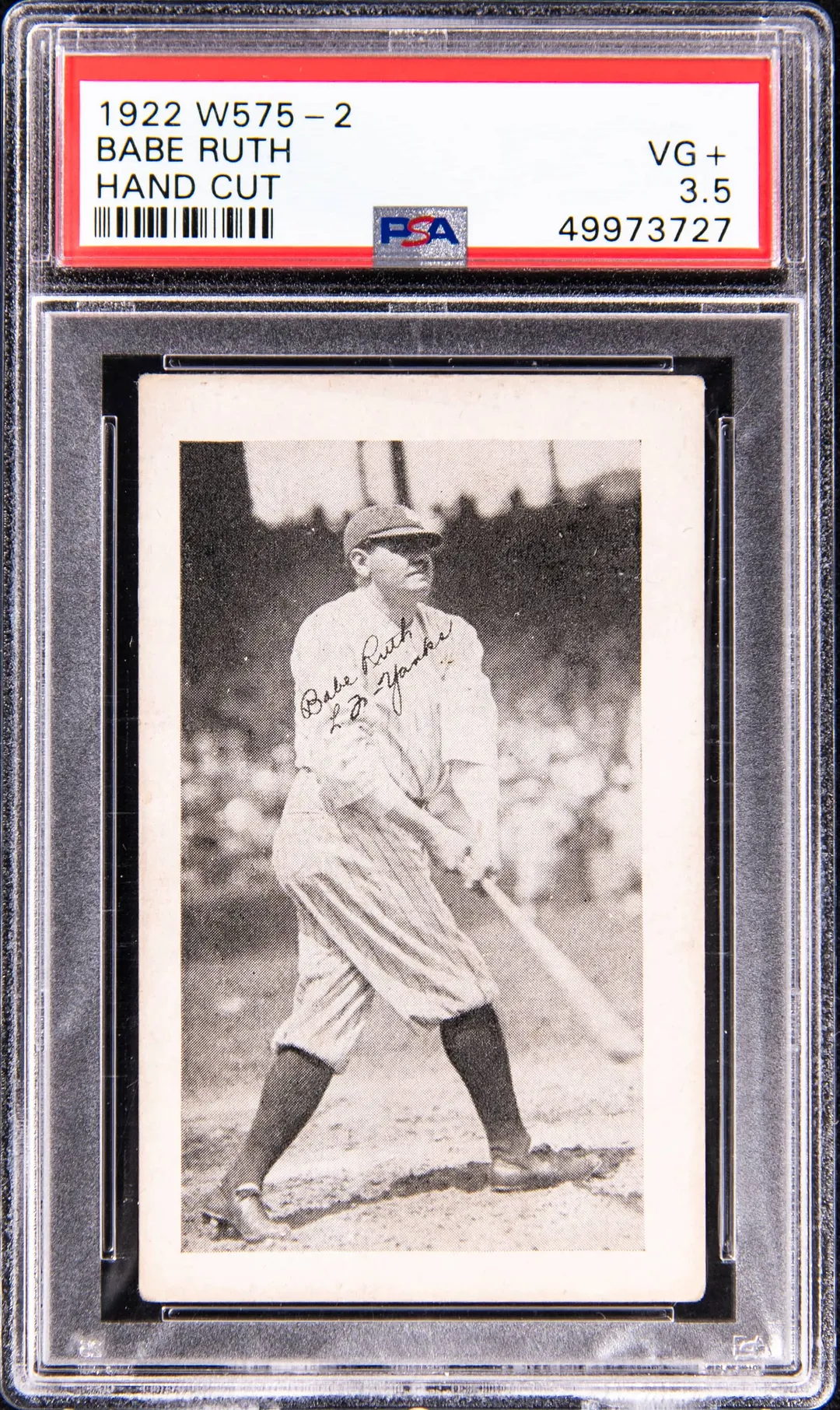
1922 W575-2 Babe Ruth Sells for $19,520 at Goldin
Breakdown of the 1922 W575-2 “Autograph on Shoulder” Babe Ruth PSA 3.5 sale for $19,520 at Goldin and what it means for vintage collectors.
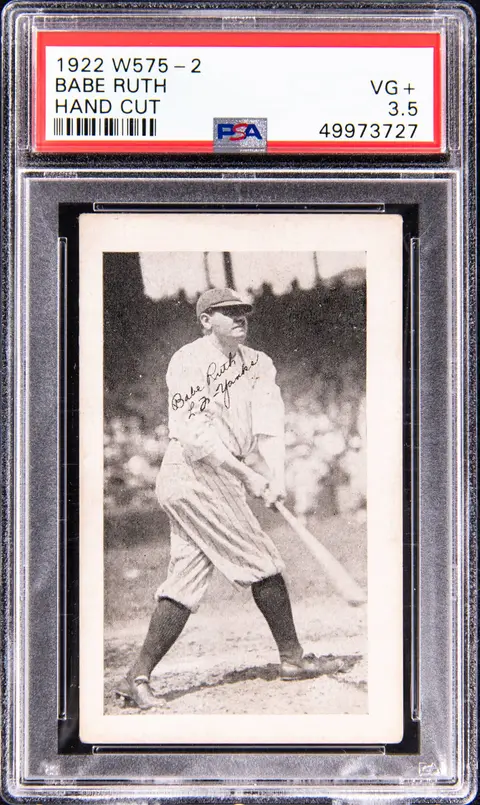
Sold Card
1922 W575-2 “Autograph on Shoulder” Babe Ruth; Hand-Cut - PSA VG+ 3.5 – POP 1; Only 6 PSA Examples Graded Higher
Sale Price
Platform
Goldin1922 W575-2 “Autograph on Shoulder” Babe Ruth; Hand-Cut - PSA VG+ 3.5 – POP 1; Only 6 PSA Examples Graded Higher
On February 22, 2026, Goldin auctioned a 1922 W575-2 “Autograph on Shoulder” Babe Ruth, hand-cut, graded PSA VG+ 3.5, for $19,520. For a card that’s over a century old, this is a quietly important data point for the vintage baseball market and for Babe Ruth collectors specifically.
Below, we’ll break down what this card is, why it matters, and how this sale fits into the broader price picture.
Card overview: what exactly sold?
- Player: Babe Ruth
- Team: New York Yankees
- Year: 1922
- Set: W575-2 strip card issue
- Nickname/pose: “Autograph on Shoulder” (Ruth holding a ball on his shoulder)
- Format: Hand-cut strip card (cut from a multi-card strip by hand, not factory-cut)
- Grading company: PSA (Professional Sports Authenticator)
- Grade: VG+ 3.5 (Very Good Plus)
- Population: POP 1 in this grade; only 6 PSA examples graded higher
W575-2 is a 1920s strip card issue, which means these cards were distributed in uncut strips and had to be separated by hand. Because of that, centering, borders, and edges are usually rough compared to pack-issued cards. High-grade examples are rare, and even mid-grade copies can be surprisingly tough.
The “Autograph on Shoulder” Babe Ruth pose is one of the more recognizable early-1920s Ruth images. It captures him in a casual, portrait-like pose with a ball resting on his shoulder, evoking the feel of early barnstorming and exhibition-era baseball imagery.
Why collectors care about this card
1. Early New York Yankees-era Babe Ruth
While not a true rookie card (Ruth’s earliest cards predate the 1920s), this W575-2 comes from the early part of his Yankees tenure — the period when Ruth was transforming both the franchise and the sport. Cards from these years help bridge the gap between his Red Sox pitching days and his full-blown Yankees superstardom.
For many collectors, early-1920s Ruth issues are key targets after the famous 1916 M101-4/M101-5 and other pre-Yankees cards. They sit at the intersection of historical significance and relative accessibility compared to his absolute top-tier, six-figure-and-beyond pieces.
2. Strip card scarcity and condition challenges
Strip cards are a distinct corner of the vintage hobby. Because these were hand-cut, they often show:
- Uneven or tight borders
- Off-center images
- Creasing or wrinkles from handling
That’s why a PSA VG+ 3.5 can be more meaningful than the number suggests if the eye appeal is strong (decent centering, relatively clean image, no major paper loss). The published population data (known as the “pop report,” a count of how many copies each grading company has certified at each grade) gives us context: this copy is a POP 1 at 3.5, with only six PSA examples graded higher.
In practical terms, that means:
- Collectors who focus on registered sets or high-end Ruth runs have limited options.
- Any visually strong mid-grade Ruth strip card is likely to attract interest when it surfaces.
3. A niche but respected set
W575-type issues don’t have the universal name recognition of, say, T206 or Goudey. However, among vintage-focused collectors, they’re respected as:
- Legitimate period issues
- A more affordable (relatively speaking) way into early Ruth compared to his true rookie or major tobacco/early candy cards
This particular “Autograph on Shoulder” pose also overlaps with other cataloged issues from the era, which helps it feel familiar even to collectors who don’t specialize in strip cards.
Market context: reading the $19,520 sale
The card sold at Goldin on February 22, 2026 for $19,520.
When collectors talk about “comps” (comparable sales), they’re referring to recent sale prices of the same or very similar cards. For a niche vintage card like this, comps are often:
- Sparse (not many public auctions)
- Spread across different grades
- A mix of raw (ungraded) and graded copies
For the 1922 W575-2 Babe Ruth “Autograph on Shoulder,” especially in PSA 3–4 range, public, recent comps are limited. What we can say with good confidence:
- Population scarcity: With only 6 copies higher at PSA and this one alone at 3.5, anything in this grade band is near the upper end of what most collectors will ever see.
- Price tier: $19,520 puts this card in the mid-to-upper tier of Ruth’s more “secondary” early issues — well below his most iconic pre-war cards, but well above many later-career or post-playing-era issues.
- Demand pattern: Sales of similar-vintage Ruth strip or early 1920s issues in comparable grades tend to cluster from the high four figures into the mid-five figures, depending on image, set prestige, and eye appeal. This result fits within that band for a scarce, recognized pose.
With vintage, each sale in a thinly traded card effectively becomes one of the reference points for future pricing conversations. This Goldin result doesn’t rewrite the Ruth market, but it does:
- Reinforce the value of early-1920s Ruth issues beyond the biggest headliners
- Provide a fresh benchmark for mid-grade W575-type Ruths
How this compares to other Babe Ruth cards
To place this in context, it helps to think of three broad tiers of Ruth:
Top-tier, blue-chip Ruth cards
These include his earliest issues and most famous cataloged cards (for example, 1916 photo-card issues and iconic pre-war majors). They can reach well into six or seven figures in high grade.Early-1920s and period-regionals
Cards like this 1922 W575-2 sit here — legitimate playing-era, relatively tough, but not at the very top of the Ruth hierarchy. Strong examples in decent grades often fall into the five-figure range.Later playing-career and post-playing vintage
These can be more accessible, with a wider range of entry points across conditions and sets.
A $19,520 sale price essentially confirms that this W575-2 Ruth, especially with its POP 1 / six-higher status, sits comfortably in that second tier. It’s a serious piece for a serious Ruth or pre-war collector, without entering the territory reserved for his absolute legendary issues.
What this sale means for collectors and small sellers
For established vintage collectors
- This sale confirms continued, steady demand for early-1920s Ruth cards, even in less-mainstream sets.
- Population data remains critical. A POP 1 with only six higher is a strong narrative driver in a segment where many collectors are chasing relative condition scarcity.
For newer or returning collectors
- A result like this highlights how condition + era + player interact. A VG+ 3.5 might sound low if you’re used to modern, pack-fresh cards, but for a 1922 hand-cut Ruth strip, it’s a meaningful grade.
- It also illustrates why knowing set types (strip vs tobacco vs gum issues) matters: distribution method and expected condition have a big influence on market value.
For small sellers
- If you encounter hand-cut or strip cards, especially of stars like Ruth, careful identification and grading can unlock substantial value.
- Even mid-grade outcomes can be strong when the player is iconic and the population is thin.
Final thoughts
The February 22, 2026 Goldin sale of a 1922 W575-2 “Autograph on Shoulder” Babe Ruth; Hand-Cut - PSA VG+ 3.5 (POP 1, six higher) at $19,520 is a solid, data-backed marker for this niche but respected early-1920s Ruth issue.
It doesn’t signal a sudden shift in the overall Ruth market, but it does:
- Underscore ongoing interest in hand-cut and strip-era Ruth cards
- Highlight the power of population scarcity in vintage
- Provide a fresh, public comp that future buyers and sellers can refer to when evaluating similar pieces
For collectors building a serious Ruth run or a focused pre-war baseball collection, this card checks important boxes: era, image, scarcity, and a confirmed five-figure market result through a major auction house.