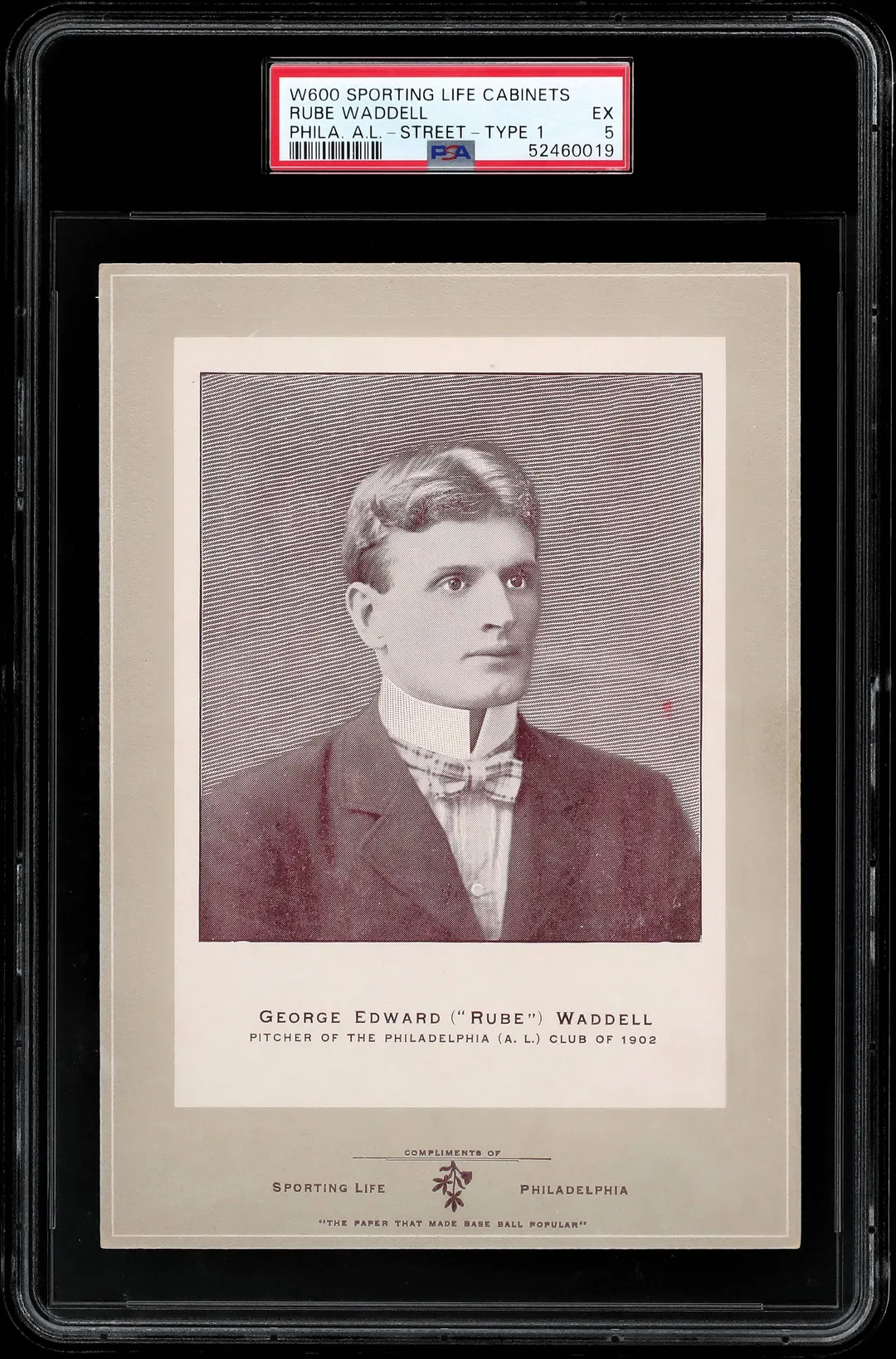
1902 W600 Rube Waddell Rookie PSA 5 Sells for $31K
Goldin sells a 1902 W600 Sporting Life Rube Waddell rookie cabinet, PSA EX 5, for $31,720. Pop 1 with only one higher copy. Figuring out what it means.
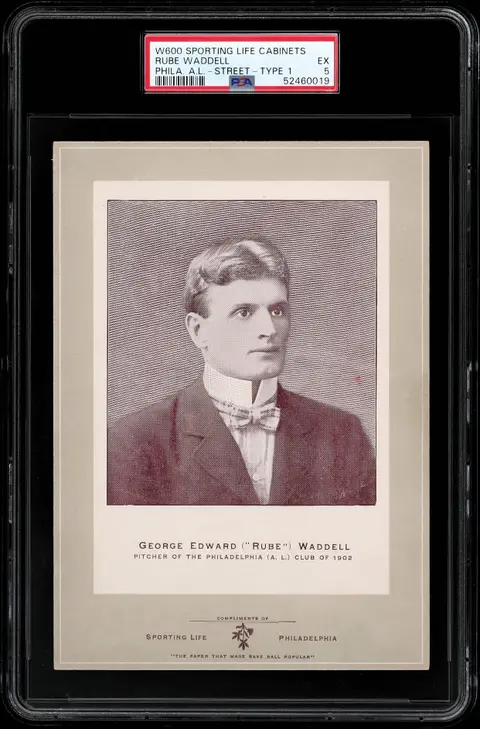
Sold Card
Extremely Rare 1902 W600 Sporting Life Cabinet Type 1 Mount Rube Waddell Street Clothes Rookie Card – PSA EX 5 - Waddell’s True Inaugural Baseball Card; POP 1; Only One Higher PSA Copy
Sale Price
Platform
GoldinExtremely Rare 1902 W600 Sporting Life Rube Waddell Cabinet Sells for $31,720
On February 22, 2026, Goldin quietly closed the books on one of the more important pre-war baseball sales of the year: an Extremely Rare 1902 W600 Sporting Life Cabinet Type 1 Mount Rube Waddell “street clothes” rookie card, graded PSA EX 5, realized $31,720.
For a certain segment of vintage and pre-war collectors, this isn’t just another nice old card. It’s Waddell’s true inaugural appearance on cardboard, a pop 1 (population 1) example at this grade level with only a single higher PSA copy known. In a category where most true rookies are locked away in long-term collections, seeing one change hands at public auction offers a rare pricing anchor for the market.
What exactly is this card?
Let’s start with the basics:
- Player: Rube Waddell (Hall of Fame pitcher)
- Team: Philadelphia Athletics (street clothes studio portrait)
- Year: 1902
- Set: W600 Sporting Life Cabinet
- Type: Type 1 mount, “street clothes” pose
- Card type: True rookie card / inaugural card issue
- Grading company: PSA (Professional Sports Authenticator)
- Grade: EX 5 (Excellent)
- Population: PSA pop 1 in EX 5; only one copy graded higher
W600 Sporting Life cabinets were large-format premium photos (about 5" x 7½") produced by the Sporting Life publication in the early 1900s. They were not pack-pulled in the modern sense, but ordered or redeemed—closer to a premium or subscriber issue than a traditional gum card.
The Waddell here is the street clothes portrait: a studio image of Waddell in formal attire instead of a uniform, mounted on a Type 1 Sporting Life mount. Among Waddell collectors and pre-war specialists, this is widely regarded as his true rookie card. His better-known tobacco issues (like T206) come several years later.
Why W600 Sporting Life matters
The W600 Sporting Life series occupies an important spot in the pre-war hobby:
- It predates most of the mass-distributed tobacco issues.
- The large cabinet format showcases period photography at a level of detail that smaller cards can’t match.
- Print runs appear relatively low, and surviving examples are often heavily worn or damaged.
- Many early Hall of Famers have their earliest, or among their earliest, appearances in W600.
For collectors who focus on “firsts” — first card, first mainstream appearance, first recognizable portrait — W600 is a core target, even if it sits slightly outside the traditional cigarette card lane.
Condition and grading: why PSA EX 5 matters
Pre-war cabinets are notoriously fragile:
- Large size means more surface area for creases, corner wear, and edge chipping.
- Mounts can warp, stain, or separate over more than a century.
- Many pieces were displayed, pinned, or stored poorly.
Against that backdrop, PSA EX 5 is a legitimately strong grade. In PSA’s scale, an EX 5 card shows light wear but remains very presentable, with solid eye appeal and relatively clean surfaces.
The auction description notes:
- Population 1 at PSA 5
- Only one higher PSA copy
In hobby terms, that combination is powerful: you’re looking at a card where the census (or pop report—the grading company’s count of how many of each card exist in each grade) confirms that very few high-grade examples exist at all.
For a low-output, early-1900s issue like W600, population data tends to be more meaningful than for modern cards. There simply aren’t many raw copies left that could dramatically change the numbers.
Market context and price positioning
This copy sold at Goldin on February 22, 2026, for $31,720. To understand what that means, it helps to compare it to:
- Other W600 Hall of Famers
- Other Rube Waddell key cards
- The broader pre-war Hall of Fame rookie market
W600 Hall of Fame cabinets
Public sales data for W600 Hall of Famers is thin because the cards turn over infrequently. Even when they do, the sales often involve different poses, mount types, or restored examples.
When recent or past sales are available, they show a pattern:
- Star Hall of Famers in attractive, problem-free condition often bring solid five-figure prices.
- Top-tier legends (Cobb, Wagner, Mathewson) or record-setting grades can go significantly higher.
- Lower-grade or condition-compromised examples trade down the price ladder but still command attention due to sheer scarcity.
Against that landscape, $31,720 for an EX 5 Hall of Famer’s true rookie cabinet fits comfortably into the higher-quality, collector-focused end of the market, especially with a pop 1 tag.
Rube Waddell’s broader card market
Waddell’s name doesn’t carry the same mainstream weight as Cobb or Ruth, but among serious pre-war and pitching-history collectors, he’s central:
- Eccentric, mercurial personality and legendary strikeout ability
- Early star in the deadball era
- Hall of Fame induction that cements long-term relevance
Most collectors encounter Waddell first through later tobacco issues (like T206). Those cards are more common, more frequently sold, and provide a “baseline” for his market.
Compared with those, this W600 cabinet represents a much earlier, scarcer, and more significant piece. That’s reflected in the price gap: this sale sits well beyond what even strong Waddell tobacco cards bring, which is exactly what you’d expect from his true inaugural issue.
How does $31,720 fit in?
Based on available public comps across pre-war auctions:
- The price is strong but not out-of-band for a pop 1, early-1900s Hall of Fame rookie in a display-grade condition.
- It aligns with a market that continues to reward genuine scarcity, clear historical significance, and confirmed top-of-pop census cards.
Because public sales of this exact Waddell pose, mount type, and grade are so limited, this auction functions as a new reference point rather than just another comp. Future buyers and sellers will likely look back to this Goldin hammer price to frame expectations.
Why collectors care about this specific Waddell
Several factors converge to make this card especially important:
True inaugural card
While some early player issues are debated, this W600 Waddell is widely regarded as his first real card. For collectors building Hall of Fame rookie or “earliest card” runs, that label matters.Scarcity by design and survival
W600 wasn’t mass-distributed. Surviving examples are few, and surviving examples in EX or better condition are rarer still. The pop 1 / one higher PSA census confirms what most collectors already anecdotally know: you don’t see this card often.Pre-war era appeal
Pre-war (pre–World War II) material sits in its own lane. Output was lower, and surviving pieces have passed through generations. Many advanced collectors feel more comfortable with these because they’ve been important to the hobby for decades, not just a few hype cycles.Visual and historical presence
The cabinet format and street clothes portrait give Waddell a very different look than his tobacco-era cards. It feels like a studio portrait more than a card, which appeals to collectors who enjoy the intersection of baseball history and early photography.
How this sale fits into the broader market
A few takeaways for hobbyists trying to understand what this Goldin result means:
True scarcity continues to matter. Cards with very low populations, especially in the pre-war space, are not moving in sync with more plentiful vintage or modern issues. Their paths are more idiosyncratic and tied to individual collectors’ long-term decisions.
Population data is a key reference, not a prediction. The pop 1 and “only one higher” notes help explain why the card drew attention, but they don’t guarantee any future trajectory. They simply quantify how hard the card is to replace.
Early Hall of Fame rookies remain a focus. The market’s interest in earliest-issue Hall of Famers—spanning W600, E-cards, and early regional issues—has been relatively steady, with occasional step-ups when museum-quality or top-pop examples come to auction.
Sales like this set benchmarks. With few direct comps available, this $31,720 sale becomes a new data point that collectors, buyers, and sellers can reference when valuing adjacent cards: lower grades, different Waddell poses, or comparable W600 Hall of Famers.
What this means if you collect pre-war or are thinking about it
For newer or returning collectors:
- You don’t have to chase cards at this price level, but watching them can be educational. They highlight where the deepest conviction is in the vintage market.
- Understanding sets like W600 helps frame why some cards behave differently from more familiar tobacco issues or modern parallels.
For active hobbyists and small sellers:
- Tracking sales like this helps you understand where “true rookie” and “first card” premiums are holding firm.
- If you handle pre-war material, it’s a reminder that strong eye appeal and clear provenance (including grading and pop context) can significantly shape outcomes.
For the advanced pre-war collector, this Goldin sale is less a surprise and more a confirmation: when a pop 1, true inaugural, Hall of Fame W600 cabinet in PSA EX 5 surfaces, the market will show up.
On February 22, 2026, it did—and it set a fresh, public marker for what Rube Waddell’s first true baseball card can bring.