Why a Player Injury Can Be the Ideal Time to Buy Sports Cards
A player injury can lower sports card prices. Discover why collectors use this time to buy undervalued cards and profit when the athlete returns to form.
The sports card market never stays the same for too long. Investors will always try to find the next possible opportunity. Injuries to players could give investors the chance to buy cards at a lower market value. Investors need an understanding of the cycle of injuries in the market so they can buy cards at the right time.
History suggests the value of player cards will always increase once they recover. This means buying the card while the player is injured is a smart, but long-term, investment. The market will also need to be assessed for card profitability at the time the player is injured. Tools powered by AI can help achieve this long-term goal, especially in determining the true value of a card.
The Grading Companies can also lower the amount of misinformation given to the collector, especially at the time of a card market collapse, when undervalued cards become more abundant. Due to the injury risk, buying a card while the player is injured will always have risk. However, longer-term investments will increase value and increase returns in cards that are bought smartly.
Understanding the Sports Card Market Cycle
The sports card market shows a strong correlation with other cyclical processes, and the factors mentioned above make understanding the cycles an important aspect of smart investing.
Many investors report the card market behaving cyclically on a yearly basis. With the start of a sports season, card values tend to rise, as they do with the start of a new sports championship. This creates ideal conditions for opportunistic buying, as card values tend to drop with the conclusion of a season and championship. In addition, injuries tend to have a pronounced effect on the cycle of the market. The value of cards associated with the sidelined player will drop, but this effect is temporary.
Cyclical market behavior can be largely driven by:
- Injuries and the performance of a player
- Changes in the performance of a team (wins/losses)
- The start of a new championship
With a great understanding of the cycles, investors are able to take advantage of dips. Tools based on artificial intelligence are able to monitor the cycles and can indicate the optimal points for card purchases and sales. As a result, these tools are some of the most important elements for the strategic management of investors' sports card portfolios.
How Player Injuries Affect Card Values
Sports card investors are seeing the dropping values of cards as an opportunity to acquire them at a lower value, with the intent of the cards increasing in value again after the player recovers. The duration and severity of an injury are both critical to consider when analyzing a player's card.
- Short-term injuries: Quicker recovery and faster price rebound
- Long-term injuries: Prolonged value drop
- Severity: Directly impacts recovery timeline
Media coverage also plays a significant role. Positive recovery news can boost confidence and help card values regain ground faster. Players with a strong comeback track record may be safer bets, making it important to study their past recovery patterns.
Historical Examples: Card Value Rebounds After Injury
Several historical cases illustrate how player card values can rebound post-injury:
- Derek Jeter: Injuries had a temporary effect on his card value. After recovery and outstanding performances, his cards saw substantial appreciation.
- Kevin Durant: His Achilles tendon injury worried investors, yet his cards soared post-recovery, reflecting trust in his skills and career trajectory.
- Peyton Manning: His neck surgery initially led to price drops. However, after resuming play and achieving success, his card values rebounded.
These cases emphasize the importance of patience and analysis. Investors who bought during the injury phases benefited in the long term. Learning from past patterns can guide future actions in navigating current and future market situations.
The Psychology of the Market: Fear, Uncertainty, and Opportunity
The sports card market is not just about numbers, psychology plays a huge role. Fear and uncertainty often drive market reactions, creating unique opportunities for savvy investors.
When a player gets injured, uncertainty looms large. Collectors often panic, fearing permanent value loss, leading to hasty sales at reduced prices. Savvy investors understand this cycle. They see injuries as temporary, assessing long-term player potential rather than reacting to immediate news. By staying informed and analyzing data, investors capitalize on market dips driven by fear.
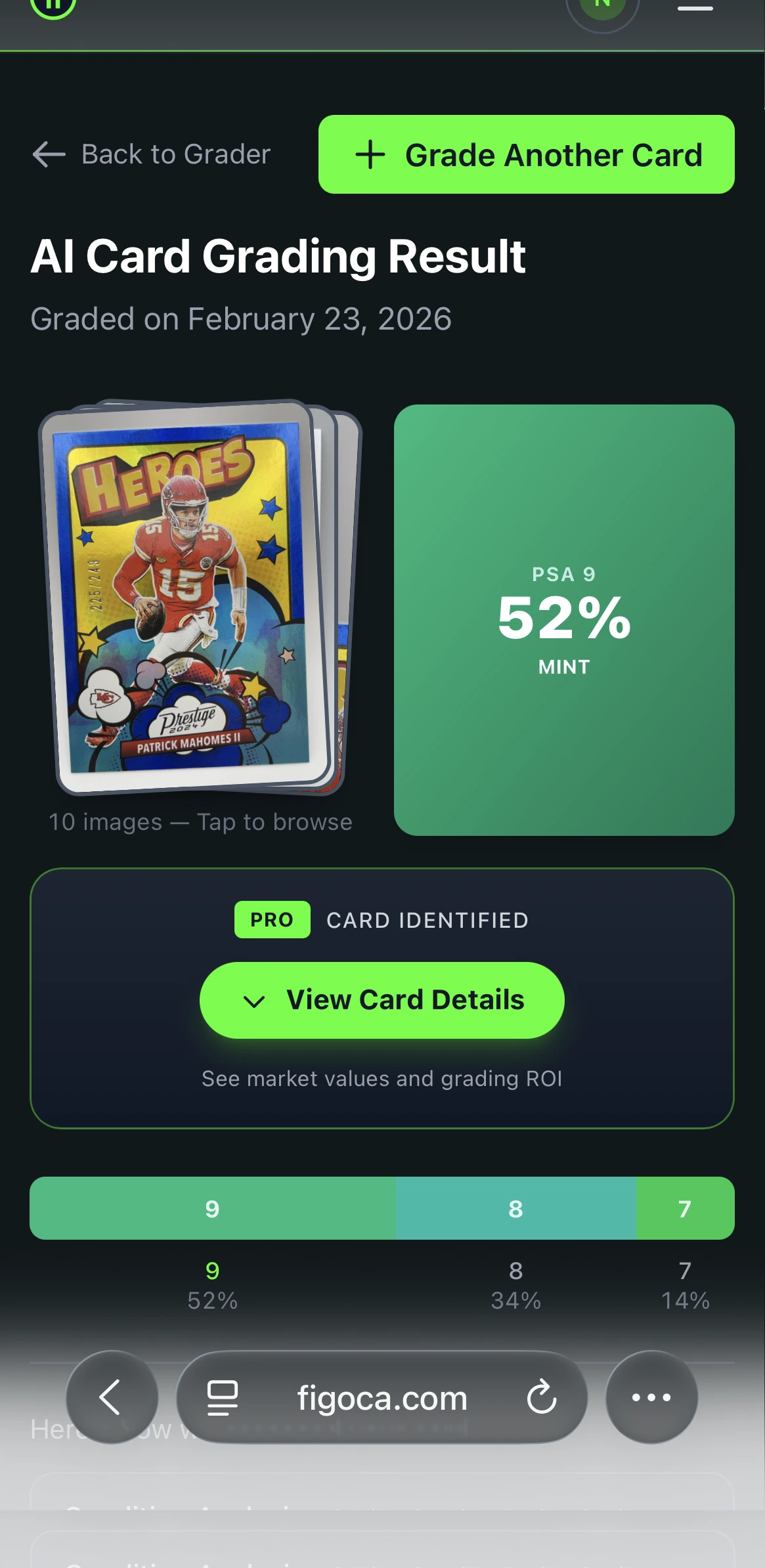
AI Card Grader
Know your card's grade before you submit
Snap a photo with your phone and get an instant AI-powered grade estimate. Check centering, corners, edges, and surface — just like the pros.
- Instant grade estimate
- Sub-grades for all 4 pillars
- Built-in ROI calculator
- Free to use
Why Buying During Injury Can Be a Smart Investment
Buying sports cards during a player's injury might seem risky at first, but it can be an intelligent investment strategy with the right approach. Several reasons make this strategy worthwhile:
- Injuries are often temporary, with players making strong comebacks
- Long-term performance can outweigh short-term setbacks
- Market overreaction often corrects with positive news
Timing is critical. Purchases made when the market undervalues a player's future potential can result in significant gains later. Investing during injuries requires careful analysis of the player's recovery outlook, considering the severity and likely recovery timeline. Proper research and clear analysis differentiate successful investors from the crowd.
Assessing Risk: What to Consider Before Buying Injured Player Cards
Investing in injured player cards carries inherent risks. Key factors to evaluate include:
- Injury severity and impact - Some injuries have long-lasting effects on performance, while others allow a quick and full recovery
- Player's historical recovery data - past injuries and recovery timelines help estimate future performance
- Team and support system - Access to quality medical care and team support can significantly affect recovery outcomes
Monitor news outlets for updates on the player's health and projected return. Market sentiment plays a role, with knee-jerk reactions impacting short-term values. Balancing risk and potential reward enables better decision-making.
Leveraging AI Card Grading Tools for Smarter Purchases
AI card grading tools are revolutionizing the sports card market by offering quick and precise card evaluations. Unlike traditional grading, which is slow and subjective, AI provides faster, objective assessments based on advanced algorithms.
Key benefits of AI card grading tools:
- Quick, reliable card evaluations
- Enhanced precision and consistency
- Reduced error and bias
AI card graders analyze minute details, assessing card corners, surfaces, and centering with high accuracy. With these tools, collectors can identify undervalued cards, insight that is especially valuable during player injury market fluctuations.
Features to look for in a grading app:
- Intuitive design
- Comprehensive analysis
- Secure data handling
These tools empower users with detailed card condition reports, guiding smarter investment decisions and providing a competitive edge in the ever-evolving sports card market.
Top AI Card Grader Apps and Tools for Collectors
AI card grader apps have transformed sports card collecting, providing precise and reliable evaluations with minimal effort. When choosing an app, consider:
- User-friendly interface
- Comprehensive grading criteria
- Accurate, consistent results
Some apps offer real-time grading, allowing immediate card assessment. Others use high-resolution imagery to ensure detailed card inspections, spotting imperfections often overlooked by the human eye. Certain apps also allow database integrations, making it simple to track market trends and card values over time.
Step-by-Step Guide: Using AI Card Grading Apps to Evaluate Cards
- Download a reputable AI card grading app and check reviews to ensure reliability and accuracy.
- Set up your account — most apps require a quick registration to unlock features.
- Take a clear photo of your card with good lighting to capture details crucial for grading accuracy.
- Upload the image — some apps require multiple angles for comprehensive analysis.
- Allow the app to analyze the card (usually takes only seconds).
- Review the grading report — the app provides insights on condition, centering, edges, and more.
- Note key details: card corners and edges, centering and surface issues, and grading score vs. current market data.
- Save the report and use it to guide future buying and selling decisions.
Tips for Timing Your Purchase and Maximizing Returns
Timing is crucial in sports card investments. Key strategies include:
- Track player injury reports to anticipate changes in card values
- Follow team performance closely to understand the broader context of a player's return
- Watch market data for pattern shifts to identify optimal buying windows
Understanding the sports season timeline is also vital. Off-season injuries may offer more time for prices to settle, providing unique buying windows. By observing these factors, investors can time their purchases for maximum profit, buying when others sell and holding until a recovery.
Conclusion
Player injuries often trigger fear and uncertainty in the sports card market. However, for savvy investors, these moments can turn into golden opportunities. Injuries temporarily depress card values, creating buying opportunities for those willing to take a calculated risk. Post-injury recoveries can restore or even boost card values, rewarding patient investors.
To make smarter decisions during these volatile periods, using a comps tool is essential. Platforms like Card Ladder, Market Movers, and eBay sold listings help investors track real-time and historical sales data. By analyzing recent comparable sales (“comps”), you can identify whether a card is undervalued due to injury hype or fairly priced, allowing you to buy with confidence and maximize long-term returns.
Leveraging AI Trading Card Tools enhances decision-making, offering precise card evaluations and minimizing the risk of buying undervalued cards. Staying informed and adaptable allows investors to exploit market inefficiencies efficiently.
The key is to remain patient, informed, and strategic, turning player injuries into smart investment opportunities.

Card enthusiast, figoca founder, and independent software developer
Nico is a card enthusiast who built figoca after running into the same problems many collectors face: uncertain pre-grading decisions, too much tab switching for comps, and no fast way to price cards on the go. He is also a big Kansas City Chiefs fan (❤️💛), follows the Kansas City Royals (💙), and enjoys Formula 1 and Golf.
- Sports Card enthusiast
- Founder of figoca
- Independent software developer with a TypeScript and AWS background