What are Downtown sports cards? Learn what they are, why collectors chase them, how to spot real Downtown inserts, and how to buy them safely online. Read now.
What Are Downtown Sports Cards?
If you have spent any time on modern sports card listings, you have probably seen the word "Downtown" in all caps. Collectors chase these cards because they are easy to recognize, tough to pull, and often feature the biggest names in the sport.
This guide explains what Downtown sports cards are, how they relate to pack odds, and how to shop for them without overpaying, as of December 2025.
TL;DR
- Downtown is a named chase insert with illustrated, city-themed artwork (most famously in Donruss Optic).
- Collectors treat Downtown like a case-hit-style pull, but the exact pull rate depends on the year and product format.
- Most Downtown cards are not serial numbered, so you verify them by product name, year, and card number, not a stamp.
- Condition matters a lot because glossy surfaces show scratches, print lines, and edge wear.
- Best buying move is to match the exact set and card number, then compare multiple sold comps.
- Use figoca while browsing eBay to see recent sales comps faster: figoca browser extension.
figoca extension
Get card comps on eBay in seconds
See comps directly on eBay listings and search results. Save time, avoid overpaying, and learn faster while you browse.
- Comps inline on item and search pages
- Automatic card detection and parsing
- Fast, privacy-first, and free
- Built for newcomers and hobbyists
What are Downtown sports cards?
Downtown sports cards are illustrated chase insert cards, most commonly associated with Panini Donruss and Donruss Optic, that feature a player in front of a city-themed background. They are usually super short print and collected like a case hit, but the exact rarity depends on the specific product, year, and format.
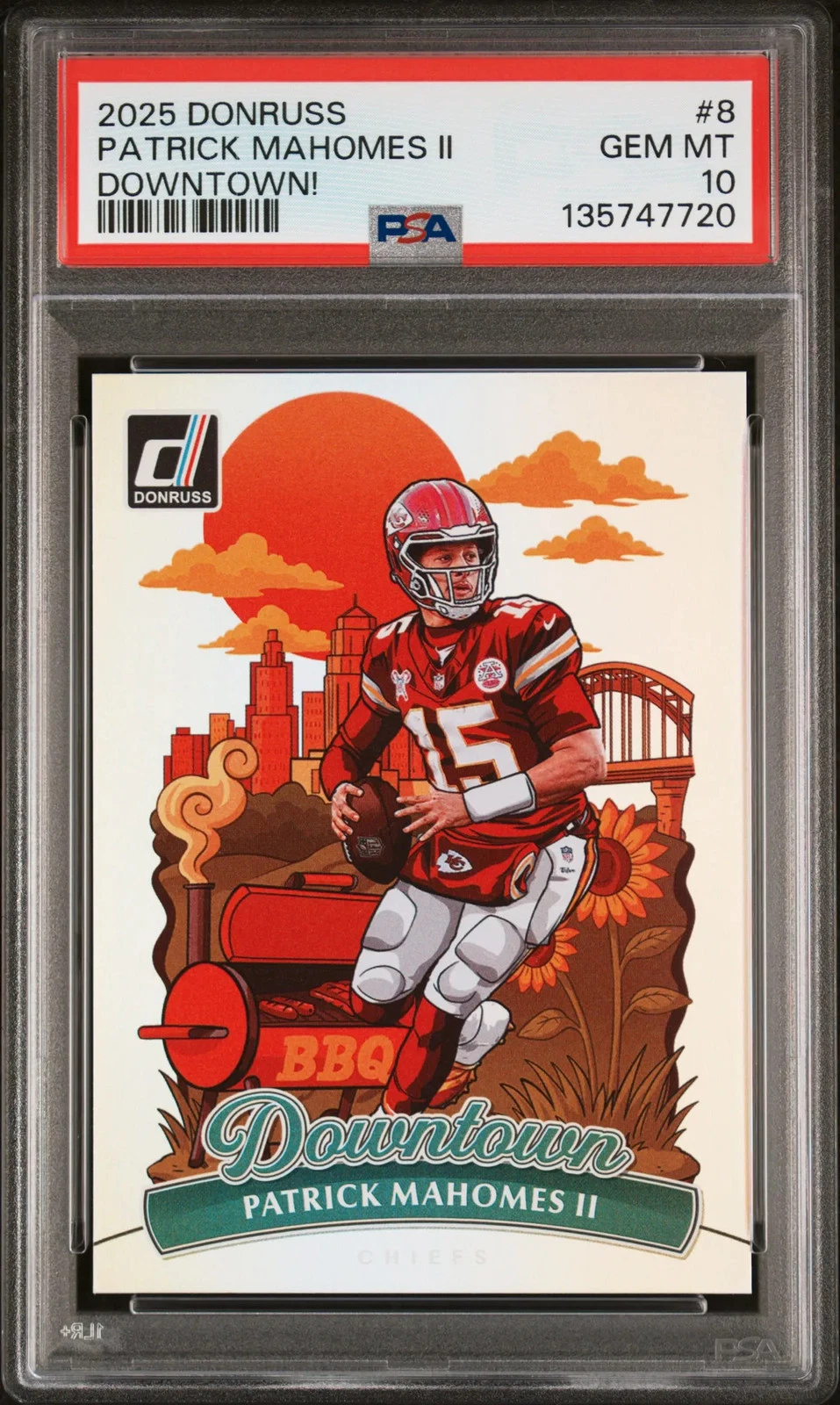
If you are new to the hobby terms around pack odds, read this first: What is a case hit in sports cards?
Why Downtown cards are so popular
Downtown is not just "another insert." It has a few traits that make it stick.
- Instant recognition: the Downtown look is obvious in photos, which helps collectors and sellers.
- Strong star demand: big quarterbacks and top rookies often drive the most search volume and the highest prices.
- High chase feel: Downtown is often discussed like a big pull in breaks, which keeps attention high.
- Display appeal: the illustrated city theme looks good in a showcase and on social media.
Downtown vs case hit vs SSP (quick comparison)
Collectors often mix these terms. Here is the clean way to think about it.
| Term | What it means | How it relates to Downtown |
|---|---|---|
| Downtown | A specific named insert set | Downtown is the insert name, not a rarity level by itself |
| Case hit | Expected about once per sealed case (long-run) | Many people call Downtown a case hit, but it can vary by year and format |
| SSP | Very limited print compared to base | Downtown is often SSP, but you verify by product details and market behavior |
Want the fast fundamentals for sealed product and pack pulls? Start here: How does a box break work?
Where Downtown cards come from (and what "Donruss Optic" means)
Most collectors associate Downtown with Panini-era Donruss products, especially:
- Donruss: flagship-style paper stock product line.
- Donruss Optic: a chrome-style line that often carries stronger demand and condition sensitivity.
That is why you will see two listings that both say "Downtown" but do not compare at all. The product line matters.
If you want a real example of how year and product line change the checklist, see: Patrick Mahomes Downtown cards: year-by-year guide
Common Downtown versions you will see
Downtown appears in multiple "subsets" across years. Names can vary, but these are the most common patterns.
- Standard Downtown: the main illustrated insert.
- Super Bowl Downtown: a Downtown-style subset tied to Super Bowl moments or winners in some years.
- Downtown Duos: two players on one Downtown-style card.
- Horizontal Downtown: a horizontal layout variant in some releases.
Practical takeaway: always treat the subset name as part of the identity of the card.
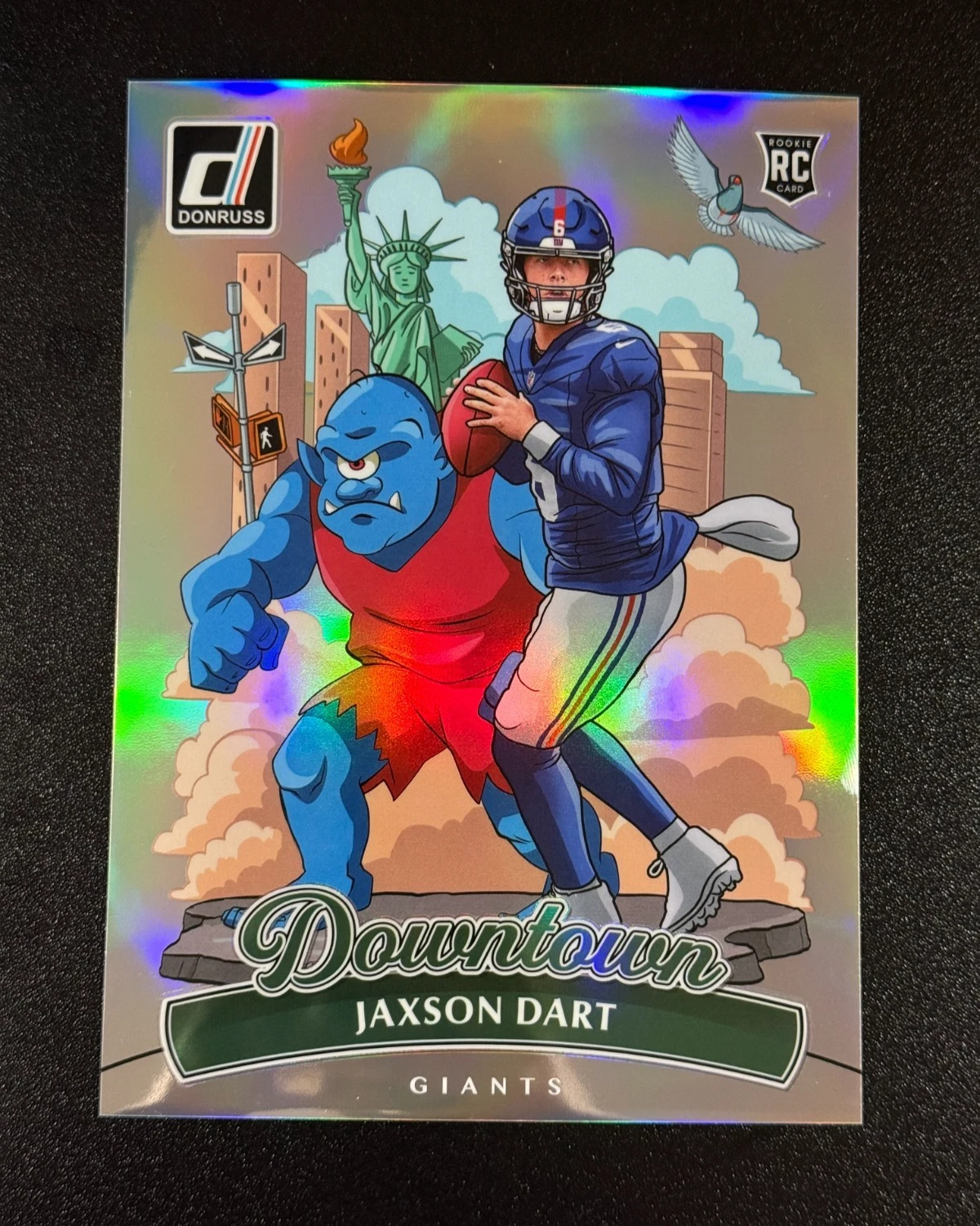
How to spot a real Downtown card (quick checklist)
Use this list to avoid most buying mistakes.
- Match the full product name: Donruss vs Donruss Optic is not interchangeable.
- Match the year: the same player can have multiple Downtown cards across different releases.
- Find the card number on the listing photo or the grading label if it is graded.
- Confirm the subset name: standard Downtown vs Super Bowl vs Duos vs horizontal.
- Compare sold comps for the exact match: year, product line, subset, card number, grade.
Simple "if this, then that" rules
- If the listing does not show the card number, ask for it before you bid.
- If the photos do not show the surface clearly, lower your max price because glossy scratches are common.
- If the seller mixes multiple years in one title, assume it is not verified until you confirm the exact card.
- If the price is far above recent comps, treat it as hype and wait for a better listing.
For a full end-to-end buying framework, use: How to buy sports cards on eBay (ultimate guide)
What actually drives Downtown prices
Downtown pricing is mostly demand plus condition, not just "it is rare."
| Price driver | What to look for | Why it matters |
|---|---|---|
| Player demand | MVP-level stars, top rookies, iconic teams | More buyers means stronger comps and faster sales |
| Product line | Optic vs Donruss and specific year | Some releases are more collected and more liquid |
| Condition | Surface scratches, print lines, corner wear, centering | High grades can command large premiums on clean copies |
| Grade and grading company | PSA, BGS, CGC (market dependent) | The label affects buyer confidence and resale |
| Timing | Season narratives, playoffs, hobby cycles | Attention shifts fast, especially for modern cards |
If you are deciding whether to grade a Downtown card, start with a value-first method: Should you grade that card? The EV method
Grading Downtown cards: what collectors miss
Downtown cards look simple, but the surfaces can be unforgiving.
- Gloss shows everything: fine scratches and print lines matter.
- Edges and corners chip easily in handling and shipping.
- Centering still matters even when the design is busy.
If you are buying graded, do a fast authenticity check before you assume it is safe: Fake PSA slabs: the 60-second check
If you want the manufacturing context behind surface issues, this is a helpful primer: How trading cards are made
How to buy Downtown cards safely (step-by-step)
Here is a simple shopping workflow that reduces expensive mistakes.
- Step 1: Identify the exact card you want (year, product line, subset, card number).
- Step 2: Pull at least 5 recent sold comps for the exact match and compare raw vs graded.
- Step 3: Set a max price before you shop so you do not chase a bidding war.
- Step 4: Evaluate condition from photos and price in surface risk if photos are weak.
- Step 5: Prefer listings with clear returns and strong seller history when the price is meaningful.
If you want faster comp checks while you browse, the figoca extension can surface sold comps and listing signals directly on eBay.
Common mistakes collectors make with Downtown cards
- Buying the wrong product: Donruss and Donruss Optic are different lines with different comps.
- Ignoring the subset name: Super Bowl Downtown and Duos should not be priced like standard Downtown.
- Overpaying for one outlier sale instead of comparing multiple recent sales.
- Assuming "not numbered" means "not rare": scarcity can exist without serial numbering.
- Underestimating surface risk: glossy inserts can look clean until they are under light.
Quick glossary
- Insert: a card that is not part of the base set.
- Chase insert: an insert collectors hunt because it is scarce and high demand.
- Case: multiple sealed boxes from the same product.
- Comp: a comparable sold listing used to estimate value.
- SSP: a very limited print compared to normal base cards.
FAQ
Are Downtown cards only in Donruss Optic?
Downtown is most associated with Donruss Optic, but versions can also appear in Donruss releases and other related formats depending on the year. Always match the card to the exact product line and checklist.
Are Downtown cards case hits?
Collectors often describe Downtown as a case-hit-style chase, but the true pull rate depends on the specific product, format, and year. If odds are available, use them. If not, rely on checklists and real market comps instead of the label.
Are Downtown cards serial numbered?
Most standard Downtown cards are not serial numbered, even though they are scarce. Some special versions or related parallels can be numbered, so check the exact listing details.
What does "Downtown Duos" mean?
Downtown Duos is a Downtown-style subset that features two players on one card. Demand can be higher because it appeals to multiple player collectors and team collectors.
What is "Super Bowl Downtown"?
Some years include a Super Bowl-themed Downtown subset tied to Super Bowl winners or moments. Treat it as a different subset than standard Downtown when you compare prices.
Are Downtown cards considered SSP?
Many Downtown cards behave like SSP inserts in the market, but the clean way to verify is by matching product details and comparing how often they appear and sell relative to base cards and common inserts.
Why do Downtown cards sell for so much?
High demand plus scarcity is the main reason. Star players, strong design appeal, and the fact that many collectors build "Downtown sets" also push prices higher.
Should I buy a raw Downtown card or a graded one?
Graded cards reduce condition uncertainty but can cost more. Raw can be a better value if you can judge surface and corners well. Use a value-based grading framework before you commit: Card grading EV method
What grade matters most for Downtown cards?
Higher grades generally sell for more, but the difference depends on the card and the player. For many Downtown cards, clean surfaces and strong centering are the biggest separators.
What should I look for in photos before buying a raw Downtown?
Ask for clear angles showing the full front surface, corners, and edges. On glossy inserts, small surface scratches and print lines can change the resale and grading outcomes.
How do I avoid overpaying for a Downtown card?
Match the exact year and product line, compare multiple recent sold comps, and set a max price before you shop. If you are buying on eBay, this guide helps: How to buy sports cards on eBay
Do Downtown cards have different checklists each year?
Yes. The player checklist, subset names, and card numbers can change by year and product. That is why "Downtown" alone is not enough to price a card accurately.
Are there fake or custom Downtown cards?
Yes. Some are clearly labeled as custom art, while others can be misleading in listings. Verify the product line, year, and card number, and be cautious with listings that do not show clear photos.
Is Donruss the same thing as "Don Ross"?
The correct name is Donruss. Misspellings are common in listings, so rely on the year, product line, and card number instead of the title spelling.
Are Downtown cards good long-term holds?
They can be strong collection pieces because they are recognizable and heavily collected, but prices still move with player performance and hobby cycles. Buy based on comps and what you want to own.
What is the fastest way to check comps while browsing?
Use eBay sold filters and compare multiple recent sales for the exact match. If you want a quicker workflow, try the figoca extension while you browse.
How do pack odds relate to inserts like Downtown?
Manufacturers state odds as long-run averages across the full production run, not a guarantee for a specific box or case. This explainer makes the concept clear: What is a case hit?
What is the safest way to buy a Downtown card on eBay?
Match the exact card identity, compare multiple recent sold comps, prefer listings with clear surface photos, and buy from reputable sellers. Start here for the full workflow: How to buy sports cards on eBay
Sources and further reading
- Panini customer support FAQ (odds wording and averages): Panini customer support FAQ
- Beckett checklists (year and subset verification examples):
Last updated: 2025-12-20

Card enthusiast, figoca founder, and independent software developer
Nico is a card enthusiast who built figoca after running into the same problems many collectors face: uncertain pre-grading decisions, too much tab switching for comps, and no fast way to price cards on the go. He is also a big Kansas City Chiefs fan (❤️💛), follows the Kansas City Royals (💙), and enjoys Formula 1 and Golf.
- Sports Card enthusiast
- Founder of figoca
- Independent software developer with a TypeScript and AWS background