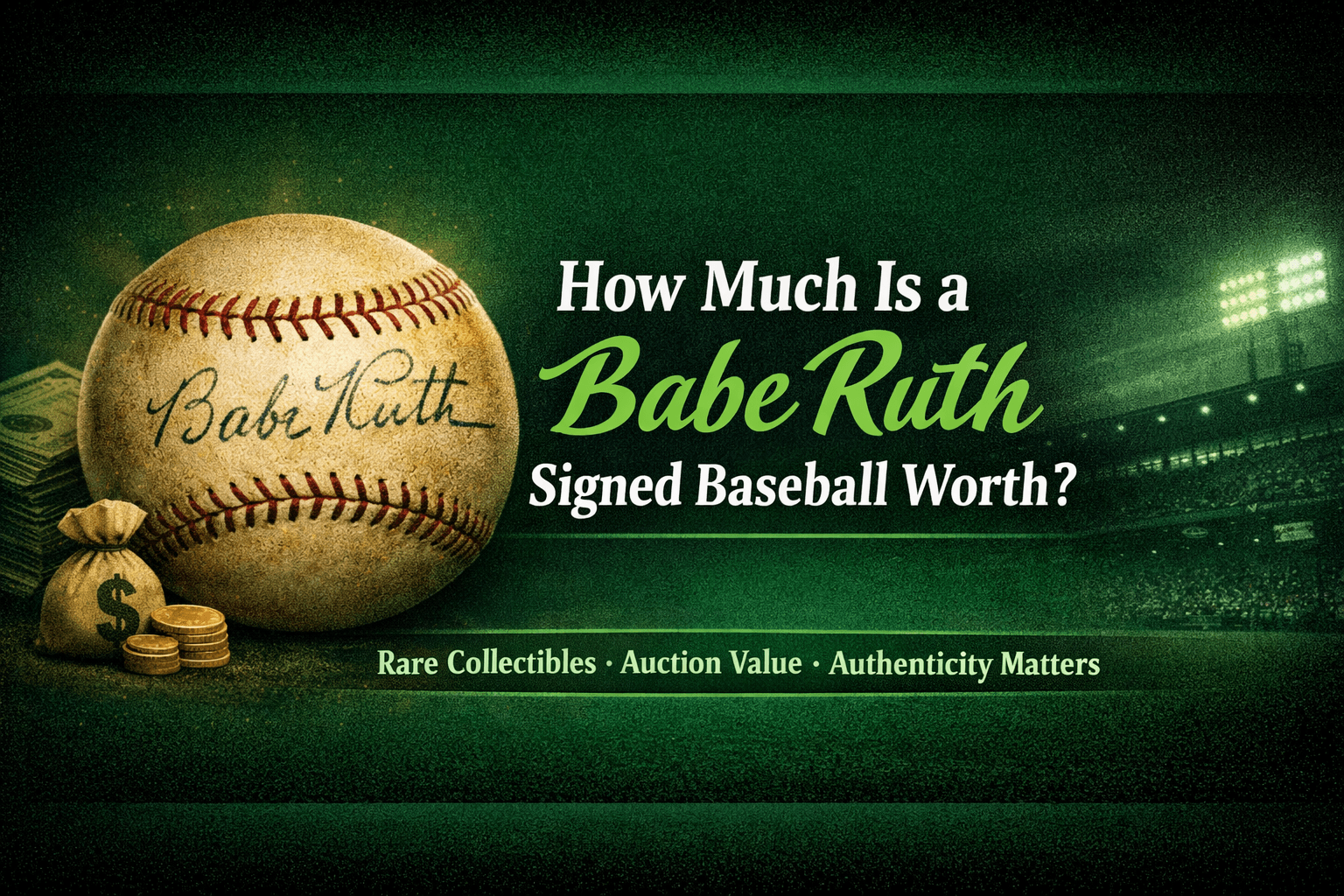
How Much Is a Babe Ruth Signed Baseball Worth?
Find out how much a Babe Ruth signed baseball is worth, typically ranging from $10,000 to $500,000+ depending on condition, rarity, and authentication.
You are cleaning out an attic and spot a yellowed baseball tucked inside a tattered box. The name scrawled across the fading leather makes your heart skip a beat: Babe Ruth. Is this a life-changing inheritance or a mass-produced replica? Before planning an early retirement, you naturally need to know exactly how much a Babe Ruth signed baseball is worth.
Within the world of vintage sports memorabilia, a genuine George Herman Ruth autograph acts as historical currency. Values span a massive gap, ranging from roughly $1,000 for a badly scuffed sphere to well over $100,000 for a pristine museum piece. Unfortunately, industry data reveals that 90% of these thrilling discoveries are factory-stamped souvenirs, turning a luxury windfall into a $50 novelty in a matter of seconds.
Assuming you beat the odds with a hand-signed original, the final price tag heavily relies on a few physical characteristics. Condition acts as the primary multiplier of value, meaning a bright ball with bold ink sells for vastly more than a dark, faded one. Buyers also obsess over signature placement, paying premium prices for autographs located squarely on the ball's front "sweet spot."
Proving your treasure is genuine remains the ultimate hurdle for any seller. This requires formal authentication, a rigorous process where independent experts verify the handwriting and issue a professional certificate. Much like a property deed, this vital paperwork proves your ball is real and permanently unlocks its true market value.
Why 'The Great Bambino' Still Dominates the Memorabilia Market
Babe Ruth didn't just play baseball; he completely transformed it. During the 1920s, his massive swing ushered in the high-scoring "live ball" era, making him America's first true celebrity athlete. Because his legendary status transcends generations, a Ruth signature is considered the ultimate "blue-chip" piece of memorabilia, a reliable, cornerstone investment that continuously drives the current market demand for vintage Yankees memorabilia.
The staggering value of these historical sports collectibles ultimately comes down to a simple equation of fame versus scarcity. Although Ruth signed thousands of autographs, the survival rate of vintage items from almost a century ago is incredibly low, as most baseballs were eventually played with and destroyed. Finding an authentic signature is exceedingly rare, which means modern replicas and souvenirs flood the market today. Before dreaming of a massive estate sale payday, you must first rule out the most common imposters.
The Quick 'Ink Test': Spotting a $50 Souvenir Factory-Stamped Ball
You might think a flawless signature is the ultimate prize, but in vintage memorabilia, perfection is often your first red flag. The easiest trap to avoid when identifying a fake Babe Ruth signature is the factory souvenir. During Ruth's era, authentic autographs were written with liquid-ink fountain pens. Conversely, stadium shops sold thousands of baseballs where Ruth's name was simply pressed onto the leather by a mechanical printing plate.
Grab a magnifying glass to tell a stamped vs. hand-signed baseball apart in under thirty seconds. A factory stamp will always reveal three visual cues:
Uniform ink thickness: Lines look flat and identical everywhere, lacking the natural pressure variations of a human hand.
Machine-perfect color: The ink often remains a crisp, artificial blue-black.
Lack of "bleeding": Stamp ink sits strictly on top of the ball.
Real fountain pen ink behaves differently on an organic surface over a century. Authentic signatures usually turn a faded, rusty brown, naturally "bleeding" or spider-webbing slightly into the leather's pores. Once you verify the ink has that genuine human touch, your next massive hurdle is determining exactly where the Bambino placed his pen.
The 'Sweet Spot' and Other Factors That Dictate Value
Imagine buying concert tickets; you gladly pay more for an unobstructed front-row view. In sports memorabilia, that premium front row is known as the "sweet spot." This narrow section of leather, where the red seams run parallel, creates a perfectly framed canvas. Consequently, a sweet spot autograph from Ruth commands a massive 20% to 30% price premium over a signature squeezed onto a curved side panel.
Securing a ball with just the Bambino's name might seem less thrilling than finding a whole team roster, yet collectors strongly disagree. The single-signed Babe Ruth baseball market value is considered the holy grail because it showcases the legend without any visual clutter. Counterintuitively, if an average teammate scribbled their name next to Ruth's, the ball's overall value actually drops, buyers view these extra names as distracting graffiti.
Rare exceptions to this penalty exist only for iconic rosters, where the historic 1927 Yankees multi-signed baseball value can eclipse a solo signature. However, once you determine if your treasure features a beautifully placed solo autograph, you must confront the physical state of the leather itself.
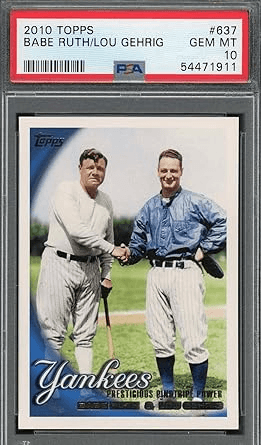
2010 Topps Babe Ruth & Lou Gehrig #637 PSA 10
2010 Topps card featuring Babe Ruth and Lou Gehrig, graded PSA 10 Gem Mint. Certified authentic and highly collectible for vintage duo fans.
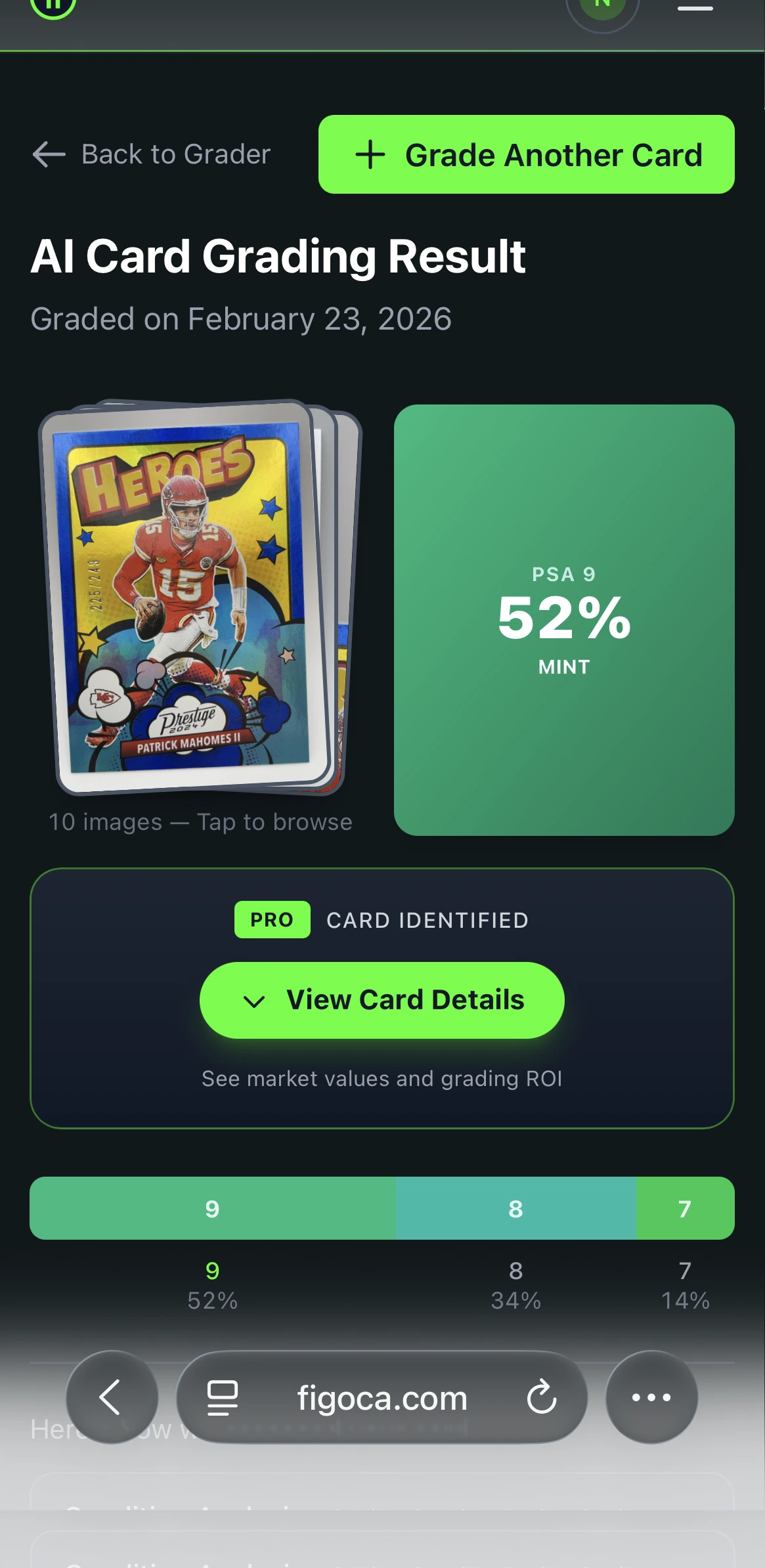
AI Card Grader
Know your card's grade before you submit
Snap a photo with your phone and get an instant AI-powered grade estimate. Check centering, corners, edges, and surface — just like the pros.
- Instant grade estimate
- Sub-grades for all 4 pillars
- Built-in ROI calculator
- Free to use
Condition Grades: Why a Yellowed Ball Might Still Be Worth Five Figures
Time is rarely kind to vintage leather, but surface imperfections rarely ruin a historic find. Discovering a dark, glossy yellow crust on a baseball is common. This results from shellacking , a well-meaning practice where old collectors painted clear varnish over the ball to protect the autograph. Unfortunately, this coating aggressively darkens over decades. Evaluators expect this historical wear; a heavily aged or shellacked ball can easily fetch five figures if the signature remains legible.
Authenticators evaluate these artifacts by separating the leather's physical state from the ink's clarity. A ball might look battered yet feature a bold signature, or boast pristine white leather with a nearly invisible name. To standardize this, the industry relies on a 1-10 grading company, operating like a simple school report card. Most authentic Ruth baseballs fall around a 4 or 5, meaning they show obvious age, scuffing, or fading, but the Bambino's handwriting remains easily identifiable.
Moving a few points on this rubric drastically shifts the impact of ball condition on sports memorabilia worth:
| Grade | Description | Approximate Value |
| :--- | :--- | :--- |
| 4–5 | Obvious age, scuffing, or fading , signature still identifiable | Low to mid five figures |
| 8 | Exceptionally clear signature with minimal wear | $50,000+ |
| Near Mint | Museum-quality, ink looks freshly applied | $90,000–$100,000+ |
This strict emphasis on preservation becomes even more critical when evaluating other historical figures. If you think a pristine solo Ruth is scarce, wait until you explore his famous teammate. Collectors constantly weigh these condition standards when comparing Ruth to a notoriously elusive Lou Gehrig signature.
Comparing Legends: Babe Ruth vs. Lou Gehrig Signed Ball Values
While Babe Ruth famously signed everything from baseballs to hot dog wrappers, his famous teammate's autographs are dramatically scarcer. Lou Gehrig's tragic illness and early death meant he spent fewer years signing for fans. Consequently, in any Babe Ruth vs. Lou Gehrig signed ball price comparison, a solo Gehrig often commands a higher premium simply because there are fewer surviving examples tucked away in rare baseball collections.
Finding both legends on a single sphere changes the math entirely. A "dual-signed" baseball, where Ruth occupies the premium sweet spot and Gehrig sits on a side panel, acts as a massive value multiplier. This price skyrockets if the leather includes other 1920s Yankees like Tony Lazzeri, transforming a valuable solo autograph into a museum-worthy snapshot of the legendary "Murderers' Row" lineup.
These multi-signed masterpieces feature incredible liquidity in the collectibles market, meaning they can be quickly converted into cash because buyer demand heavily outpaces supply. However, this intense hunger also attracts a flood of clever forgeries. Before anyone writes a check for a six-figure vintage find, they require absolute proof of its origins, bringing us to the ultimate gatekeepers of the hobby.
The 'Gold Standard' of Authentication: PSA/DNA vs. JSA
Imagine trying to sell a luxury house without a deed. In the memorabilia world, a Babe Ruth baseball without a Letter of Authenticity (LOA) faces this exact problem. Unauthenticated balls routinely sell for 70% less because buyers refuse to gamble on clever forgeries. While the importance of provenance in vintage sports cards sets, the documented history of who owned the ball, helps establish trust, a professional appraisal backed by third-party authentication (TPA) is mandatory to secure top dollar.
When seeking verification, the industry relies on three main companies to issue these critical LOAs:
PSA/DNA: The hobby's gold standard. Authentication for a Ruth signature typically starts around $250 but scales higher based on the item's final declared value.
JSA: Highly respected by major auction houses. Comparing PSA/DNA vs. JSA authentication services often just comes down to geographic convenience and personal preference.
Beckett (BAS): A universally trusted pillar offering a thorough technological review.
Securing this official paperwork transforms a questionable attic find into a recognizable asset. Once a trusted expert issues that vital letter, the conversation immediately shifts from proving authenticity to evaluating physical condition. Translating these verified characteristics into cash requires analyzing what buyers are actively paying at auction right now.
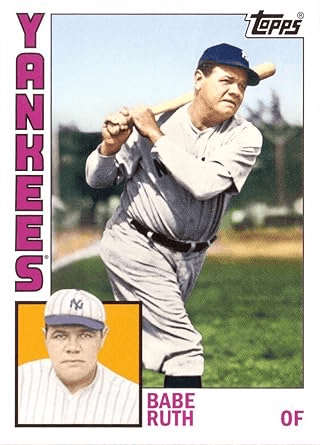
2012 Topps Archives #189 Babe Ruth Yankees
2012 Topps Archives #189 Babe Ruth New York Yankees card in mint condition. A collectible base card for Babe Ruth and Yankees fans.
Recent Auction Realities: What Buyers Are Actually Paying Today
With authentication secured, the next step is determining what collectors are actively paying in today's market. Looking at recent auction results for Ruth autographed baseballs, prices range from a steady "floor" of around $3,000 for heavily faded examples to a "ceiling" exceeding $100,000. That massive gap exists because a buyer's willingness to spend is entirely dictated by visual appeal and technical grade.
Data from 2023 and 2024 highlights these extremes perfectly. According to major memorabilia Sales & Market News reports:
A heavily scuffed ball with a barely visible Ruth signature recently sold at Heritage Auctions for roughly $4,500.
A pristine, museum-quality single-signed ball, where the dark ink looks like it was applied yesterday, commanded nearly $90,000 from eager bidders.
Finding realistic values for an attic discovery requires researching verified, completed sales rather than active asking prices. Collectors often use an aggregated Card Price Search tool or auction house archives to find exact matches for their specific grade. Once you understand the realistic baseline value of your authenticated baseball, the final puzzle piece is deciding exactly where to list it for the biggest return.
Where to Sell Your Vintage Baseball for the Highest Price
Figuring out where to sell vintage sports memorabilia for top dollar is your next crucial step. While everyday auction sites seem easy, they expose you to risky returns when moving expensive artifacts. Instead, premium pieces perform best at specialized venues like Heritage Auctions. These established houses attract verified collectors specifically hunting for authenticated history rather than looking for a quick bargain.
Partnering with these firms involves consigning your baseball, meaning they handle all marketing for a fee. When reviewing agreements, always calculate the "buyer's premium" , an extra charge, often 20%, added to the winning bid that goes to the house, naturally impacting how much buyers are willing to offer initially. Understanding these auction dynamics ensures you know your exact final payout. If that estimated return convinces you to keep your treasure instead, your priority must immediately shift toward proper preservation and insurance.
Preserving Your Legacy: How to Store and Insure a High-Value Autograph
Deciding to keep your Ruth baseball means shifting into preservation mode. Environmental degradation, damage from light, heat, and moisture, can quietly erase 50% of a ball's value by fading the irreplaceable ink. Follow these four essential rules for preservation:
Keep it out of direct sunlight.
Maintain a climate of 50°F and 50% relative humidity.
Use UV-filtered acrylic cubes for vital UV protection.
Always avoid touching the signature.
Beyond physical storage, financial protection is equally critical. Standard homeowner policies rarely cover high-value artifacts like a $20,000 piece of sports history. Instead, you need a " scheduled insurance rider", a specific add-on to your policy guaranteeing coverage for the exact appraised value if disaster strikes.
Your 3-Step Action Plan for a Potential Ruth Find
Determining the true value of a Babe Ruth signed baseball requires looking far beyond the famous name. Instead of wondering if you hold a fortune or a factory-stamped souvenir, you can confidently execute a three-step plan:
Inspect the ink and placement yourself, look for authentic bleeding, pressure variation, and sweet spot placement.
Secure trusted third-party authentication, submit to PSA/DNA, JSA, or Beckett before making any financial decisions.
Seek a professional appraisal, use auction house archives or a Card Price Search tool to establish realistic market value.
While the sports memorabilia market has its share of fakes, uncovering a genuine piece of baseball history remains an incredible find. Protect your potential investment and avoid common scams by dealing strictly with reputable authenticators before making financial decisions. If the appraisal process gets confusing, keep a Trading Card Glossary handy to translate industry terminology. By taking these methodical steps, you can uncover the verified history and true market value behind your piece of the Bambino's legacy.

Card enthusiast, figoca founder, and independent software developer
Nico is a card enthusiast who built figoca after running into the same problems many collectors face: uncertain pre-grading decisions, too much tab switching for comps, and no fast way to price cards on the go. He is also a big Kansas City Chiefs fan (❤️💛), follows the Kansas City Royals (💙), and enjoys Formula 1 and Golf.
- Sports Card enthusiast
- Founder of figoca
- Independent software developer with a TypeScript and AWS background