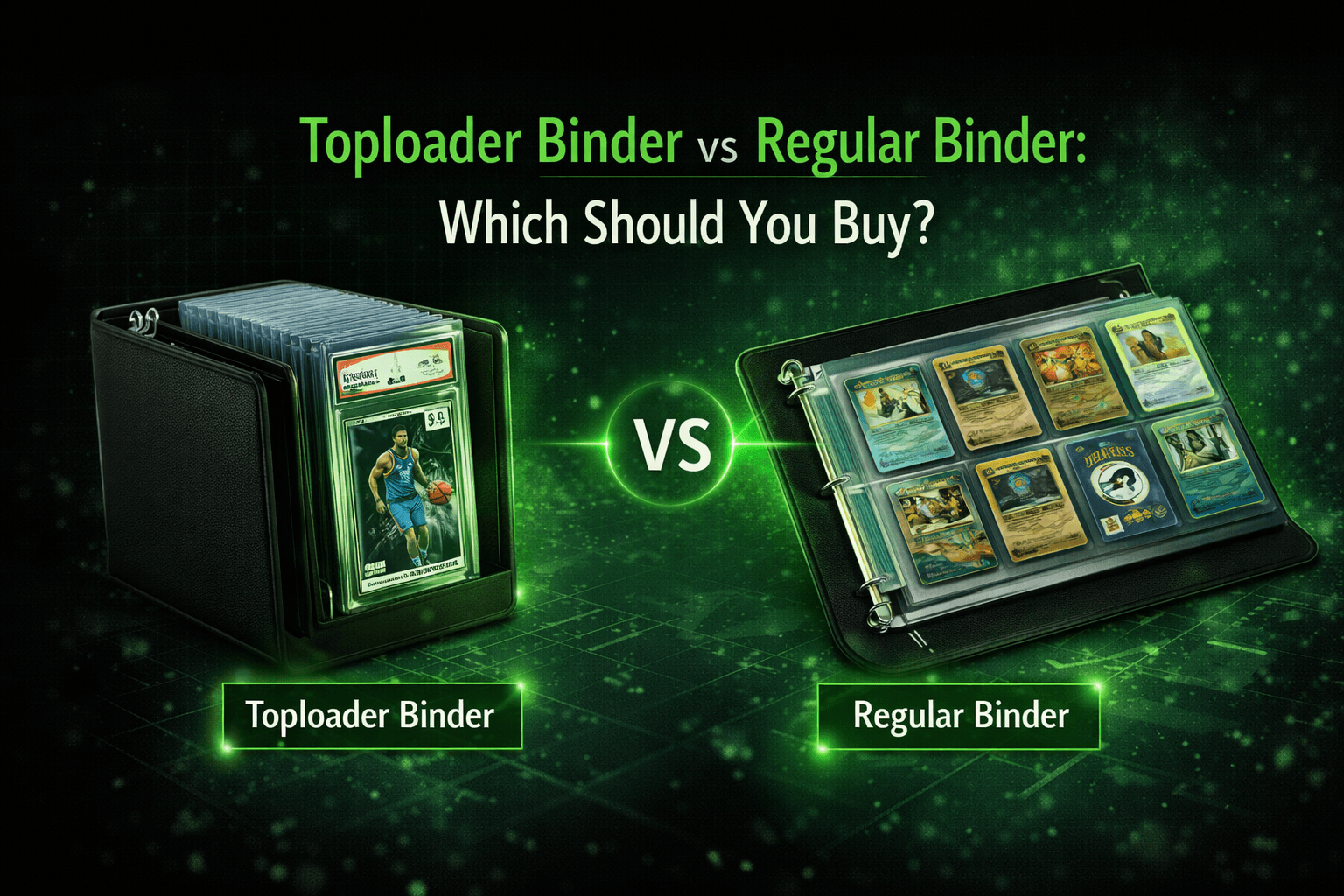
Toploader Binder vs Regular Binder: Which Should You Buy?
Protect your trading cards the right way. Compare toploader binder vs regular binder, pros, cons, and choose the best option for safe, long-term card storage.
You've just pulled out a valuable card or finally unearthed that nostalgic childhood collection, and suddenly, your old school supplies feel inadequate. We all feel a distinct "duty of care" toward our items. Yet, many new collectors unknowingly place their prized possessions in danger of bending or "ring-dings" permanent indentations caused by standard binder rings. This creates an immediate dilemma: do you stick with the classic, easy-to-browse format, or is it time to upgrade to heavy-duty armor?
To make the right choice, picture the difference between a simple plastic folder and a hard-shell suitcase. A standard binder functions like a library, offering lightweight pages for easy flipping, whereas a toploader binder is designed to hold cards already sealed inside rigid plastic cases called toploaders. In this setup, the toploader acts as a personal bodyguard for every single card, providing a stiff defense against creases that soft pages simply cannot match. Seasoned hobbyists often note that while soft sleeves prevent scratches, only rigid protection effectively stops structural damage during long-term storage.
Your decision ultimately depends on balancing maximum security against shelf efficiency and cost. While the bodyguard approach offers superior safety, it requires significantly more physical space than the traditional "library" method. By weighing the importance of archival safe storage for collectibles against your specific budget, you can find the perfect home for your cards and ensure your collection survives for the next generation.
The Toploader Binder Explained: Why Rigid Protection is the 'Bodyguard' of Modern Collecting
If you've ever slipped a prized card into a toploader that rigid, hard plastic sleeve, you know the feeling of instant relief. It is like giving your collectible a personal bodyguard against creases and corner damage. However, stacking those hard cases in a shoebox makes enjoying the artwork difficult. The toploader binder solves this by taking that rigid safety and organizing it into a familiar flip-through format. It is arguably the best binder for high-value trading cards because it doesn't ask you to choose between viewing your collection and keeping it safe from bends.
Unlike the standard office supplies you might have used for school, these specialized binders feature pages explicitly designed to accommodate the extra bulk of hard plastic. You aren't forcing a thick case into a thin slot; instead, the pages are usually permanently integrated into the cover. This built-in design eliminates the risk of "ring-ding," a common damage type where standard metal rings press into the inner column of cards. By removing the rings entirely, your collection stays flat and secure.
Fitting hundreds of rigid cases into a single volume requires specific engineering to keep the book from flaring open like an overstuffed wallet. Manufacturers combat this by significantly widening the spine, creating a box-like shape when closed, ensuring that the front and back covers remain parallel rather than pinching the cards inside. It is this structural integrity that justifies using toploaders for card storage within a bound format rather than loose storage boxes.
This setup offers premium archival protection for TCG enthusiasts who want their collection to survive for decades without chemical degradation or physical warping. While the added bulk and cost provide the ultimate defense for your most expensive treasures, it might be overkill for every single card you own. Understanding when to step down from this heavy-duty armor is just as important as knowing when to use it.
The Regular Binder Reimagined: Why High-Capacity 'Libraries' Still Have a Place
While the "bodyguard" approach works perfectly for your high-value heavy hitters, trying to house an entire collection in rigid plastic creates a new problem: massive bulk. A complete set could easily span three separate toploader binders, eating up valuable shelf space. The modern, high-quality "regular" binder acts as an efficient "library" for the bulk of your hobby, offering a smart balance between clear visibility and necessary compactness.
Efficiency is the primary advantage here, allowing you to flip through hundreds of cards without the combined weight of heavy plastic cases. For those organizing sports card collections in binders, specifically large "base sets" (the standard cards that make up the majority of a release), this format is essential. You can store nearly 400 cards in the same physical footprint that a rigid binder uses for just 100, making it the practical choice for completionists who want to see the full narrative of a set unfold.
Modern options have evolved significantly past the flimsy clear sheets you might remember from childhood, now featuring a crucial design improvement called side-loading. Unlike old pages where items could slip out the top if held upside down, side-loading pocket pages ensure cards stay locked in horizontally. This friction-based security is particularly popular for Pokémon card storage for collectors, where keeping the artwork perfectly centered and dust-free is a priority.
Despite these significant improvements in page design, the binding mechanism itself remains the single biggest risk factor for long-term storage. Many enthusiasts still mistakenly buy generic office binders with metal rings, unaware of the structural pressure they place on the innermost column of cards. Understanding exactly how this hardware interacts with your collection is the only way to prevent accidental indentations.
Stopping the 'Ring-Ding': How to Identify and Prevent Mechanical Binder Damage
Have you ever opened a binder and noticed a heartbreaking semi-circular dent on the inner edge of a card? In the trading card glossary, this specific damage is widely known as "ring-ding," and it answers the common question of whether 3-ring binders damage cards. The culprit is almost always the standard round ring ("O-ring") found in cheap office supplies. When you close an O-ring binder, the circular shape allows pages to slip under the metal mechanism, crushing the card stack against the steel rings and leaving permanent indentations.
Preventing this mechanical disaster requires changing the geometry of your storage hardware. The safest traditional binders utilize a "D-Ring" mechanism mounted on the back cover rather than the spine. The flat side of the "D" allows your pages to stack perfectly straight like a book, rather than curving around a circle. This simple structural change keeps your pages flat and maintains a safe distance between the metal hardware and your fragile cardboard, effectively preventing card warping in binders.
Even with the correct ring shape, physical safety often requires one final accessory called a "sheet lifter." This curved piece of rigid plastic acts as a ramp, guiding your pages smoothly over the rings when you close the cover. To ensure your current setup isn't silently hurting your collection, run this quick safety audit:
Check the Shape: Confirm the binder uses a flat-backed D-Ring, never a round O-Ring.
Inspect Alignment: Ensure the ring teeth close tightly with absolutely no gaps that could snag a page.
Install a Ramp: Verify a sheet lifter is placed at the front to guide pages during closing.
Now that the physical threat is neutralized, we must address the silent killer lurking in the plastic itself: chemical aging.
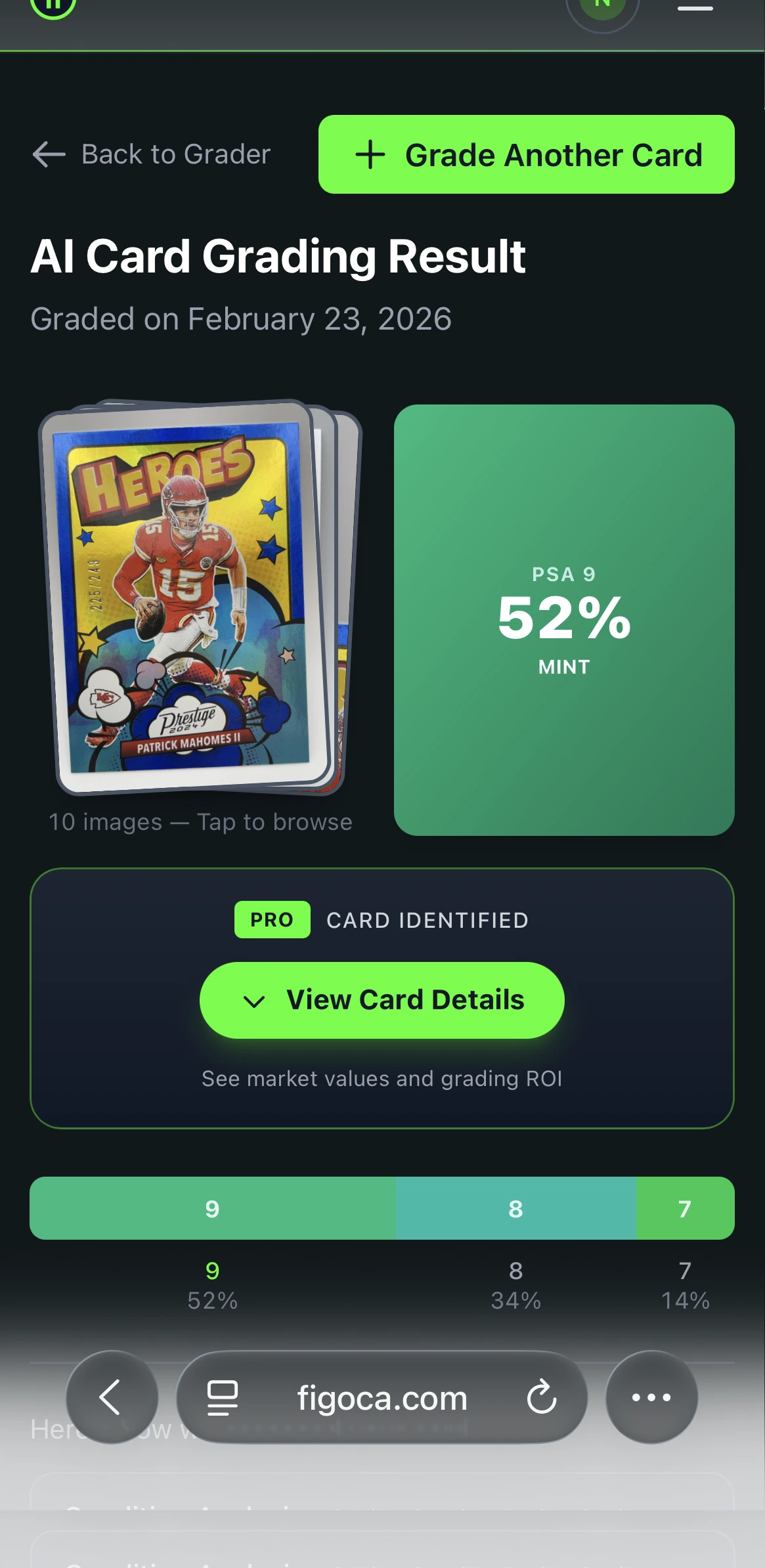
AI Card Grader
Know your card's grade before you submit
Snap a photo with your phone and get an instant AI-powered grade estimate. Check centering, corners, edges, and surface — just like the pros.
- Instant grade estimate
- Sub-grades for all 4 pillars
- Built-in ROI calculator
- Free to use
The Invisible Threat: Choosing PVC-Free and Archival-Safe Materials for Long-Term Value
While a bent corner is heartbreakingly obvious the moment it happens, chemical damage plays a dangerous long game that can ruin your collection silently. Many older or cheaper binders are made with Polyvinyl Chloride (PVC), a material that releases acids as it degrades over time. You can often identify these dangerous pages by the distinct "plastic pool float" smell or a stiff, slightly oily surface texture. If left in contact with your collection, this unstable plastic acts like a slow-moving solvent, eventually causing the ink on your cards to lift off the paper and stick permanently to the binder page.
Protecting your investment requires looking past the price tag to the manufacturing label on the back of the package. Reliable archival safe storage for collectibles will explicitly state that the product is "Acid-Free" and "No PVC" (or "PVC-Free"). This certification means the plastic, usually a safer material known as polypropylene, is chemically inert and will not react with the foil, gloss, or cardstock it touches. Swapping out murky, smelly pages for high-clarity, PVC-free trading card pages ensures that the holographic finish you store today maintains its original luster decades from now.
Using acid-free materials for card protection is the only way to prevent your prized cards from becoming a sticky, ruined brick of paper. Even affordable modern supplies usually meet these standards, so there is never a good reason to risk your collection in vintage or generic dollar-store office hardware. Once you have confirmed your materials won't chemically eat your cards, you must ensure gravity doesn't ruin them either, which brings us to the crucial debate between standard pockets and side-loading designs.
Side-Loading vs. Top-Loading Pockets: Preventing the 'Slide and Scratch' Effect
Imagine holding your binder by the spine and giving it a gentle shake. If you are using standard top-loading pages, similar to the clear sheet protectors used for school reports, your cards rely entirely on friction to stay put against gravity. This orientation poses a significant risk if the binder is ever dropped or held upside down, potentially spilling your collection onto the floor. Standard top-loading pockets often fail to secure thinner cards or those in slick, soft sleeves, allowing them to shift and scratch against the plastic.
Comparing side-loading pocket pages vs top-loading options reveals why modern collectors prefer the former for security. By inserting the card from the side closest to the spine, the pocket creates a natural " gravity lock", unless the plastic rips, the card physically cannot fall out while the binder is closed. This orientation also creates a tighter "friction-seal" that limits the amount of air and dust that can settle on the top edge of your collectibles, effectively turning each page into a sealed environment against household grit.
Choosing the best binder for high-value trading cards means prioritizing this stability, especially if you enjoy flipping through pages frequently. A side-loading design ensures your items won't migrate or slide during viewing, offering essential peace of mind for your most prized possessions. However, these specialized secure binders often come with a higher premium than standard office supplies, forcing every collector to weigh protection against their budget.
Doing the Math: Is the $40 Toploader Binder Worth the Investment for Your Collection?
Staring at the price tag of a dedicated toploader binder can be jarring, especially when many luxury trading card binder reviews highlight price points triple that of standard office supplies. To navigate this, savvy collectors use the "10% Protection Rule." This guideline suggests that your storage investment should roughly equal 10% of the collection's total value. If you are storing a set of cards worth $500, spending $50 on a high-end binder is a logical insurance policy; however, putting 50-cent cards into a $60 binder is financial overkill.
Break down the investment by looking at the "cost-per-slot" for a standard 200-card collection:
Beyond the financial cost, you must also consider the physical footprint involved with the toploader binder capacity and size. Because these binders house rigid plastic cases, they are significantly thicker and heavier than standard albums. A shelf that holds 1,000 cards in standard sleeves might only fit 200 in toploaders. Before upgrading, perform a quick card price search to confirm your collection's value justifies the loss of shelf space. This trade-off between density and security leads directly to asking how often you actually handle your cards.
AI Card Grader
Know your card's grade before you submit
Snap a photo with your phone and get an instant AI-powered grade estimate. Check centering, corners, edges, and surface — just like the pros.
- Instant grade estimate
- Sub-grades for all 4 pillars
- Built-in ROI calculator
- Free to use
The 'Flipper vs. Storer' Test: Finding Your Personal Organization Style
Start by auditing your actual interaction habits to determine if you are a "Flipper" or a "Storer."
Flippers enjoy the tactile experience of turning pages frequently to admire their collection with friends, making a lighter, standard side-loading binder the more comfortable and portable choice.
Storers view their collection as a vault; they rarely handle the physical items and prioritize maximum security over ease of viewing, making the heavier, armor-like toploader binder the logical selection.
Shelf real estate acts as the second major constraint for most collectors. Because toploader binders are designed to hold rigid plastic cases, they are remarkably bulky, often resembling a thick encyclopedia compared to the paperback profile of a standard album. A collector with limited space might find that switching to toploaders reduces their storage capacity by nearly 60%, forcing a difficult choice between housing fewer cards securely or keeping a larger volume in standard archival sleeves.
Future intentions also dictate your hardware choice, specifically regarding card value. If you plan to send items to professional grading companies, keeping them in a toploader binder minimizes physical handling risks while you prepare the submission. The rigid plastic offers a flat, clear surface that is ideal for scanning with a sports card grading app or AI card grader to estimate condition. Since a generic card grader app relies on visual clarity to detect flaws, the superior material of a toploader allows for accurate digital assessments without ever exposing the raw card to the elements.
Your Step-by-Step Transition Plan: Safely Moving Your Cards to a Forever Home
You no longer need to guess if your collection is truly safe. Whether you are preserving a vintage sports card set or organizing modern gaming hits, you now possess the knowledge to balance budget with security. The choice isn't just about buying plastic; it is about respecting the value, sentimental or financial, of the items in your care.
Don't feel pressured to upgrade your entire library overnight. Instead, grab your collection and apply this simple 3-tier audit to prioritize your spending:
Tier 1 (The VIPs): Move cards worth over $50 (or sentimental favorites) into premium archival protection for TCG and sports cards, specifically a toploader binder.
Tier 2 (The Core): Place cards valued between $5 and $50 into a high-quality, strap-free regular binder to prevent ring damage.
Tier 3 (The Bulk): Store common cards under $5 in acid-free cardboard storage boxes to maximize shelf space.
When determining the winner in the battle of the toploader binder vs regular binder, remember that the best system is the one you actually use. Start by securing your single most valuable card today. Once that first "bodyguard" is in place, you will feel that immediate peace of mind knowing your history is preserved for the long haul.
Conclusion
Staying competitive in the hobby requires more than just protecting your cards, it also means staying informed about sales trends and market developments. By tracking price movements, auction results, and rising players, collectors can make smarter decisions on when to hold, sell, or upgrade their collections. In the Figoca Blog, Nico Meyer emphasizes the value of combining proper storage techniques with current market knowledge, enabling collectors to both preserve their cards and maximize their long-term value in an ever-evolving marketplace.

Card enthusiast, figoca founder, and independent software developer
Nico is a card enthusiast who built figoca after running into the same problems many collectors face: uncertain pre-grading decisions, too much tab switching for comps, and no fast way to price cards on the go. He is also a big Kansas City Chiefs fan (❤️💛), follows the Kansas City Royals (💙), and enjoys Formula 1 and Golf.
- Sports Card enthusiast
- Founder of figoca
- Independent software developer with a TypeScript and AWS background