PSA Submission Supplies Checklist: What to Buy and Why
PSA submission supplies checklist: a complete guide on what to buy and why each item matters to ensure safe, accurate, and successful trading card grading.
You've finally pulled that high-value Charizard or star rookie card, but now comes the terrifying part: trusting the mail carrier with your treasure. Mailing unprotected raw cards is remarkably similar to shipping a delicate glass vase across the country. According to industry logistics experts, the three most common causes of shipping damage are moisture, crushing weight, and "transit edge-wear," which happens when a loose card constantly slides against rigid plastic inside a moving truck.
Shifting your mindset toward preservation over presentation is the ultimate secret to surviving this journey. Skimping on proper Trading Card Tools might save you two dollars today, but data from experienced collectors reveals that a single dinged corner can drop a card's graded value by hundreds. That reality makes mastering a basic submission supplies checklist essential for protecting your financial investment from your desk to the final destination.
What actually happens once your cardboard gold reaches California? During the standard PSA intake protocol, receiving workers swiftly process thousands of packages daily. Major Grading Companies require submissions packed in a very specific, standardized way so their team can extract your items safely without causing accidental creases. Equipping yourself with the exact right protective gear ensures your package breezes through this rapid unboxing phase without risking permanent damage or the dreaded "Order On Hold" email.
The 'Undergarment' of Grading: Why Standard Penny Sleeves Beat Tight-Fit Alternatives
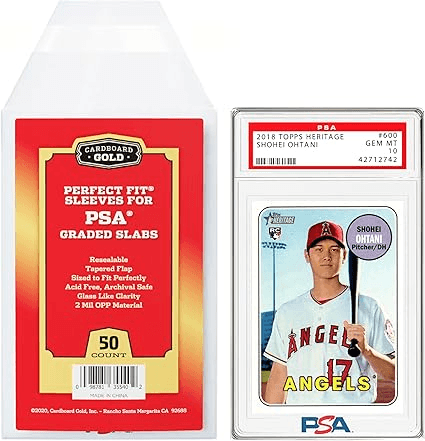
Think of the penny sleeve as your card's "undergarment" the crucial first layer of defense against surface scratches. When learning how to use penny sleeves for PSA submissions, skip the premium colored-back varieties bulk standard sleeves save you money and are exactly what graders expect. To insert your prized Charizard without nicking a corner, use the "two-finger" slide technique: gently pinch the sleeve's vertical seams to pop the top open, then let the card drop naturally inside instead of pushing it down.
Material science matters just as much as your handling technique, especially if your collection sits for months while you catalog it in a Rookie Cards Database. Cheap plastics contain PVC, a chemical that can slowly "off-gas," leaving an oily residue or turning crisp white borders yellow over time. Protect your investment by verifying this three-step checklist before buying:
- Look for a bold "PVC-Free" and "Acid-Free" label on the packaging.
- Check for crystal-clear transparency to ensure perfect visibility.
- Confirm the standard 2-5/8" x 3-5/8" size so the card has proper breathing room.
Slipping your treasure into an archival-safe sleeve is only the beginning of its journey. While this soft plastic layer prevents friction, it offers zero defense against bending in the mail, meaning you must pair it with the best semi-rigid card holders for grading. To build a true shipping fortress, we need to look at the outer armor and examine exactly why grading companies explicitly reject toploaders in favor of semi-rigid holders.
Why PSA Rejects Toploaders: Mastering the Semi-Rigid Holder Requirement
Many collectors naturally assume thick plastic display cases are perfect for shipping. While great for your shelf, the short answer is that toploaders are not safe for PSA submissions, their roomy design lets sleeved cards slide dangerously against hard edges during transit.
Grading companies explicitly require semi-rigid holders instead. These flexible pouches gently clamp down on the penny sleeve, creating a tight grip that completely stops internal card movement.
This flexibility directly protects your treasure during the actual grading process. When analyzing Card Saver 1 versus traditional top loaders, the biggest advantage is safe removal. If a card gets stuck, a grader can simply cut the soft plastic to free it without risking a bent corner. Looking at a Cardboard Gold vs Ultra Pro comparison, both brands offer this exact, PSA-approved flexibility.
Always buy the oversized "Size 1" holders, because the smaller "Size 2" versions force you to squeeze the card inside, risking edge damage. Once your card is safely tucked into this semi-rigid fortress, you need one incredibly cheap addition before sealing the box to prevent grader frustration.
Cardboard Gold PSA Graded Card Sleeves 50 Count
Resealable 2 mil sleeves sized for PSA slabs with the PSA logo. Clear, snug protection for graded cards in storage or display.
700+ bought in past month
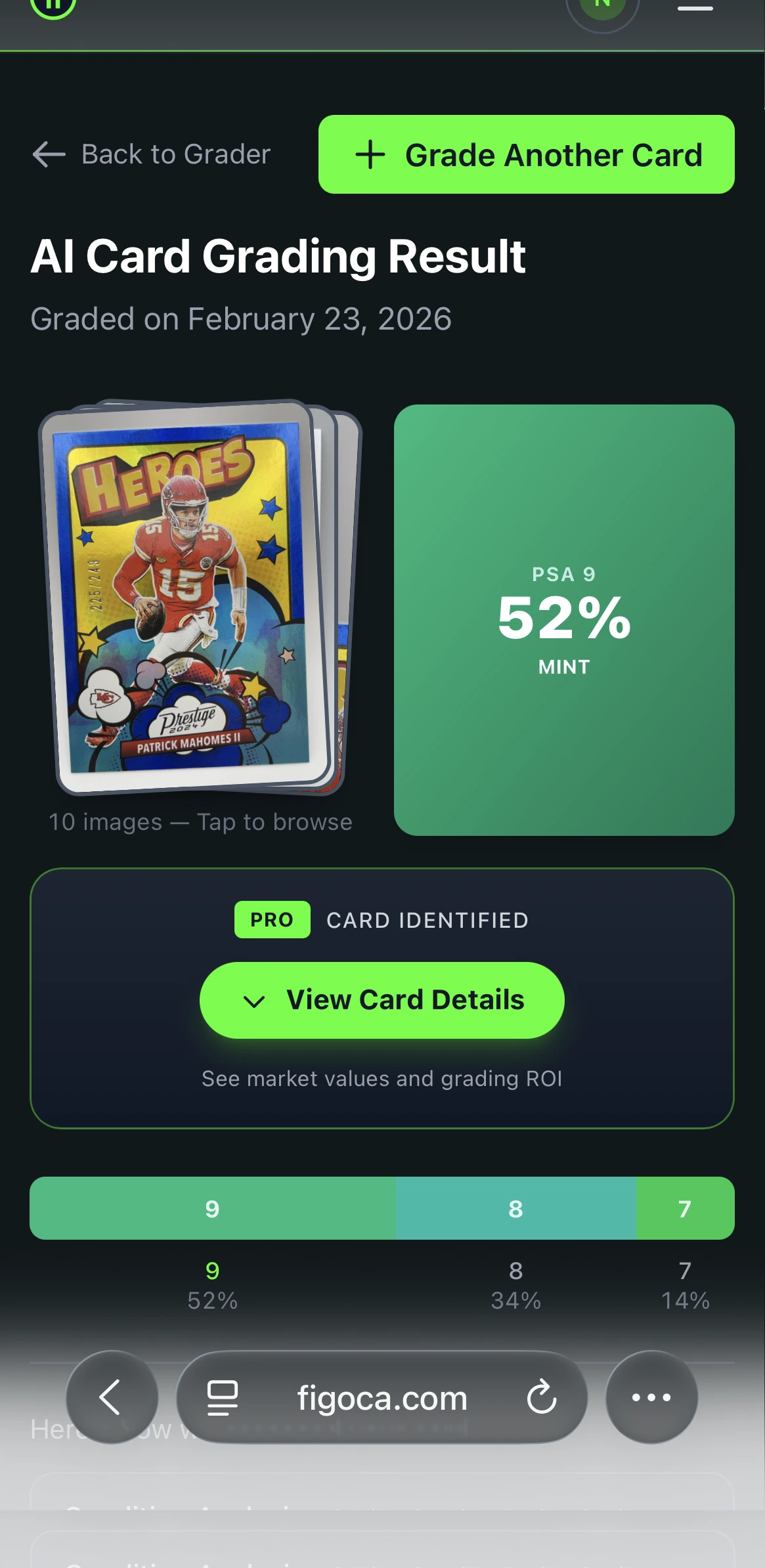
AI Card Grader
Know your card's grade before you submit
Snap a photo with your phone and get an instant AI-powered grade estimate. Check centering, corners, edges, and surface — just like the pros.
- Instant grade estimate
- Sub-grades for all 4 pillars
- Built-in ROI calculator
- Free to use
The 'Post-It' Hack: Why a 10-Cent Sticky Note Prevents Grader Frustration
While the tight grip of a semi-rigid holder excels at preventing card movement during shipping, it creates a new challenge: safe extraction. Graders process thousands of items daily. By creating a basic "pull-tab," you reduce the risk of grader-inflicted damage by 90%, ensuring they never pinch your card while pulling it free.
Consider this tab a mandatory addition to your PSA Submission Supplies Checklist. You just need standard, low-tack sticky notes to avoid leaving dangerous chemical residue. Whether you pre-screened your modern pulls visually or used an AI card grading app, rough handling ruins grades. Apply the tab safely using these steps:
- Fold the sticky section over itself to create a dry handle.
- Attach the remaining adhesive to the top-back of the penny sleeve.
- Ensure exactly 1/2 inch of the handle protrudes from the semi-rigid pouch.
Providing this simple mechanism lets grading professionals slide your treasure out effortlessly. With your housing logistics securely dialed in, the final requirement before sleeving is achieving a flawless surface.
Cleaning Your Cards Without Destroying Them: The Microfiber Secret
Smudges might look harmless to the naked eye, but under a grader's 10x magnification loupe, a simple thumbprint resembles a massive oil spill. Before sleeving, achieving a pristine surface is just as vital as checking centering with an AI card grader. Unlike traditional paper surfaces that absorb moisture, modern "chrome" finishes notoriously trap factory surface wax and natural oils, causing harsh grading penalties if ignored.
Grabbing a standard paper towel guarantees microscopic scratches, which is why a microfiber cloth for cleaning cards before grading is essential. Think of this fabric as a gentle magnet for microscopic debris, lifting away loose dust rather than grinding it into the gloss. To properly clean the card, breathe lightly on the surface and gently wipe the affected area in a tight, circular motion.
Never apply liquid cleaners or sprays; moisture will instantly warp the stock and ruin your submission. It is crucial to distinguish a fixable smudge from a permanent scratch; pressing harder on a physical gouge only inflicts new damage. Reviewing a Trading Card Glossary helps identify these defect types. Once your pristine card is sleeved, you are ready to build a proper shipping fortress.
Building the 'Shipping Fortress': From Cardboard Gold to Bubble Wrap
Slipping your pristine Charizard into a semi-rigid holder is only half the battle. Your next mission is surviving the postal system's brutal gauntlet. To prevent catastrophic bends, you must engineer a protective shell around your submission that eliminates internal movement.
The foundation of this barrier requires structural sandwiching, stacking your card holders tightly between two oversized pieces of rigid corrugated cardboard. Secure this stack with blue painter's tape instead of clear Scotch tape. Painter's tape peels off effortlessly, preventing graders from having to use sharp scissors near your prized cards, a vital detail when using cardboard inserts for card protection.
A proper defense relies on mastering how to pack cards for PSA safely using a strict layering order:
- The taped card bundle
- Cardboard inserts sandwiching the stack
- A dense bubble wrap cocoon
- A sturdy padded box
Choosing the right shipping box for PSA means picking a container large enough to accommodate this thick perimeter, shielding your investment from crushing weights and accidental moisture exposure along the journey.
Before taping the outer flaps, perform the mandatory "Shake Test" by gently rattling the package near your ear. Hearing a thud or sliding sound means you need extra bubble wrap to fill those empty voids. Once the interior is completely silent, your fortress is properly built, and you can move on to finalizing labels, tape, and insurance.
The Final Logistics: Labels, Tape, and Insurance
Sealing your fortress requires meeting specific trading card shipping tape requirements by using heavy-duty packing tape exclusively on the exterior, avoiding "Tape Nightmares" where adhesive accidentally ruins interior card holders. Once securely closed, prioritize printing PSA submission labels correctly. These barcodes must be taped entirely flat against the cardboard without any wrinkles across the ink. Mastering this scannable logistics trick allows PSA's receiving department to immediately check your package into their system, preventing it from being sidelined into a frustratingly slow manual processing queue.
Handing this box to the post office introduces the ultimate variable of transit risk. Securing proper shipping insurance for high-value trading cards provides crucial financial protection if a package disappears in transit. When declaring monetary value, newer collectors often struggle between using the current "raw" condition price or the estimated post-grading worth. The safest strategy is insuring for the raw replacement value plus your actual grading fees, guaranteeing you can completely replace your ungraded collection if disaster strikes.
Checking off these last bureaucratic steps ensures your investment confidently bridges the risky gap between your living room desk and the grading facility. Now that your prized cards are fully secured and insured, optimizing your supply investments requires comparing bulk buying versus starter kits to calculate your true total cost.
Bulk Buying vs. Starter Kits: Calculating Your Total Cost
Protecting your prized rookies shouldn't require emptying your wallet before the grading fees even kick in. Many newcomers accidentally waste money by confusing thick "storage supplies" (like rigid display toploaders) with the flexible "grading supplies" that PSA actually requires. Sticking to essential, grade-trusted brands like Cardboard Gold or Ultra PRO ensures you aren't overpaying for unnecessary plastic while keeping your cards perfectly safe.
The total cost of grading submission materials comes down to simple math. While buying a tiny starter kit seems cheap upfront, you achieve the best supply ROI by purchasing bulk quantities of 100 or more. Here is the typical cost breakdown per 50 cards:
If you are looking for where to buy bulk card grading supplies, skip the big-box retail stores and check dedicated distributor websites frequently highlighted in hobby Sales & Market News. Scaling your purchases this way dramatically lowers your overall cost-per-submission, leaving more budget for grading your favorite pulls.
Your Submission-Ready Checklist: From Desk to Post Office
Handing over your prized cards to buy the postal service no longer has to feel like a gamble. You are fully equipped to build a PVC-free, damage-proof fortress. By mastering these submission supplies, you proactively protect your investment from transit damage and ensure graders can handle your items safely.
Before you reach for the packing tape and permanently seal that shipping box, execute this final 5-point safety audit to guarantee your collection is fully submission-ready:
- Sleeved? Every card rests inside a fresh, clean penny sleeve.
- Semi-rigid? Sleeved cards are securely housed inside flexible semi-rigid holders.
- Pull-tab? Sticky tabs are gently attached to the sleeves for effortless grader removal.
- Securely sandwiched? Holders are bundled tightly between sturdy cardboard pieces.
- Scannable label? Your submission barcode is clearly visible on the package's exterior.
With your package safely en route, your only remaining job is to monitor your tracking number. While PSA processes your order, you can utilize various Trading Card Tools or monitor a Rookie Cards Database to track your collection's shifting market value. Proper preparation eliminates transit risks, providing total peace of mind as your treasures make their journey toward authenticated grades.
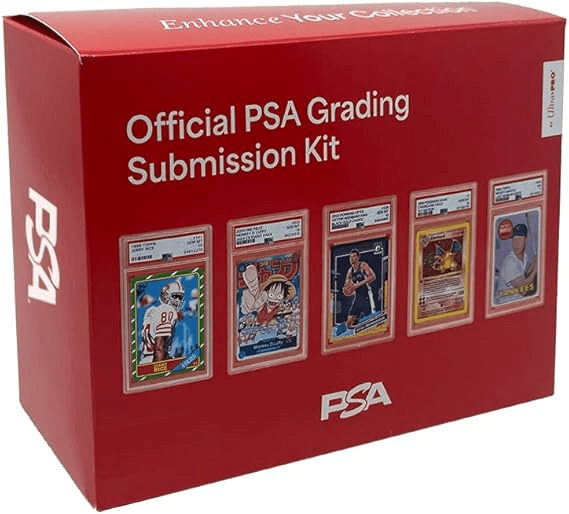
PSA Card Grading Submission Kit by Ultra PRO
Kit for PSA submissions with 1 shipping envelope, 20 Easy Grip card sleeves, and 20 semi-rigid card holders for safe card prep.

Card enthusiast, figoca founder, and independent software developer
Nico is a card enthusiast who built figoca after running into the same problems many collectors face: uncertain pre-grading decisions, too much tab switching for comps, and no fast way to price cards on the go. He is also a big Kansas City Chiefs fan (❤️💛), follows the Kansas City Royals (💙), and enjoys Formula 1 and Golf.
- Sports Card enthusiast
- Founder of figoca
- Independent software developer with a TypeScript and AWS background