
7 Pieces of Cardboard More Expensive Than a Ferrari
7 rare trading cards worth more than a Ferrari. See why collectors pay millions for these valuable cards and what makes them so rare and highly priced.
Imagine a sleek, red Ferrari Roma idling in your driveway, representing over $250,000 of Italian engineering. Now, picture trading those keys for a 2.5-inch scrap of paper featuring a man in a wool baseball jersey. It sounds like a terrible financial decision, yet for the 7 pieces of cardboard that are more expensive than a Ferrari, that trade would actually be a bargain.
Value in this hobby often confuses newcomers because it relies heavily on condition rather than just age. Think of a perfect "Gem Mint" grade like a piece of fruit at the supermarket that has never been touched by a human hand since leaving the orchard. Professional grading services inspect cards under microscopes to assign a score from 1 to 10; a single microscopic scratch can mean the difference between a $500 card and one worth millions.
Trading cards vs exotic car investment metrics often favor the fragile paper, provided it passes this strict scrutiny. Evaluating rare trading card investment value requires the "Ferrari Scale", measuring these assets not just in dollars, but in how many supercars you could buy with a single swing of the gavel.
Why the 1952 Mickey Mantle Costs More Than 40 Ferraris: The Legend of the Atlantic Ocean Dump

If you walked into a candy store in 1952, you couldn't give these cards away. Topps struggled to sell the late-season series featuring a young Mickey Mantle, leading to a decision that haunts modern collectors: thousands of unsold cases were barged out and dumped into the Atlantic Ocean. That historical blunder turned a mass-produced toy into one of the most expensive sports cards ever sold, proving that one generation's trash is literally another generation's treasure.
Surviving the ocean dump is only half the battle; the real challenge is finding a copy that was printed correctly. Manufacturing standards in the fifties were primitive, frequently resulting in images cut significantly off-center, like a family photo printed crooked on the paper. Because of these errors, finding a card that meets PSA 10 Gem Mint grading standards, meaning it is virtually flawless to the naked eye, is a statistical anomaly that defies the odds of both time and technology.
This extreme scarcity drives prices that make luxury vehicles look like budget purchases. A high-grade example recently fetched $12.6 million, a sum that could purchase a fleet of over 40 Ferrari Romas with enough change left for a private racetrack. While most attic finds are beat-up copies worth a fraction of that, a pristine 1952 Topps Mickey Mantle condition report transforms a piece of nostalgic cardboard into an asset worth more than most mansions.
While the Mantle legend was built on excess inventory meeting a watery grave, the next heavyweight champion of the hobby was born from a personal refusal. Long before Topps was dumping crates into the ocean, a Pittsburgh shortstop took a moral stand against tobacco companies, unknowingly creating the Holy Grail of the industry: The T206 Honus Wagner.
The T206 Honus Wagner: How an Anti-Tobacco Stance Created a $7.25 Million Icon
While the Mantle owes its value to mass destruction, the T206 Honus Wagner owes its legendary status to a refusal to be created at all. In the early 1900s, baseball cards were not sold with bubblegum; they were stiffeners inserted into cigarette packs to protect the tobacco products inside. This seemingly trivial marketing tactic clashed with the personal ethics of Pittsburgh Pirates superstar Honus Wagner, leading to the creation of the most famous "short print", a card pulled early from production, in history.
Historians debate the exact reason Wagner halted the presses, but the effect on the card's population was permanent. Only roughly 50 to 60 authentic copies are known to exist today because the American Tobacco Company stopped distributing them almost immediately. The leading theories for this abrupt cancellation include:
- Wagner did not want to influence children to buy cigarettes to get his picture.
- He demanded higher financial compensation for the use of his image.
- A defective printing plate forced the factory to scrap the specific run.
Supply is so microscopic for this asset that a standard T206 Honus Wagner price guide is largely irrelevant; when one surfaces, it writes its own rules. Condition matters far less here than with modern cards; a jagged, creased, or stained Wagner can still command a price higher than a showroom-fresh Bugatti Chiron. When a nice copy sold privately for $7.25 million, it cemented the card's status as the "Mona Lisa" of the hobby, proving that extreme scarcity trumps all other factors.
You might assume that only century-old antiques featuring men in wool uniforms reach these astronomical heights, but the market has recently shifted gears. The next record-breaker wasn't found in a vintage cigarette pack, but was awarded as a prize in a Japanese drawing contest in 1998: The Pikachu Illustrator Card.
Inspiring Baseball Stories
Real-life baseball underdog stories and championship moments for young fans. Focuses on teamwork, perseverance, and sportsmanship.
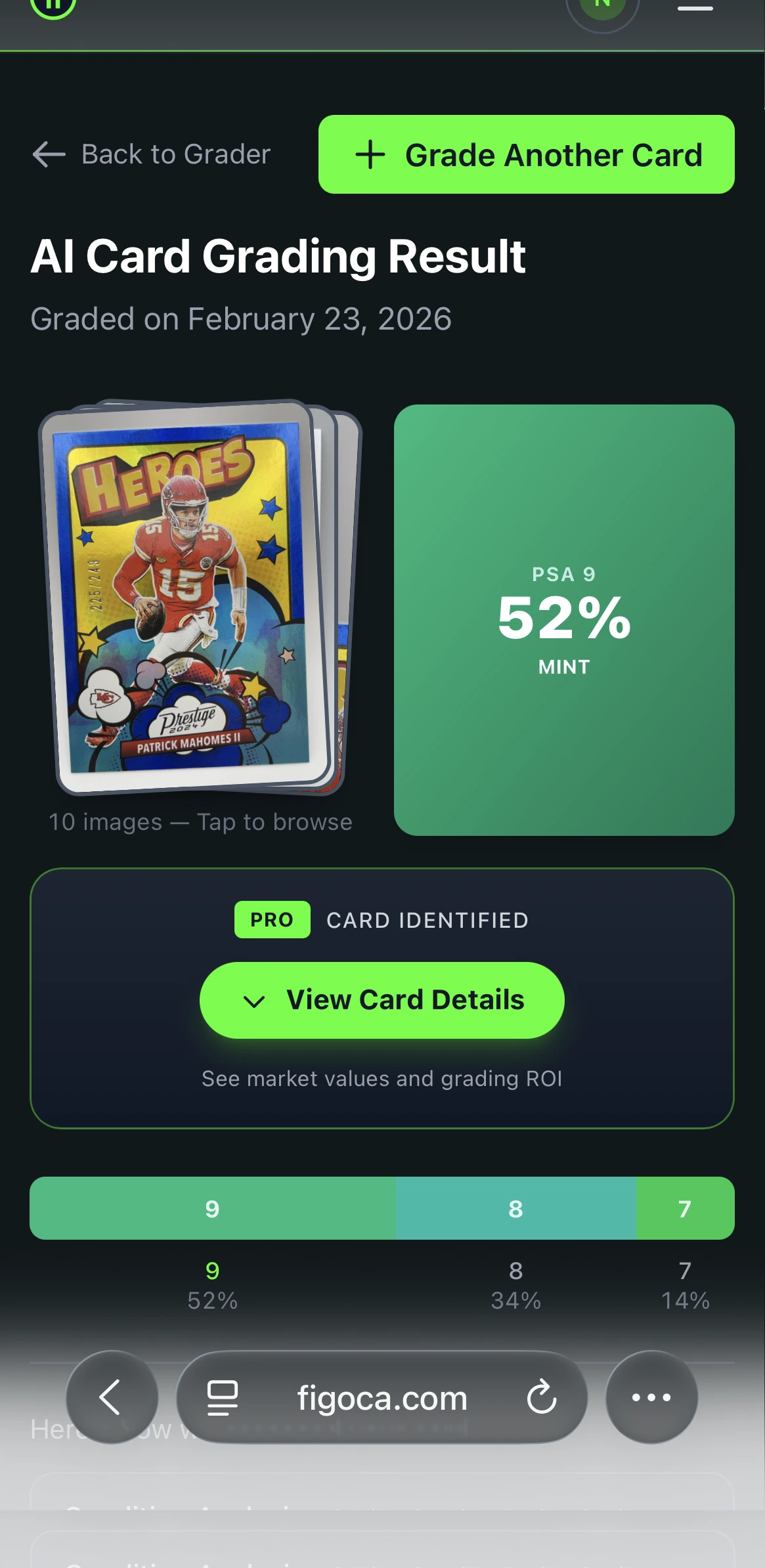
AI Card Grader
Know your card's grade before you submit
Snap a photo with your phone and get an instant AI-powered grade estimate. Check centering, corners, edges, and surface — just like the pros.
- Instant grade estimate
- Sub-grades for all 4 pillars
- Built-in ROI calculator
- Free to use
The Pikachu Illustrator Card: Why a Japanese Drawing Prize Outperforms a Ferrari SF90
If you grew up in the 90s, you likely believe the holographic Charizard is the ultimate holy grail. While that card is undeniably valuable, it pales next to the "Pikachu Illustrator", the most expensive Pokémon card ever sold. In 2022, influencer Logan Paul exchanged a lower-grade copy plus $4 million in cash, totaling $5.275 million, for the world's only known perfect specimen. To put that into perspective, that single slip of paper costs the same as purchasing ten Ferrari SF90 Stradale, with enough money left over to build a luxury garage to house them.
Unlike the cards you bought at convenience stores, this asset was never sold in booster packs. It was a "Trophy Card," awarded exclusively to winners of a Japanese drawing contest in 1998. With only 39 copies originally distributed, it is significantly rarer than the Honus Wagner. This distinction is crucial for collectors: while a standard card relies on nostalgia, a prize card relies on historical provenance, it is effectively a museum piece that happens to fit inside a plastic slab.
Condition acts as the final multiplier for this staggering price tag. The specific copy sold for $5.2 million is a "PSA 10 Gem Mint," meaning professional grading companies found it virtually flawless under magnification. If this card had a single bent corner, common for items owned by children, its value would plummet by millions. Much like a pristine Magic: The Gathering Black Lotus worth a fortune, the Illustrator's record-breaking value relies on its miraculous survival in perfect shape for over two decades.
This sale proved that childhood icons have officially caught up to traditional sports antiques. Yet, modern manufacturers didn't just watch this happen; they decided to engineer it. Instead of relying on contests or accidents, companies began intentionally limiting production numbers to drive demand. This shift to "manufactured scarcity" defines the modern king of basketball cards: the 2003 Upper Deck LeBron James.
2003 Upper Deck LeBron James: How 'Manufactured Scarcity' Created a $5.2 Million Rookie Asset
For nearly a century, scarcity was accidental, the result of mothers throwing away shoeboxes or bicycle spokes ruining cardboard edges. In 2003, Upper Deck flipped this script by launching the "Exquisite Collection," a luxury sports card set designed to be expensive from day one. The crown jewel of this experiment was the Rookie Card of LeBron James, an asset that recently fetched $5.2 million, proving that manufactured rarity can rival historical survival.
What justifies a price tag equivalent to twenty Ferrari F8 Spiders? Unlike the flat cardboard of the past, these "Patch Autograph" cards function more like technological relics. They feature an actual square of the jersey worn by James during his rookie season embedded directly into the card stock, right next to his guaranteed authentic signature. You aren't just buying a photo of the athlete; you are purchasing a tangible piece of his history.
To ensure these items remained exclusive, manufacturers introduced "serial numbering," a system stamping exactly how many copies exist directly onto the front. The most coveted version is the "Logoman," which features the iconic NBA silhouette cut from the jersey's collar. Because there is only one logo on a jersey, there can often be only one card of its kind produced, creating a "One-of-One" masterpiece that eliminates all market competition.
This specific LeBron James card represents the pinnacle of modern collecting, where value is engineered through gold foil and fabric rather than the passage of time. It turns a piece of memorabilia into a singular asset class. However, long before marketing teams calculated scarcity, factory workers were accidentally creating it through simple mistakes, paving the way for the bizarre case of the T206 Ty Cobb.
The T206 Ty Cobb (Ty Cobb Back): The Printing Error Worth a Luxury Supercar
While LeBron's value comes from intentional design, the vintage world relies on the serendipity of the printing press. Most people perform a basic card price search by looking strictly at the player's face, but in the case of the T206 Ty Cobb, the fortune is actually hidden on the reverse side. This specific card teaches a vital lesson for anyone inspecting old shoeboxes: ignoring the fine print on the back of a collectible can effectively cost you a retirement fund.
In 2016, a family cleaning out a great-grandfather's dilapidated house stumbled upon a crumpled paper bag containing seven identical cards of baseball legend Ty Cobb. These weren't standard issues; they featured a specific printing anomaly that turned a standard collectible into a seven-figure treasure. Known as "The Lucky 7" find, this discovery proved that attic gold still exists. If you are ever researching where to sell rare collectible cards, stumbling upon a find of this magnitude allows you to dictate the terms to any major card auction house in the world.
The massive price difference lies entirely in the advertisement printed on the rear of the card. The T206 set was distributed inside cigarette packs in the early 1900s, and while the front image remained the same, the branding on the back changed based on which tobacco company paid for the print run:
This variation highlights one of the primary factors determining trading card market prices: distinctiveness overrides fame. A standard Cobb is a luxury sedan; a "Ty Cobb Back" is a bespoke hypercar. Yet, sports icons aren't the only ones commanding Ferrari prices; sometimes, a simple flower painted for a fantasy game can rival the greatest athletes in history.
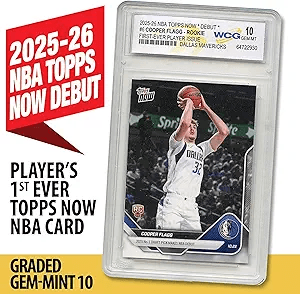
2025-26 Topps Now NBA Cooper Flagg RC #6 PSA 10
2025 Topps Now NBA #6 Cooper Flagg rookie card, Dallas Mavericks, graded GEM-Mint 10. First-ever Topps Now player issue.
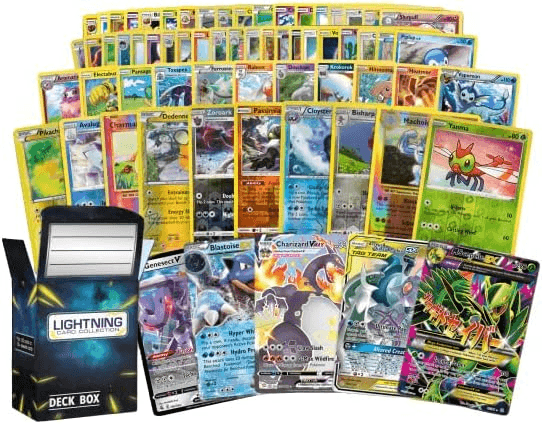
50 Pokémon Cards with Rare Legendary Card and Deck Box
Bundle includes 50 assorted authentic Pokémon cards, 1 double rare legendary card, and an LCC deck box that holds up to 100 cards.
10K+ bought in past month
Magic: The Gathering Black Lotus: The $500,000 Wizard Card That Proves Fantasy is Big Business
Unlike the Ty Cobb card, which celebrates a real-world athlete, the Black Lotus depicts a flower that doesn't exist in nature, yet it commands a price tag that could buy a fully loaded Ferrari SF90 Stradale. In the early 1990s, this card was the ultimate power move for players, allowing them to cast spells faster than their opponents could react. This highlights a unique driver of value called "utility." While baseball cards are admired strictly as historical artifacts, the Black Lotus became legendary because it was practically unbeatable in the game itself, creating a desperate demand that quickly outpaced the supply.
To prevent the value of these early cards from crashing, the game's publisher created the "Reserved List," a binding promise never to reprint specific powerful cards again. For collectors, this is the gold standard of financial security, similar to a central bank promising to stop printing money to prevent inflation. This guarantee turns a piece of cardboard into a stable asset class, ensuring that the Magic: The Gathering Black Lotus worth is protected because no new supply will ever enter the market to dilute the price.
Just as with classic literature, the specific edition matters immensely. The very first print run, known as "Alpha," features slightly more rounded corners and a much smaller population count than the subsequent "Beta" run. The difference might seem trivial to an outsider, but in a trading card glossary, "Alpha" is synonymous with "First Edition," commanding significantly higher prices. A battered Alpha copy can often outsell a pristine Beta simply because it represents the true genesis of the entire trading card game genre.
Validating these nuances requires professional authentication, often leading wealthy buyers to investigate the difference between PSA and SGC grading standards for non-sports cards. While fantasy collectors scrutinize corner curvature, hockey fans face a different nightmare regarding rough edges on cards featuring "The Great One", suffering from a manufacturing defect so common that finding a perfect copy is statistically harder than winning the lottery.
1979 O-Pee-Chee Wayne Gretzky: Why Canadian Printing Quality Makes This Card a $3.75 Million Treasure
Most sports fans recognize Wayne Gretzky as the undisputed king of hockey, but few realize his Rookie Card comes in two distinct flavors that drastically change the price. In 1979, the card was printed by Topps in the United States and O-Pee-Chee in Canada. While they look identical to the casual eye, the Canadian 1979 O-Pee-Chee Wayne Gretzky is the version collectors crave, recently fetching $3.75 million, enough to buy a limited-edition Ferrari Daytona SP3 with cash to spare.
The challenge lies in how the Canadian cards were manufactured. The cutting wires used at the O-Pee-Chee factory were notoriously dull, acting more like a tear than a slice, which left the cards with jagged "rough cut" edges. For those interested in investing in sports memorabilia for beginners, these ragged edges are often a sign of authenticity, but they make achieving a high grade nearly impossible because professional graders deduct points for physical imperfections.
Data proves just how difficult it is to find a survivor. Modern trading card tools allow us to view a "Population Report" (or "Pop Count"), which tracks exactly how many cards exist at each grade level globally. Out of nearly 12,000 O-Pee-Chee Gretzky submissions, only two have ever received a perfect "Gem Mint 10" score, making a flawless copy statistically rarer than winning many state lotteries.
Owning even a jagged, slightly imperfect copy is a badge of honor, but finding a sharp one is the equivalent of discovering a lost masterpiece in a thrift store. Since most of us probably don't have a pristine multimillion-dollar hockey legend hiding in a scrapbook, the next step is learning how to spot the more common hidden gems you actually might own.
Is Your Attic Hiding a Ferrari? 3 Red Flags to Look for Before Throwing Away Old Cards
You've seen how a 2.5-inch piece of paper can outprice a fleet of Italian supercars. While most of the cards sitting in your childhood closet are likely just sentimental keepsakes rather than life-changing wealth, the difference between a coaster and a fortune often comes down to a quick audit. Before you donate that dusty shoebox, perform a basic triage using these criteria:
- Check the Era: Pre-1980 cards rely on vintage scarcity, while modern hits rely on manufactured rarity.
- Inspect the Shine: Look for serial numbering, autographs, or holographic refractor finishes.
- Audit the Corners: Sharp, unbent corners are the first thing professional grading companies examine.
If a card survives that scrutiny, resist the urge to handle it further. Use online trading card tools to research sold listings rather than asking prices. If the numbers look promising, learn how to verify authentic vintage cards through professional appraisers rather than guessing. Even if you don't find a Ferrari in your attic, you can now look at a piece of cardboard and understand exactly why the world's wealthiest collectors are fighting over it.
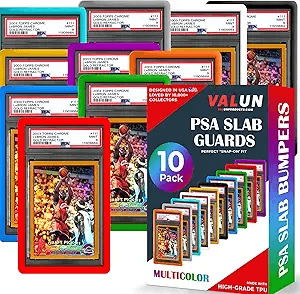
VALUN 10 Pack Slab Guards for PSA, CGC, TAG
Hard TPU bumper guards for PSA, CGC, and TAG slabs. Snug fit helps protect graded cards from scratches, scuffs, and drops.
300+ bought in past month

Card enthusiast, figoca founder, and independent software developer
Nico is a card enthusiast who built figoca after running into the same problems many collectors face: uncertain pre-grading decisions, too much tab switching for comps, and no fast way to price cards on the go. He is also a big Kansas City Chiefs fan (❤️💛), follows the Kansas City Royals (💙), and enjoys Formula 1 and Golf.
- Sports Card enthusiast
- Founder of figoca
- Independent software developer with a TypeScript and AWS background