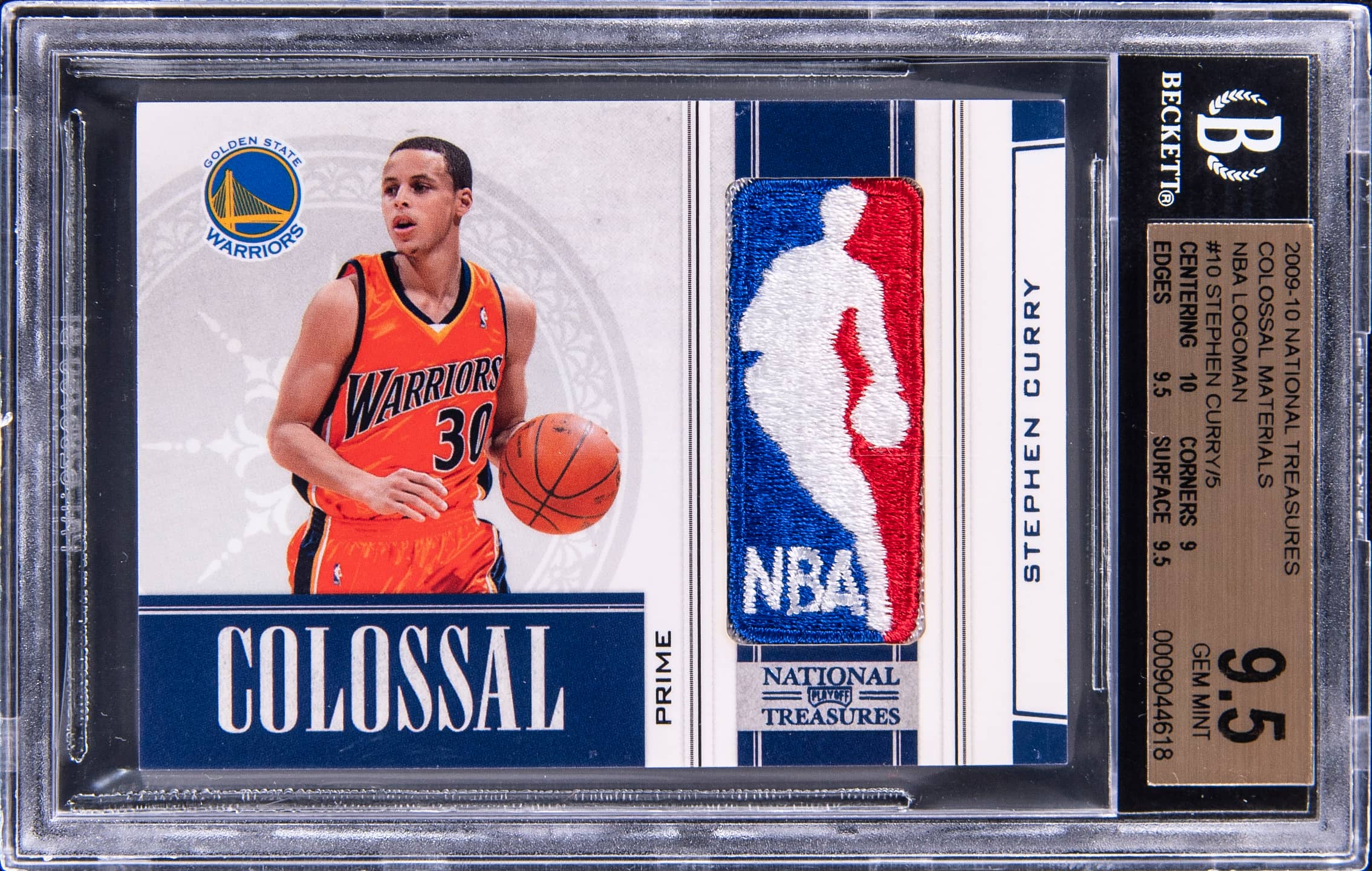
Steph Curry 2009 NT Logoman Rookie BGS 9.5 Sale
Breaking down the $244,000 Goldin sale of the 2009-10 National Treasures Stephen Curry Colossal Logoman rookie card, BGS 9.5, serial-numbered 5/5.
Sold Card
2009-10 Panini National Treasures Colossal Materials NBA Logoman #10 Stephen Curry Patch Rookie Card (#5/5) - BGS GEM MINT 9.5 - Pop 2
Sale Price
Platform
GoldinThe 2009–10 Panini National Treasures Colossal Materials NBA Logoman #10 Stephen Curry Patch Rookie Card is one of the more advanced corners of the modern basketball market. On December 7, 2025, Goldin sold a BGS GEM MINT 9.5 copy, serial‑numbered 5/5, for $244,000. With a population report of just two in this grade, this sale adds another data point to how collectors value ultra‑scarce, high‑end Curry rookies.
Card ID: What Exactly Sold?
Let’s break down the full title and what it means in hobby terms:
- Year: 2009–10
- Brand / Product: Panini National Treasures
- Subset: Colossal Materials NBA Logoman
- Card #: 10
- Player: Stephen Curry (Golden State Warriors)
- Rookie Card: Yes, this is from Curry’s true rookie season
- Serial Numbering: #5/5 – only five copies were produced
- Memorabilia: Oversized NBA Logoman patch (the league logo patch from the jersey)
- Grading Company: Beckett Grading Services (BGS)
- Grade: GEM MINT 9.5
- Population (“Pop”): Pop 2 – only two copies have received a BGS 9.5 grade
“Colossal Materials” refers to the jumbo patch window on the card. “NBA Logoman” indicates the patch is the recognizable Jerry West silhouette from the jersey – a patch type that has quietly become one of the most chased forms of memorabilia in modern high‑end basketball.
Why This Card Matters to Collectors
For many collectors, a player’s rookie‑year National Treasures cards sit near the top of the hierarchy. National Treasures is Panini’s premium, thick‑stock, low‑serial‑number product that helped define the modern “high‑end box” era when it launched in basketball during Curry’s rookie season.
Within that product, not all rookies are created equal:
- Rookie year: 2009–10 is Stephen Curry’s debut season; anything from this year is foundational to his card market.
- Logoman patch: Logoman patches are among the most coveted memorabilia types. They are normally reserved for extremely low‑numbered cards.
- Ultra low print run: At /5, this is not a card you see often. The entire world supply is five copies, and only a fraction of those will ever hit the market at any given time.
- High grade scarcity: With BGS 9.5, Pop 2, there are only two examples known at that gem mint level. That matters in a niche where many collectors track population reports closely.
Curry himself is a major driver of demand. He’s widely regarded as the greatest shooter in NBA history, a multi‑time champion and MVP, and a defining player of the pace‑and‑space era. That long‑term on‑court impact helps support sustained interest in his top‑tier rookie pieces.
Market Context: How Does $244,000 Fit In?
Converted from the reported cents, the Goldin result lands at $244,000. For a card like this, comps (short for “comparables” – recent sales of similar items used as reference) are inherently limited:
- There are only five total copies of this exact card.
- Only two sit in BGS 9.5 holders.
- High‑end Curry rookies often trade privately or infrequently at public auction.
That means there usually isn’t a long, neat list of identical‑card sales to analyze month by month. Instead, collectors tend to compare:
- Other major Curry National Treasures rookies (especially his Rookie Patch Auto /99 and lower‑numbered parallels).
- Other Curry Logoman cards, both rookie‑year and later issues.
- Similar tier cards of peer superstars (LeBron, Kobe, Jordan, modern MVPs) as rough context.
Public auction records over recent years show that:
- Curry National Treasures rookie patch autos in top grades have reached deep six‑figure and, in some cases, seven‑figure levels for especially rare parallels.
- Logoman rookies of true franchise icons often rank among a player’s three to five most important modern cards.
Within that landscape, a $244,000 sale for a non‑autographed but rookie‑year National Treasures Logoman at BGS 9.5 sits in what many collectors would view as the serious high‑end tier, but still well below the very top of Curry’s market (which includes his most premium autos and unique one‑of‑one pieces).
Because public comps for this exact card are thin, this Goldin sale on December 7, 2025 becomes a key reference point going forward. Future buyers and sellers will likely look back at this result when pricing discussions arise around this card or closely related Curry Logoman rookies.
Why National Treasures 2009–10 Still Resonates
The 2009–10 National Treasures release carries special weight for several reasons:
- Early Panini premium era: This was Panini’s inaugural flagship‑style premium product in basketball after taking over the NBA license. It helped establish the template for high‑end basketball releases in the 2010s.
- Rookie class: The set covers a strong class headlined by Stephen Curry and James Harden, with other notable names sprinkled in. But Curry has clearly emerged as the defining chase of the product.
- Low print runs and on‑card content: National Treasures is known for low‑numbered rookies, big patches, and (in many cards) on‑card autographs. That combination created a new standard for what a “premium rookie” looks like.
Even within that strong overall product, rookie Logoman cards are a tier above – they bridge the gap between set‑building and art piece. Collectors often treat them as long‑term centerpiece cards, not speculative flips.
Grading and Population: Why BGS 9.5, Pop 2 Matters
Grading companies like BGS, PSA, and others evaluate condition on factors such as corners, edges, surface, and centering, then assign a numerical grade.
For thick, patch‑based cards like National Treasures, achieving BGS GEM MINT 9.5 is not simple. Common issues include:
- Soft corners
- Edge chipping on dark borders
- Surface dimples or indentations from the patch window
Because of that, many high‑end patch cards end up in the 8–9 range. A 9.5, especially on a scarce Logoman, signals that the card has survived packing, handling, and grading with minimal flaws.
The “Pop 2” designation means only two copies of this specific card have ever received a BGS 9.5 grade according to Beckett’s population report. For collectors who focus on both rarity and condition, that pairing (print run of five, population of two in gem mint) is a meaningful datapoint.
Hobby Context: 2020s Modern and Ultra‑Modern
Curry’s rookie year falls into what many collectors think of as the “modern” era but predates the massive production surge of the late‑2010s and 2020s. That positions 2009–10 National Treasures in an interesting spot:
- Supply is naturally limited: Print runs are low, especially on numbered parallels and Logoman patches.
- Graded population is constrained: Not every card was pulled, preserved, and graded – particularly in those early Panini years.
- Demand has matured: Curry’s career arc is now well‑established. Collectors aren’t responding to a short‑term hot streak; they’re weighing a long résumé of championships, MVP awards, and records.
Market interest in Curry has been supported over the past several seasons by:
- Record‑breaking 3‑point milestones
- Continued All‑Star level play
- Ongoing relevance of the Warriors in playoff discussions
These factors influence how the hobby views the stability of his legacy, especially for true cornerstone pieces like premium National Treasures rookies and Logoman patches.
What This Sale Tells Collectors and Small Sellers
For active hobbyists and small sellers, a $244,000 sale isn’t just a headline; it has a few practical takeaways:
Top‑tier Curry rookies remain firmly in the high‑end lane. Even non‑autographed pieces, when combined with a Logoman patch, rookie‑year status, and a strong grade, can command serious five‑ and six‑figure attention.
Rarity plus condition is still a core formula. A print run of /5 and a Pop 2 grade set this card apart. When you’re assessing other cards – even at more accessible price points – it’s useful to think in these same terms: how many exist, and how many exist in this condition?
Thin comps require context, not guesses. Cards like this don’t change hands every month. When public sales are sparse, collectors lean more heavily on product reputation, player legacy, and relative comparisons to similar cards, rather than treating any single sale as a guarantee of future values.
Auction houses matter. A sale like this running through Goldin on December 7, 2025 signals that high‑end buyers are still using established auction platforms for their biggest moves. For smaller cards, this doesn’t mean you need to use a major house, but it’s worth knowing which channels serious collectors watch.
Final Thoughts
The 2009–10 Panini National Treasures Colossal Materials NBA Logoman #10 Stephen Curry Patch Rookie Card (#5/5) in BGS GEM MINT 9.5 is a nuanced piece of Curry’s rookie portfolio. With only five copies made and just two graded at this level, it sits at the intersection of rarity, condition, and product prestige.
The $244,000 result at Goldin on December 7, 2025 won’t define the entire Curry market, but it does provide a meaningful waypoint for anyone tracking how top‑end Stephen Curry rookies are being evaluated in today’s hobby. As always, it’s best viewed alongside other recent sales, the broader state of the basketball card market, and your own collecting goals.
For collectors at every level, this sale is a reminder that understanding print runs, grading, product history, and player legacy can help make sense of headline numbers—whether you’re buying a flagship rookie in a raw stack or following six‑figure Logoman auctions from a distance.