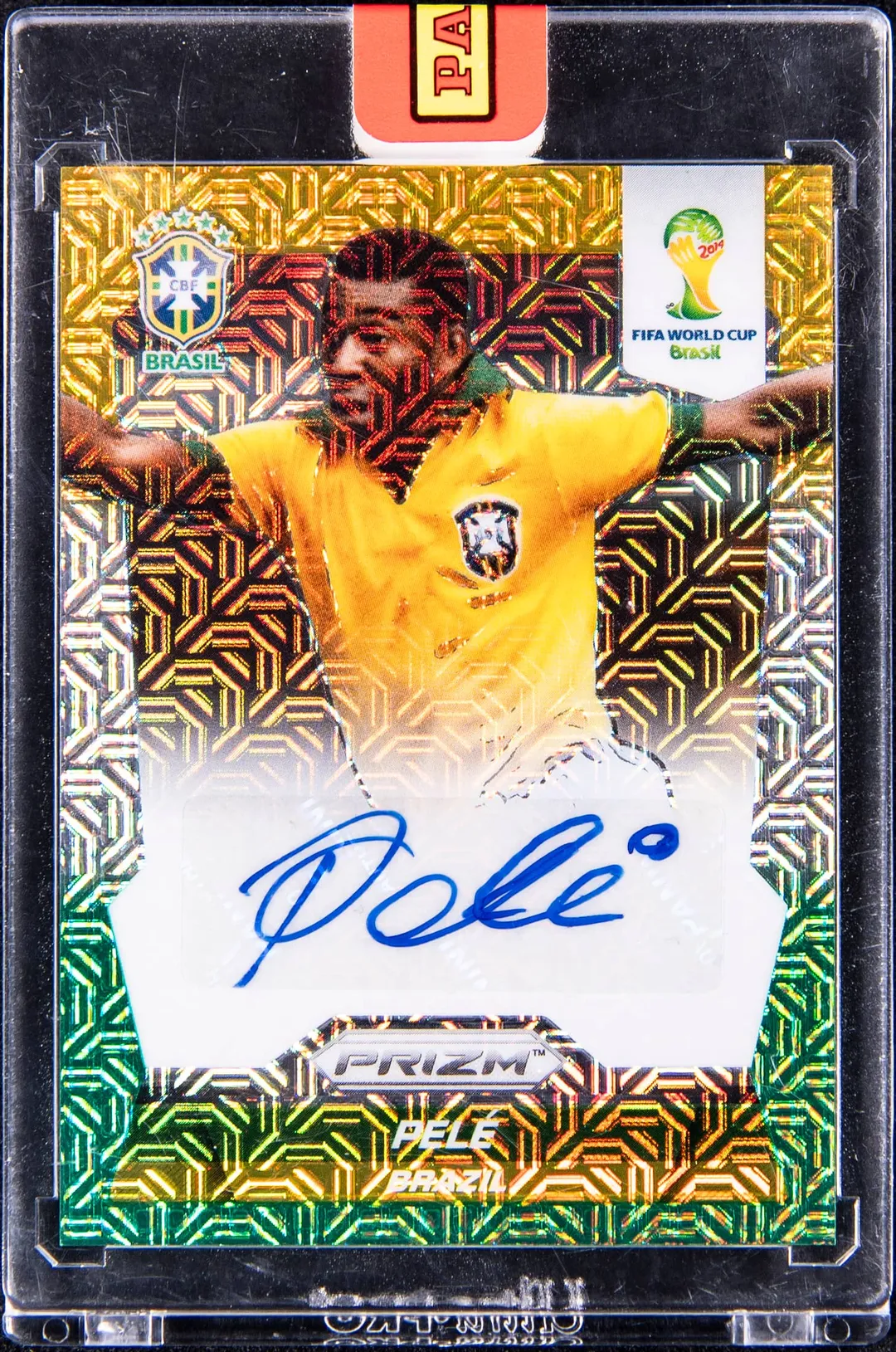
Pelé 2014 Prizm World Cup 1/1 Auto Sells for $106K
Goldin sold a 2014 Panini Prizm World Cup El Samba 1/1 Pelé autograph for $106,384. See why this modern World Cup card matters for collectors.
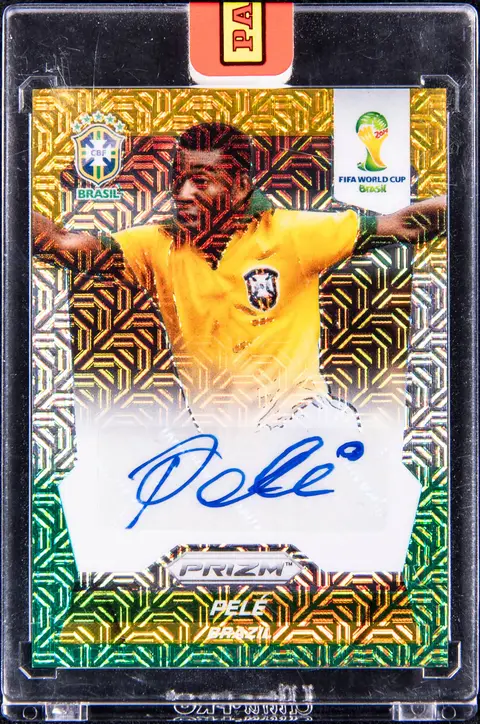
Sold Card
2014 Panini Prizm World Cup Signatures El Samba Prizm #S-PEL Pele Signed Card (#1/1) - Panini Encased
Sale Price
Platform
Goldin2014 Panini Prizm World Cup Signatures El Samba Prizm #S-PEL Pele Signed Card (#1/1) – Panini Encased Sells for $106,384
On January 4, 2026, Goldin closed a notable modern soccer auction: a 2014 Panini Prizm World Cup Signatures El Samba Prizm #S-PEL Pele signed card, serial-numbered 1/1 and Panini-encased, sold for $106,384.
For collectors who follow high-end soccer, this is a meaningful data point for both Pele’s modern autograph market and the long-term status of 2014 Prizm World Cup as a cornerstone set.
Card overview
Let’s break down what this specific card is:
- Player: Pelé (Brazil)
- National team: Brazil men’s national team
- Year: 2014
- Set: Panini Prizm World Cup
- Subset: World Cup Signatures – El Samba Prizm parallel
- Card number: #S-PEL
- Serial numbering: 1/1 (one-of-one)
- Autograph: Panini-certified, on-card or sticker (Panini World Cup autos from this period are typically sticker, but this listing is described only as “Signed Card” and “Panini Encased”)
- Encapsulation: Factory Panini-encased (not third-party graded)
- Rookie status: Not a rookie; this is a key modern autograph issue from a landmark set.
The “El Samba Prizm” naming indicates a special parallel version within the World Cup Signatures lineup, with this copy being the only one produced. In hobby terms, a 1/1 (one-of-one) is the highest level of scarcity; there are no other identical copies of this exact parallel.
Panini’s own tamper-evident encapsulation is common for premium autographs and 1/1s, especially for World Cup products. While this is not an independent grade from PSA, BGS, or SGC, many collectors treat a clean, original Panini seal as a positive attribute because it confirms the card is in its factory-issued state.
Why 2014 Prizm World Cup matters
2014 Panini Prizm World Cup is widely regarded as a foundational modern soccer set. For many collectors, it plays a role similar to flagship chrome-style sets in basketball and football:
- It was a widely distributed, chromium-stock World Cup product.
- It introduced many collectors (especially in North America) to soccer cards in a mainstream way.
- It contains key World Cup-era cards and parallels for global legends and modern stars.
Within that context, a Pelé signed 1/1 from this set sits at the very top of the modern World Cup pyramid. While Pelé’s true playing-days and vintage issues (for example, his 1958 cards and stickers) are his historical keys, his 2014 Prizm World Cup autographs have become an important bridge between vintage icon status and the modern, serial-numbered, parallel-driven hobby.
Market context and recent sales
To understand what this $106,384 sale means, it helps to look at the broader landscape:
- Pelé autographs from 2014 Prizm World Cup: Standard World Cup Signatures and color parallels (not 1/1) have sold across a wide range, depending on serial number, condition, and the marketplace. Numbered parallels in strong condition and/or graded by PSA or BGS have historically achieved five-figure prices at major houses, while lower-tier parallels and raw copies have settled in the mid four- to low five-figure range.
- 1/1 Pelé cards in general: One-of-one Pelé cards from high-profile modern sets (Prizm, National Treasures, Immaculate, and other premium Panini releases) have previously achieved strong prices, especially when auctioned by major houses. Realized prices vary widely by design, brand, and timing but tend to sit at the top end of Pelé’s modern card market.
- World Cup Prizm high-end comps: Premium 2014 Prizm World Cup cards for other global icons (such as Messi and Ronaldo) have recorded headline sales, particularly for 1/1s, Gold /10, and key signature parallels. These results have helped establish 2014 Prizm World Cup as a long-term “reference set” for the modern soccer market.
Because this specific El Samba Prizm #S-PEL 1/1 is, by definition, unique, there is no exact comp in recent public data. However, the final price of $106,384 at Goldin fits within the pattern seen for:
- Top-tier 1/1 Pelé modern issues from respected brands.
- Trophy-card type pieces from 2014 Prizm World Cup.
Within that framework, this sale reads as a strong but believable outcome for a one-of-one Pelé auto in a landmark modern soccer set, rather than an outlier disconnected from broader market behavior.
Why collectors care about this card
Several factors give this card weight in the hobby:
1. Pelé’s status in soccer history
Pelé is widely viewed as one of the greatest players of all time. His legacy is tied tightly to Brazil’s World Cup dominance in the mid‑20th century, and his name still defines soccer for many casual fans.
For collectors, that means:
- His vintage issues are treated as historical artifacts.
- His modern autographs are a relatively accessible way to own a certified, visually strong piece connected to that legacy.
A 1/1 autograph from a World Cup-themed product adds an extra layer of relevance, because World Cups were where Pelé built his global reputation.
2. 2014 as a modern inflection point
The hobby often splits eras into:
- Vintage: roughly pre-1980.
- Junk wax era: mass-produced cards from the late 1980s and early 1990s.
- Modern and ultra-modern: lower print runs, parallels, autographs, and serial-numbered cards from the mid‑1990s forward, with a big acceleration in the 2010s.
2014 Prizm World Cup sits firmly in the modern/ultra-modern period, where scarcity (via serial numbers and parallels) plays a central role. The set’s print and the global nature of the World Cup gave it enduring visibility. Collectors who entered or re-entered the hobby in the 2010s often view 2014 Prizm as their starting point for serious soccer collecting.
3. 1/1 scarcity and Panini encasement
A 1/1 is the purest form of scarcity in modern cards: there is only one copy produced. For a global icon like Pelé, that creates a strong focal point for advanced player collectors, high-end set builders, and buyers who search for “trophy cards” (high-profile, centerpiece items rather than volume collecting).
Panini’s factory encapsulation, while not the same as a third‑party grade, adds perceived security:
- The card is sealed with a Panini label confirming authenticity and set details.
- The original seal is often viewed as a positive when the card appears at auction, especially if the case is clean and undamaged.
Some buyers later cross such cards into PSA, BGS, or SGC holders to obtain a numerical grade for both the card and the autograph, but many are also content to leave true 1/1s in their original Panini shells.
How this result fits into broader Pelé and soccer trends
Recent years have seen:
- Ongoing attention to iconic legends (Pelé, Maradona, Cruyff) alongside modern stars.
- Increased interest in World Cup-linked cards, as international tournaments give collectors distinct storylines and milestones to follow.
- A clearer separation between routine inserts and cards with durable collecting hooks: true scarcity (1/1s, /10s), on-card or certified autographs, and association with historically important sets.
Within that environment, a Pelé 1/1 signature from 2014 Prizm World Cup feels structurally aligned with what the market tends to treat as a long-term, high-priority target.
It’s also worth noting that Pelé’s passing in late 2022 brought a renewed focus on his career and memorabilia. The market has had time to absorb that event; the current sale should be viewed as part of a longer adjustment phase rather than an immediate reaction. This $106,384 result in early 2026, several years removed, helps define where the modern Pelé autograph market is stabilizing for true top-end pieces.
Takeaways for collectors and small sellers
For collectors, especially those newer to soccer or returning to the hobby:
- Modern doesn’t mean common. While many ultra-modern cards are plentiful, specific combinations—legendary player, key set, on-card or sticker autograph, and true 1/1 serial numbering—can be genuinely scarce.
- Set reputation matters. 2014 Prizm World Cup continues to function as a reference point for modern soccer cards. High-end results from Goldin and other houses reinforce that stature.
- Comps (comparable sales) require nuance. With unique 1/1s, you almost never get a perfect match. It’s more about triangulating from:
- Other parallels from the same set.
- Other 1/1s of the same player across similar products.
- The broader trajectory of legends vs. active stars.
For small sellers, this sale does not automatically translate to similar values for all Pelé or 2014 Prizm cards. Instead, it underscores which attributes the market currently respects most:
- Clear scarcity (serial numbers and meaningful parallels).
- Connection to historically important sets.
- Clean provenance through major auction houses.
Final thoughts
Goldin’s January 4, 2026 sale of the 2014 Panini Prizm World Cup Signatures El Samba Prizm #S-PEL Pelé signed 1/1 for $106,384 is another marker in the evolution of modern soccer’s high end.
It highlights how:
- A legend’s legacy can bridge vintage and modern collecting.
- A single set—here, 2014 Prizm World Cup—can become a long-term pillar.
- True scarcity plus a global icon continues to command attention, even as the broader card market shifts through different cycles.
For collectors tracking the top of the market, this result is less about surprise and more about confirmation: Pelé’s most significant modern World Cup issues, especially unique 1/1 autographs, remain firmly in the conversation among the hobby’s most pursued soccer cards.