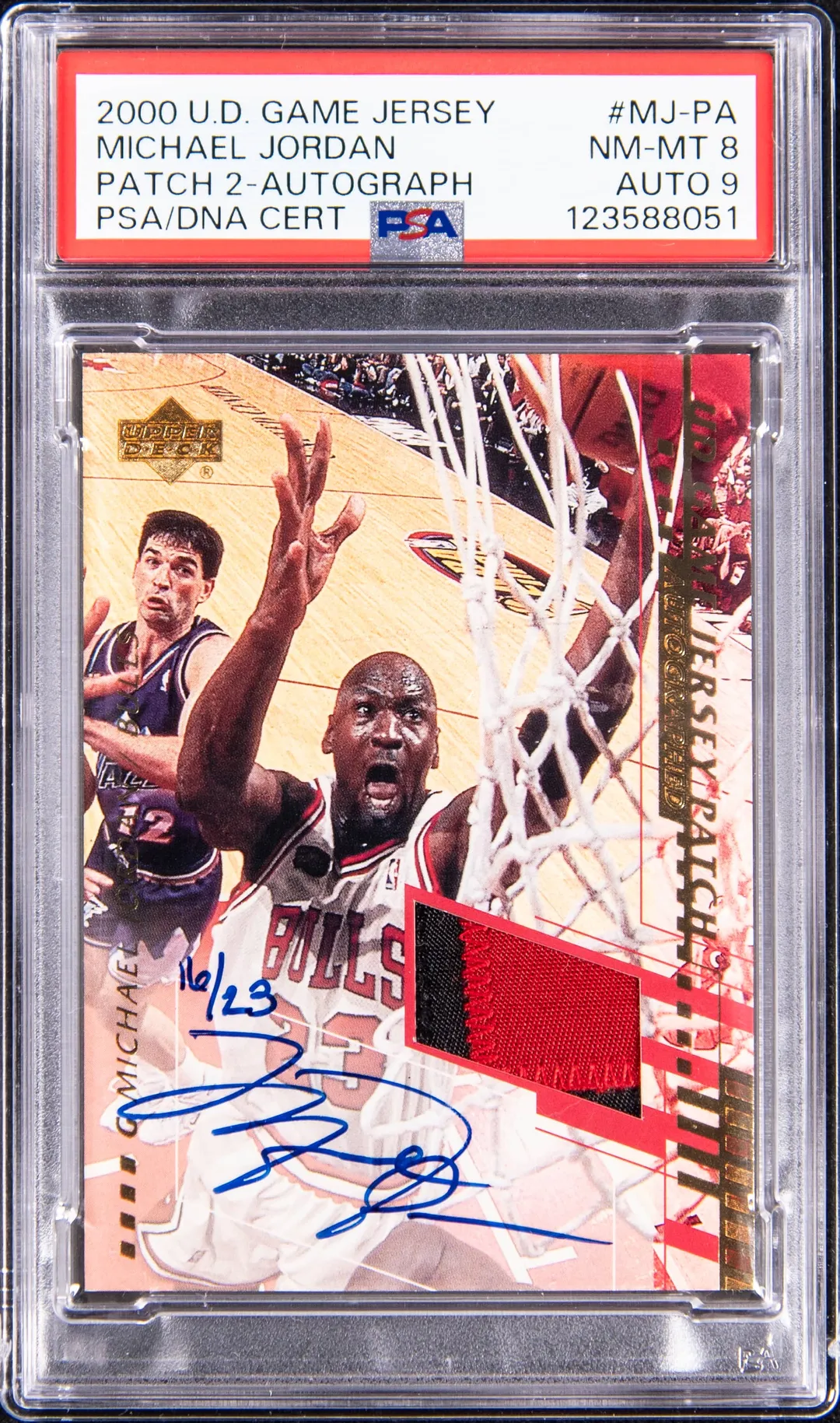
Michael Jordan 2000-01 UD Patch Auto Sells for $378K
Goldin sold a 2000-01 Upper Deck Game Jersey Patch 2 Autograph Michael Jordan /23 (PSA 8, PSA/DNA 9, Pop 1) for $378,200 on Dec 7, 2025.
Sold Card
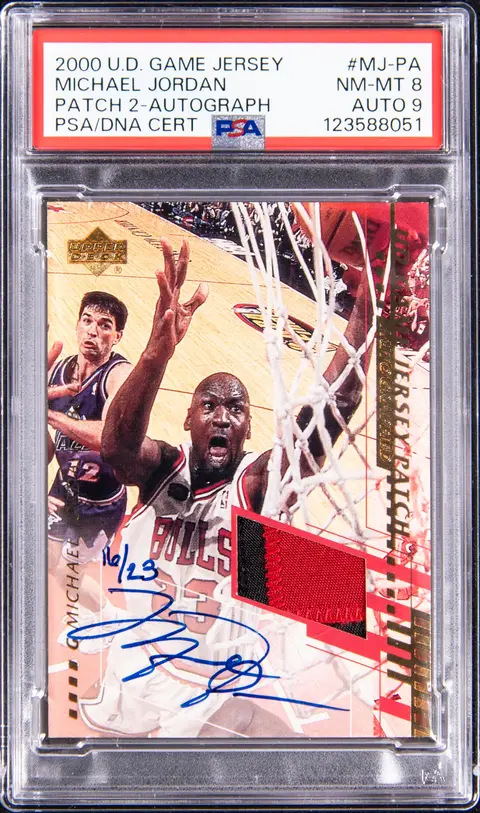
2000-01 Upper Deck Game Jersey Patch 2 Autograph #MJ-PA Michael Jordan Signed Game-Used Patch Card (#16/23) - PSA NM-MT 8, PSA/DNA MINT 9 - Pop 1
Sale Price
Platform
Goldin2000-01 Upper Deck Game Jersey Patch 2 Autograph #MJ-PA Michael Jordan Signed Game-Used Patch Card (#16/23) - PSA NM-MT 8, PSA/DNA MINT 9 - Pop 1 Sells for $378,200
On December 7, 2025, Goldin closed a major Michael Jordan sale that will have a lot of collectors double-checking their Jordan PC and their 2000s game-used inserts.
A 2000-01 Upper Deck Game Jersey Patch 2 Autograph #MJ-PA Michael Jordan sold for $378,200. The card is serial numbered 16/23, features a game-used patch and on-card autograph, and is graded PSA NM-MT 8 with a PSA/DNA MINT 9 auto. According to PSA’s population report, this exact configuration sits as a Pop 1 at the time of the sale.
Below, we’ll break down what this card is, why it matters, and how this result fits into the broader Jordan and high-end 2000s insert market.
Card rundown: what exactly sold?
For newer collectors or those returning to the hobby, it helps to decode the full title:
- Year: 2000-01
- Brand / Set: Upper Deck – Game Jersey Patch 2 Autograph insert
- Card number: #MJ-PA
- Player: Michael Jordan
- Team on card: Typically Chicago Bulls for this era’s Upper Deck Jordan issues
- Key features:
- Game-used patch (multi-color swatch from a Jordan game-used jersey)
- On-card autograph (Jordan signed directly on the card, not a sticker)
- Serial numbered 16/23 (only 23 copies of this exact version were made)
- Grading:
- Card: PSA NM-MT 8 (Near Mint-Mint)
- Autograph: PSA/DNA MINT 9
- Population: Pop 1 in this exact grade/auto combo (no other copies graded PSA 8 with a PSA/DNA 9 auto as of the sale)
This is not a rookie card, but it is very much a “key issue” Jordan: an early-2000s, low-serial, on-card auto with a premium game-used patch from a flagship brand of the era.
Why the 2000-01 Game Jersey Patch 2 Autograph line matters
The early 2000s were a turning point for high-end basketball inserts and memorabilia cards. A few reasons this specific line has collector weight:
Game-used plus on-card auto combination
In modern products, game-used patch autos are common. In 2000-01, pairing a bold, on-card Jordan signature with a game-used patch and a print run of just 23 copies was still a relatively new, premium concept. These cards helped define what “high-end” looked like in the post-90s Jordan era.Low serial-numbering (23 copies)
A card limited to 23 – matching Jordan’s iconic jersey number – taps directly into how the hobby thinks about scarcity. In an era before today’s many parallels, a print run of 23 felt truly tough.Transition-era Jordan collectible
This card comes from Jordan’s post-Bulls, early-Wizards time frame, but Upper Deck maintained Bulls imagery and branding on many of his premium issues. For collectors, this era bridges classic 90s Jordan inserts and the more modern designs and technologies of the 2000s.Upper Deck as a Jordan cornerstone brand
Upper Deck holds Jordan’s long-term exclusive autograph and memorabilia deal. That means some of the most important Jordan autos and game-used cards come from UD products, and this card sits firmly in that lane.
Grading overview: PSA 8 with PSA/DNA 9 auto, Pop 1
The copy that sold at Goldin carries a PSA NM-MT 8 for the card and a PSA/DNA MINT 9 for the autograph.
- PSA 8 (Near Mint-Mint) typically allows for relatively minor wear – a bit of corner or edge touch, or light surface issues – but remains presentable. With patch/autograph cards, thickness and handling out of the pack can make higher grades tougher.
- PSA/DNA MINT 9 auto signals a strong, clean signature with only very slight issues, if any. For a bold, on-card MJ autograph over a game-used patch, a 9 is considered a premium auto grade.
- Pop 1 means that as of PSA’s latest population report, there is only one example in their database with this exact card grade and auto grade combination. There may be other grade combos (for example, PSA 7 with 9 auto, or PSA 8 with 10 auto), but this specific configuration is unique.
Population data is one of the hobby’s main tools for understanding supply. When you see “Pop 1,” it doesn’t automatically mean the card is the best or most valuable, but it does underscore that the market cannot easily replace this exact graded copy.
Price context: where does $378,200 sit?
The card sold at Goldin for $378,200 (converted from the hammer price in cents). To frame that number, it helps to look at three layers:
Exact-card comps (same card, different copies)
Reliable public sales for this exact 2000-01 Upper Deck Game Jersey Patch 2 Autograph #MJ-PA in recent years are limited. Ultra-rare MJ patch autos from the early 2000s do not trade frequently, and when they do, results can be spread across multiple auction houses and sometimes behind private sales.When comparable copies do surface at major houses, they typically close firmly in the high five-figure to low/mid six-figure range, depending on patch quality, auto strength, and grade. Within that context, $378,200 is clearly at the upper end, consistent with a premium example in a strong marketplace.
Comparable Jordan patch/autos from the same era
Looking at other early-2000s MJ patch autos with low serial-numbering and on-card signatures from Upper Deck, we see:- High-end examples with especially strong patches and high grades reaching into the mid- and even high-six figures at the very top of the market.
- More condition-sensitive or less visually striking versions often landing lower, though still very expensive relative to most modern cards.
This sale slots into that top-tier pattern: a scarce, visually important Jordan with a strong auto and pop 1 status landing in the higher portion of the known range.
Relative to the broader Jordan grail market
Compared to the most famous Jordan cards – 1986 Fleer rookies in high grade, PMG Green/Red, Jambalaya, 90s credentials, and premium Exquisite autos – this card’s price lines up with the modern expectation that:- Rookie cards and iconic 90s inserts anchor the market in one lane.
- Low-serial, on-card, game-used autos from the early 2000s form another lane, with select examples regularly pushing six figures.
At $378,200, this Game Jersey Patch 2 Autograph is clearly being treated by the market as a serious Jordan grail, even if it isn’t as widely discussed as the PMGs or Fleer rookies.
Because exact historical sales for this particular serial number (16/23) and grade combo are not widely cataloged, it’s safer to say that the price is consistent with the upper tier of high-end Jordan patch autos, rather than calling it an outright record without verified evidence.
Collector significance: why this card matters
For collectors, this sale highlights several key themes that are shaping the modern Jordan market:
Early 2000s game-used autos are maturing
Cards like this were once seen as “modern luxury” pieces. Now, with over two decades of history, they’re starting to feel closer to established classics. Many serious Jordan collectors now view early-2000s Upper Deck patch autos as cornerstone holdings alongside 90s inserts.Preference for on-card autographs
On-card means Jordan signed directly on the card’s surface. Collectors often prefer this over sticker autos, because the autograph feels more integrated and has stronger display appeal. As more modern products rely on stickers, older on-card MJ signatures stand out even more.Patch quality and game-used provenance
Game-used material (swatches from jerseys worn in NBA games) is generally preferred over event-worn or “player-worn” material. In the early 2000s, UD’s game-used line still leaned heavily into true game usage, which helps these cards hold status.Low print runs in a pre-parallel explosion era
Unlike many ultra-modern products with a long list of different colored parallels, this era typically had fewer, more clearly defined versions. A card numbered to 23 feels significant in part because there aren’t another dozen versions numbered to 25, 49, 75, etc.Steady MJ demand
Jordan doesn’t rely on current-season performance, injuries, or team changes. Instead, his market is guided by:- Long-term GOAT (greatest of all time) status
- Nostalgia among collectors who grew up in the 80s and 90s
- A steady international fan base
That stability tends to support sustained interest in scarce, high-end pieces like this one.
How small sellers and active hobbyists can use this information
Not everyone is hunting six-figure Jordan patch autos, but sales like this still matter for everyday collectors and sellers:
Use high-end sales as a compass, not a target
Watching grail-level auctions helps you understand which eras, sets, and formats the hobby treats as premium. This doesn’t mean every Jordan insert or jersey card is suddenly worth a fortune, but it can guide you toward:- Early Upper Deck game-used and auto cards
- Low-serial Jordan issues with strong design and clear provenance
Check pop reports and grading trends
Pop reports (population reports) are free tools from grading companies that show how many copies of a card exist in each grade. For your own cards:- Compare your grade to the overall pop and highest grades
- Note whether your card is in a crowded grade band or relatively thin
While pop by itself doesn’t set value, it helps you gauge how easily the market could replace what you’re holding.
Pay attention to set reputation
Not every game-used card is created equal. Understanding the hierarchy of brands and years—like 90s inserts, early-2000s Upper Deck, Exquisite-era autos—can help you focus on cards that collectors already respect.Document provenance for your better cards
When a card passes through a major auction house like Goldin, that sale becomes part of its story. If you ever sell a notable card, keeping auction receipts and grading records can add context that serious buyers appreciate.
Final thoughts
The $378,200 sale on December 7, 2025, at Goldin of the 2000-01 Upper Deck Game Jersey Patch 2 Autograph #MJ-PA Michael Jordan (serial numbered 16/23, PSA NM-MT 8, PSA/DNA MINT 9, Pop 1) is a clear signal of how collectors are currently valuing early-2000s, low-serial, on-card MJ patch autos.
For long-time Jordan collectors, it reinforces the idea that this era sits alongside the iconic 90s inserts as a core part of the Jordan landscape. For newer or returning collectors, it offers a roadmap: understand the key sets, the scarcity, and the grading context, and use that knowledge to build a collection that fits your own budget and goals—no six-figure grail required.
As always, this sale is a data point, not a guarantee. But it’s an important one for anyone tracking how the Jordan high-end market continues to evolve.