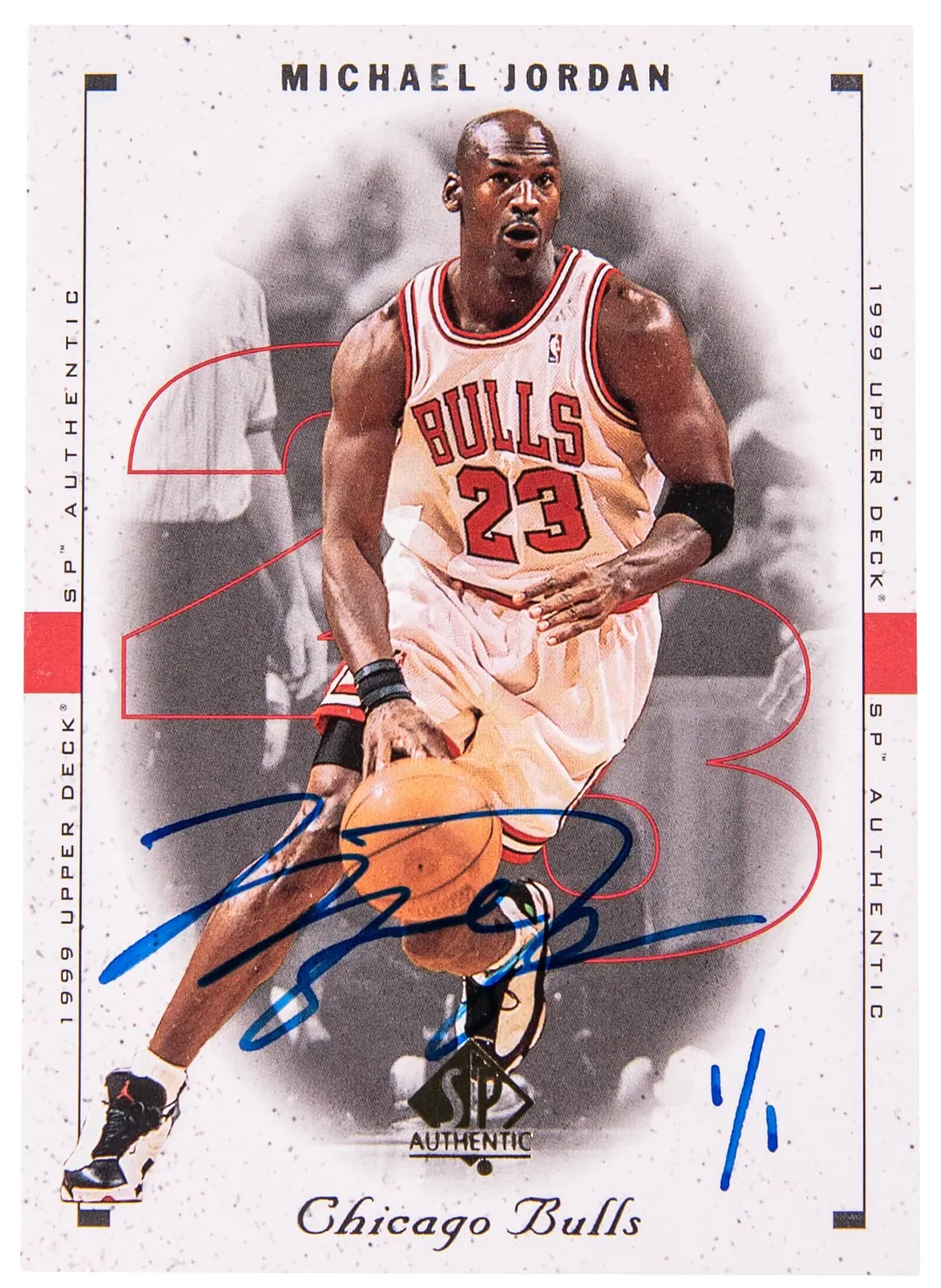
Michael Jordan 1/1 SP Authentic Buyback Sells for $36K
Goldin sold a 2013-14 SP Authentic 1/1 Michael Jordan Buyback auto for $36,600 on Nov 30, 2025. Here’s what this UDA-signed card means for collectors.
Sold Card
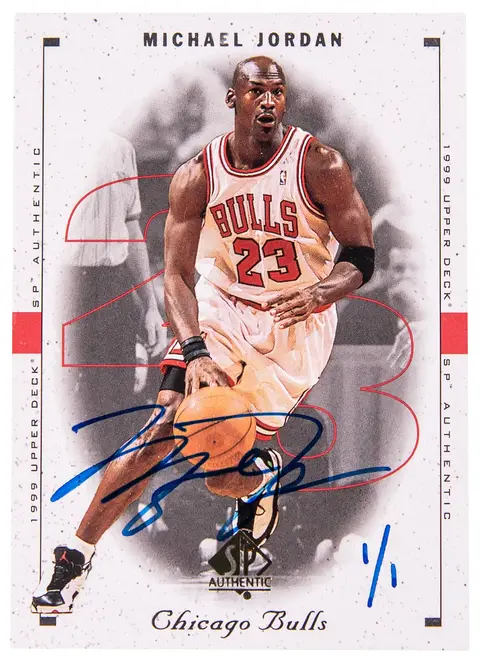
2013-14 Upper Deck SP Authentic Buyback Signatures '98-99 SP Authentic Sample #23 Michael Jordan Signed Card (#1/1) - UDA COA
Sale Price
Platform
GoldinMichael Jordan’s autograph market continues to show depth and strength. On November 30, 2025, Goldin sold a 2013-14 Upper Deck SP Authentic Buyback Signatures ’98-99 SP Authentic Sample #23 Michael Jordan signed card, serial-numbered 1/1 and accompanied by a UDA (Upper Deck Authenticated) COA, for $36,600.
This piece is an unusual mix of eras: it’s a late-1990s SP Authentic Sample card that was later bought back by Upper Deck and signed during the 2013-14 SP Authentic release. The result is a modern-era, pack-issued autograph built on a late-90s MJ card shell.
Card overview: what exactly sold?
From the listing details, here’s how this card breaks down for collectors:
- Player: Michael Jordan
- Team: Chicago Bulls (depicted in Bulls uniform; standard for 1998-99 SP Authentic-era MJ)
- Original base card: 1998-99 SP Authentic Sample #23
- Buyback issue: 2013-14 Upper Deck SP Authentic Buyback Signatures
- Serial numbering: Hand-numbered 1/1 (one-of-one)
- Autograph: On-card signature, authenticated by Upper Deck Authenticated (UDA COA)
- Grading: The description does not indicate a slab or a numeric grade, which strongly suggests it was sold raw (in its original or later holder) with UDA certification rather than a third-party card grade.
- Rookie status: This is not a rookie card. It’s a late-career MJ card from the 1998-99 SP Authentic line, later turned into a pack-inserted auto through the 2013-14 buyback program.
Upper Deck’s Buyback Signatures program takes original cards from prior years, has them signed by the athlete, hand-numbers them, and inserts them into modern products as chase hits. This MJ is exactly that: a late-90s SP Authentic Sample transformed into a 1/1 autograph chase for 2013-14 SP Authentic.
Why this card matters to collectors
1. On-card Jordan auto with UDA provenance
Jordan’s autograph is controlled tightly by Upper Deck. For collectors, three factors tend to drive premium interest in MJ autos:
- On-card signature – The autograph is signed directly on the card surface (not on a sticker). Many collectors prefer this because it feels more personal and visually integrated.
- Clear provenance – The presence of a UDA COA means the autograph comes with Upper Deck’s in-house authentication. UDA is widely trusted as the primary source of legitimate MJ signatures.
- Key brands and eras – SP Authentic is one of Upper Deck’s marquee brands, especially in the late 90s and 2000s. Pairing Jordan with SP Authentic, even via a buyback, checks an important brand box for many hobbyists.
This card brings all three together.
2. One-of-one scarcity
A 1/1, or "one-of-one," is a card that is serial-numbered as the only copy produced in that specific version. One-of-one status doesn’t automatically make a card more desirable than every other MJ issue, but it does introduce real, structural scarcity: there is no way for another collector to own the same exact buyback variant.
In practice, that matters most to:
- Player collectors trying to assemble unique or unusual Jordan pieces
- High-end MJ auto collectors who value one-of-a-kind cards within key brands
Compared with serial-numbered MJ cards out of 25, 50, or 100, this MJ stands out as a single-copy piece tied to a historically important Upper Deck line.
3. Cross-era appeal
This card lives in an interesting space between:
- Late 90s SP Authentic Jordan – a classic era for SP design, with Jordan cards that many 90s kids recognize.
- Modern 2010s auto culture – where pack-pulled, serial-numbered, on-card autographs with clear provenance became the hobby norm.
For collectors who like Jordan, Upper Deck, and SP Authentic, this buyback format bridges eras in a clean, hobby-respectable way.
Market context: how does $36,600 fit in?
When collectors talk about “comps” (short for comparables), they mean recent sale prices for the same card or closely similar cards. That helps put a new sale in context without implying future price predictions.
Because this specific card is a 1/1 buyback, there is no true direct comp with identical features. Instead, it’s more useful to look at adjacent categories:
- Other Upper Deck MJ on-card autos from premium brands (SP Authentic, Exquisite, Chronology)
- Other Jordan 1/1 or very low-serial-numbered autos
- Other Jordan buyback autos from Upper Deck
Across major auction houses and marketplaces in recent years, patterns generally look like this:
- Standard Upper Deck MJ autos from the 2000s (numbered /23 to /100 depending on the set) often trade from the mid four-figure to low five-figure range, depending on brand, design, and grade.
- Iconic, high-end issues (for example, Exquisite Limited Logos, early 2000s SP Authentic with low numbering, or multi-star autos) can climb into the upper five figures and beyond, with particularly famous patches or dual-signature cards going even higher.
- Jordan buyback autos—especially 1/1s tied to strong brands—tend to land somewhere between standard autos and the most famous Exquisite-type cards, depending on eye appeal and the underlying base card.
At $36,600, this Goldin sale lands within the established high-end MJ auto ecosystem, but not at the absolute top of the Jordan market. It reflects:
- Real recognition of the 1/1 status and SP Authentic branding
- Added confidence from the UDA provenance
- A premium above many more common MJ autos, but below the most famous Exquisite or patch-based grails
In other words, it’s a strong but not shocking result given how collectors currently value premium, non-rookie MJ autographs.
How it compares to other Jordan pieces
This card is best thought of as:
- A unique, one-of-one MJ auto with UDA backing
- A brand piece for collectors who prioritize SP Authentic and 90s Jordan aesthetics
It is not:
- A flagship rookie (like the 1986-87 Fleer Jordan)
- A major patch card (there is no patch, only autograph)
- One of the historically record-setting MJ cards tied to the very top of the market
Recent record-type MJ sales often involve:
- 1986-87 Fleer rookie cards in elite grades
- Exquisite patch autos with very low numbering
- Rare multi-signature pieces
Those can reach multiples of this $36,600 result. By comparison, this SP Authentic buyback sits in the tier of serious high-end Jordan autos that are important to player collectors but not headline-setting for the entire hobby.
Why SP Authentic and the 1998-99 era still resonate
Even though this is a 2013-14 buyback, the underlying card is from 1998-99 SP Authentic, which taps into a key timeframe:
- Jordan had just completed his second three-peat with the Bulls
- SP Authentic was a premium brand that helped define late-90s Upper Deck aesthetics
For collectors who grew up in that era, 1998-99 SP Authentic sits alongside other classic late-90s premium issues. A buyback autograph that reuses that original design carries nostalgic weight—especially when combined with a clear, bold on-card signature.
Market signals and collector takeaways
A single sale doesn’t set the market, but it can offer signals:
Steady demand for quality MJ autos
The willingness to pay over $30,000 for a non-rookie, non-patch Jordan card underscores that collector demand for clean, authenticated signatures remains strong.Provenance and brand still matter
The combination of Upper Deck, SP Authentic, and UDA COA is a clear plus. Collectors routinely show a preference for MJ autos where they fully trust both the card and the autograph source.One-of-one status is meaningful—but contextual
Not every 1/1 is equal. In this case, one-of-one status attached to a late-90s SP Authentic Sample design and a major brand gave the card enough gravity to command a high-end result.Buyback autos carve out their own lane
Buybacks occupy a niche between original-era autos and modern insert autos. Results like this suggest that for iconic players, well-executed buybacks with strong branding can hold the interest of serious collectors.
For newcomers and returning collectors
If you’re just stepping (back) into the hobby, here are a few practical notes drawn from this sale:
Comps (comparable sales): When researching value, look for recent sales of similar cards—same player, similar brand tier, autograph type, and serial numbering. A 1/1 will rarely have exact comps, so focus on adjacent cards.
Provenance and authentication: With MJ autos especially, prioritize cards with clear, trusted authentication—UDA, PSA/DNA, Beckett, or high-confidence pack-issued autos from Upper Deck-era products.
Brand hierarchy: Not all brands are equal. SP Authentic, Exquisite, and other top-tier lines historically command stronger interest than lower-end releases.
Avoid assuming future gains: This $36,600 result tells you what at least two parties were willing to do on November 30, 2025 through Goldin. It does not guarantee future values. Use results like this as data points, not promises.
Final thoughts
The 2013-14 Upper Deck SP Authentic Buyback Signatures ’98-99 SP Authentic Sample #23 Michael Jordan 1/1, sold by Goldin on November 30, 2025 for $36,600, is a clear example of where high-end MJ autos currently live: premium but measured, strong but not speculative.
For Jordan collectors, it’s a distinctive one-of-one that ties together 90s SP Authentic design, modern pack-issued auto culture, and UDA-backed authenticity. For the broader hobby, it’s another data point showing that well-centered, brand-strong, on-card MJ autos continue to attract serious, steady demand.
As always, if you’re building a Jordan collection—whether on a budget or at the high end—focus on clarity: know the set, understand the autograph source, and look at multiple recent sales to get a realistic, data-based picture of the market.