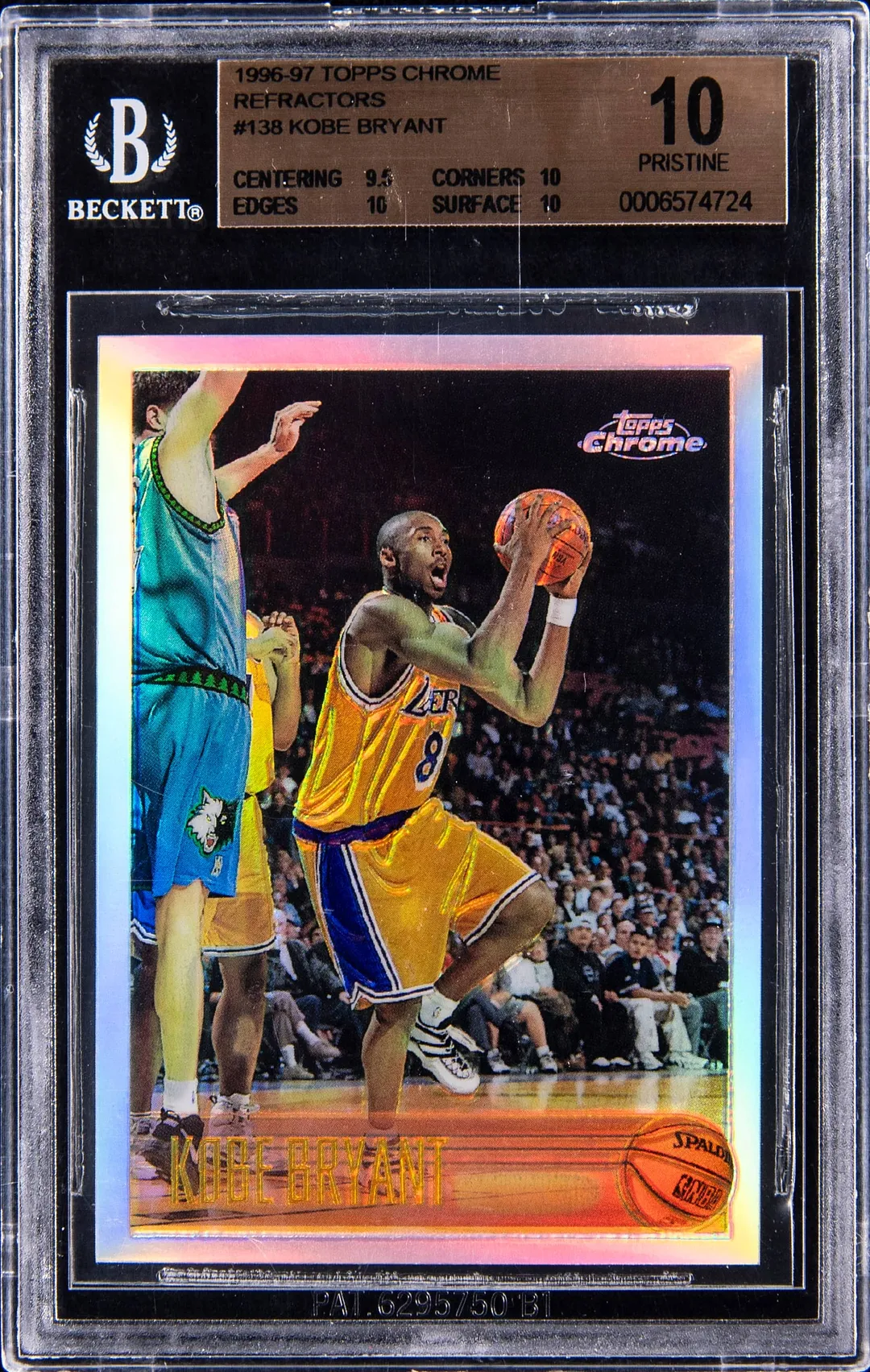
Kobe 1996 Topps Chrome Refractor BGS 10 Sale
Goldin sold a 1996-97 Topps Chrome Refractor #138 Kobe Bryant BGS Pristine 10 rookie for $113,323 on Jan 4, 2026. figoca breaks down the market context.
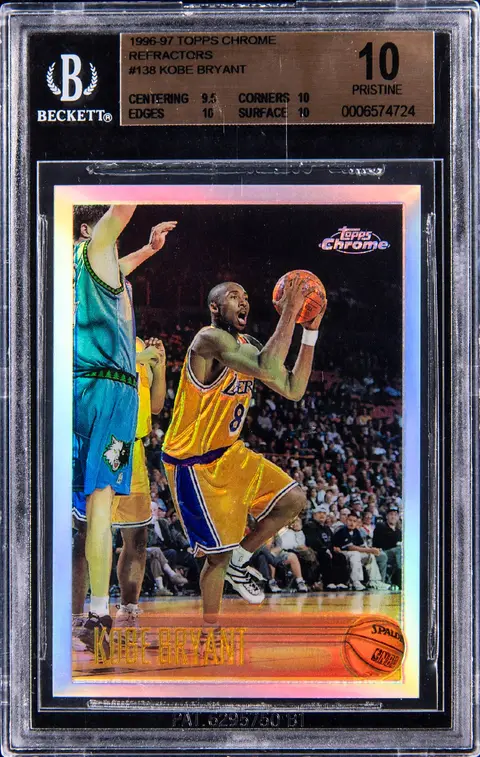
Sold Card
1996-97 Topps Chrome Refractor #138 Kobe Bryant Rookie Card - BGS PRISTINE 10
Sale Price
Platform
Goldin1996-97 Topps Chrome Refractor #138 Kobe Bryant Rookie Card - BGS PRISTINE 10 Sells for $113,323
On January 4, 2026, Goldin closed a major modern-era basketball sale: a 1996-97 Topps Chrome Refractor #138 Kobe Bryant Rookie Card graded BGS PRISTINE 10 realized $113,323.
For collectors, this is one of the cornerstone Kobe rookies, in one of his most important parallels, at one of the highest attainable grades. Below, we break down why this card matters, how this result fits into recent market context, and what collectors can take away from the sale.
Card Overview
Card details
- Player: Kobe Bryant
- Team: Los Angeles Lakers
- Year: 1996-97
- Set: Topps Chrome
- Card number: #138
- Parallel: Refractor (the chromium, rainbow-finish parallel of the base)
- Rookie status: Yes – this is a flagship chromium rookie for Kobe
Grading details
- Grading company: Beckett Grading Services (BGS)
- Grade: PRISTINE 10 (the second-highest standard label in Beckett’s scale, just below Black Label 10)
- Attributes: Non-autographed, non-serial numbered, highly condition-sensitive chromium surface
Topps Chrome is widely viewed as the premium chromium rookie home for many 1990s stars. The Refractor parallel adds scarcity and a distinctive rainbow shine that became a defining feature of late-90s basketball cards.
Why This Kobe Rookie Matters to Collectors
A keystone Kobe rookie
Within Kobe Bryant’s rookie portfolio, several cards regularly come up in high-end conversations: the 1996-97 Topps paper rookie, 1996-97 Topps Chrome base, and this card – the 1996-97 Topps Chrome Refractor.
Collectors gravitate to this specific card because:
- It’s from Topps Chrome, a flagship chromium product of the 1990s.
- It’s the Refractor parallel, which was much scarcer than the base.
- It captures Kobe at the very start of his Lakers career during the iconic 1996 draft class era.
In hobby terms, this is often treated as one of Kobe’s true premium rookie grails. The combination of brand, era, and parallel gives it lasting relevance across collector segments.
1990s chromium and condition sensitivity
The mid-to-late 1990s chromium cards are notorious for:
- Easy surface scratching
- Print lines
- Edge chipping and minor centering issues
That means landing a BGS PRISTINE 10 is difficult. To earn that grade, a card typically needs three 10 subgrades and one 9.5, with extremely strong eye appeal overall.
As a result, even though the card itself is not serial numbered, high-end copies are scarce in top grades. The pop report (the grading company’s population report showing how many of each grade exist) is low at the Pristine level compared with the total number of raw and lower-grade copies in the market.
Market Context: How $113,323 Fits In
Sale details
- Auction house: Goldin
- Sale date: January 4, 2026 (UTC)
- Final price: $113,323
When looking at a result like this, experienced collectors usually compare it to recent comps – shorthand in the hobby for “comparable recent sales.” Those comps often include:
- The same card in the same grade (BGS Pristine 10)
- The same card in nearby grades (BGS 9.5, PSA 10, BGS Black Label 10)
- Closely related rookies, such as the 1996-97 Topps Chrome base in top grades
Context versus BGS 9.5 and PSA 10
While exact figures move over time, the general pattern has been:
- BGS 9.5 and PSA 10 copies of this card commonly trade at substantial discounts to the Pristine tier because they are more plentiful.
- The Pristine grade commands a significant premium as a condition trophy, particularly at major auction houses like Goldin.
This $113,323 result lands in the upper tier of modern-era rookie refractor prices and reinforces the gap between elite-grade Kobes and more accessible high-grade copies.
Context versus BGS Black Label
The only grade generally considered above a BGS Pristine 10 is the BGS Black Label 10, where all four subgrades are perfect 10s. Black Labels for iconic rookies often sit in their own pricing lane.
Historically, Kobe’s Topps Chrome Refractor in Black Label (when it has surfaced) has been referenced as a true record-chasing card. Those sales create a ceiling benchmark, while Pristine 10s like this one form a second, but still very high, tier.
This Goldin result sits below the rarefied Black Label territory but well above more common grades, which is consistent with how collectors have been valuing these tiers.
Set and Era Significance
The 1996-97 Topps Chrome legacy
1996-97 Topps Chrome is one of the most important modern basketball releases because it lines up with:
- The legendary 1996 draft class (Kobe Bryant, Allen Iverson, Steve Nash, Ray Allen, and more).
- The rise of chromium technology, which paved the way for later sets like Bowman Chrome and Prizm.
Within that set, Refractors were a premium chase parallel. They were not serial numbered, but they were substantially more difficult to pull than base cards. Over time, collectors have treated them similarly to short prints, especially for star rookies.
Where this card fits in the broader Kobe market
Within the Kobe market, collectors often rank major rookie cards across tiers:
- Core entry tier: 1996-97 Topps paper rookie in lower grades or raw condition.
- Core graded tier: Topps paper and Topps Chrome base in PSA 9 / PSA 10 / BGS 9.5.
- Premium parallel tier: Topps Chrome Refractor and certain limited parallels from 1996-97 products.
- Ultra-premium / record tier: Pristine 10s, Black Labels, and exceptionally rare inserts or autographs.
This specific card – a Topps Chrome Refractor in BGS Pristine 10 – clearly sits in the premium to ultra-premium range, especially when paired with a six-figure auction result.
What Collectors Can Take Away
1. Condition still drives the top of the market
Even for a card that is already important and in-demand, the jump from a strong grade to an elite one can mean a large difference in realized prices. This sale underlines how much weight collectors place on condition in:
- Early chromium-era cards
- Iconic Hall of Fame rookies
For newer or returning collectors, this is a reminder to:
- Look closely at surface, edges, and centering when buying raw.
- Use population reports to understand how rare a grade truly is, not just how rare the card is in general.
2. Proven blue-chip legends still command attention
Kobe Bryant’s career is fully written—multiple championships, MVP, global fan base, and continued cultural significance. While daily prices can move with hobby sentiment, the consistent interest in high-end Kobe cards signals enduring demand among:
- Long-term collectors
- Fans building focused Kobe or Lakers collections
- Set builders chasing high-grade 1996-97 Topps Chrome runs
This Goldin sale fits into that pattern: a well-known, historically respected card attracting meaningful bidding when it appears in a top grade.
3. Auction setting matters
High-end examples like this often surface at established auction houses rather than fixed-price marketplaces. An auction environment can:
- Gather more serious bidders at the same time.
- Create public, referenceable comps that the rest of the market uses as context.
For sellers, that visibility can be attractive. For buyers, it offers clear, timestamped price history for future decisions.
Final Thoughts
The January 4, 2026 Goldin sale of the 1996-97 Topps Chrome Refractor #138 Kobe Bryant Rookie Card in BGS PRISTINE 10 at $113,323 reinforces this card’s place among the key modern basketball rookies.
It combines:
- A foundational 1990s set
- A premium Refractor parallel
- An all-time great player
- A near-top-of-the-scale grade
For collectors tracking the upper end of the Kobe market, this result is a useful modern benchmark for where high-grade Refractors are trading and how the hobby continues to value condition and historical significance in tandem.
As always, prices can move over time, and no single sale defines a permanent value. But this Goldin auction offers a clear, data-backed snapshot of how the market currently views one of Kobe Bryant’s most important rookie cards.