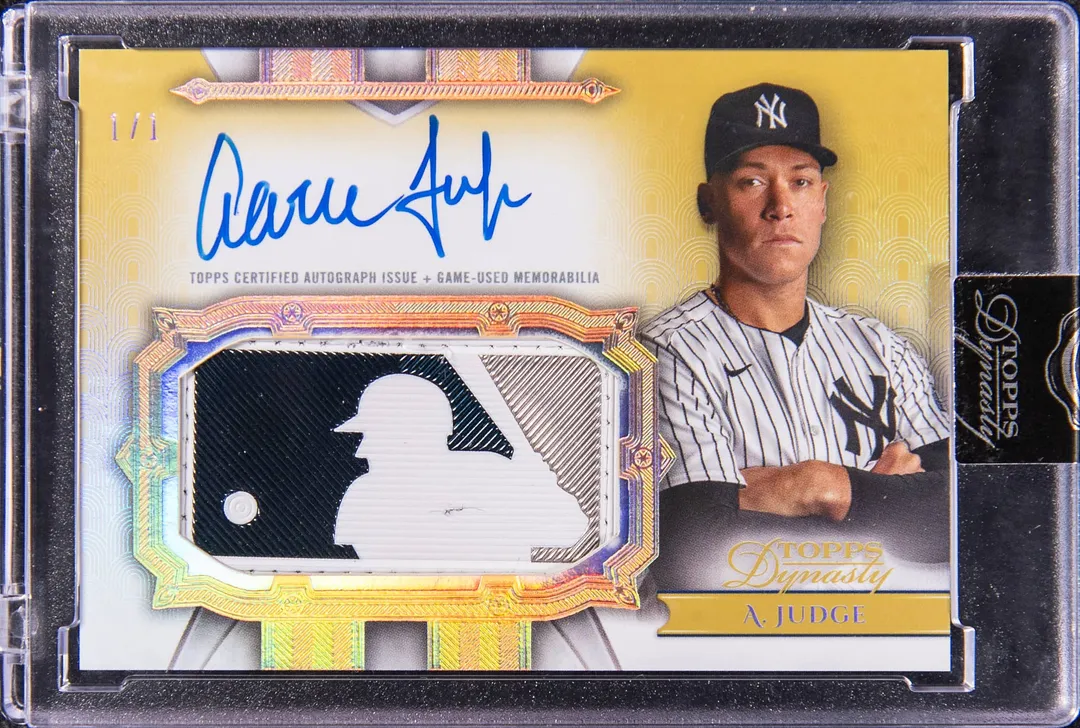
Aaron Judge 2024 Topps Dynasty 1/1 Sells for $69K
Goldin sold a 2024 Topps Dynasty Aaron Judge 1/1 MLB logo patch auto for $69,540. See what this ultra-modern Yankees grail means for the market.
Sold Card
2024 Topps Dynasty Autographed MLB Logo Patch #AMLP-AJ Aaron Judge Signed Game-Used Patch Card (#1/1) - Topps Encased
Sale Price
Platform
Goldin2024 Topps Dynasty Autographed MLB Logo Patch #AMLP-AJ Aaron Judge Signed Game-Used Patch Card (#1/1) Sells for $69,540
On January 4, 2026, Goldin closed a notable ultra-modern baseball auction: a 2024 Topps Dynasty Autographed MLB Logo Patch #AMLP-AJ Aaron Judge card, serial-numbered 1/1, sold for $69,540. For collectors tracking high-end modern baseball, this is a meaningful data point in the ongoing story of Aaron Judge’s premium patch autos.
In this breakdown, we’ll walk through what this card is, why it matters, and how this sale fits into the broader Judge and Dynasty markets.
Card overview: what exactly sold?
Card details
- Player: Aaron Judge (New York Yankees)
- Year: 2024
- Product: Topps Dynasty Baseball
- Card: Autographed MLB Logo Patch
- Card number: #AMLP-AJ
- Serial numbering: 1-of-1 (only one copy produced)
- Autograph: On-card (signed directly on the card surface)
- Memorabilia: Game-used patch featuring the MLB logo
- Manufacturer encapsulation: Topps encased (factory sealed)
- Rookie card? No – Judge’s rookies are from 2017 flagship and related products.
Topps Dynasty is Topps’ flagship ultra-premium baseball line. Each box typically contains one encased, high-end hit (often a patch autograph), so these cards effectively function as case-level chase cards.
This specific card combines several premium checkboxes that matter to high-end collectors:
- True 1/1 numbering
- On-card autograph rather than a sticker auto
- Game-used MLB logo patch, not just “player-worn” or generic material
- Topps factory encapsulation, which provides tamper-evident sealing even without a third-party grade
What makes 2024 Topps Dynasty important?
Topps Dynasty has built a reputation over the past decade as one of the most respected modern baseball patch-auto products. Within the hobby, it sits in a similar lane to products like:
- Panini National Treasures (for other sports)
- Topps Definitive and Topps Museum at slightly different price and configuration tiers
Dynasty is known for:
- Low serial numbering (often /10 or lower)
- Premium patches (nameplates, logos, multi-color swatches)
- A checklist that leans heavily on stars, rookies, and legends rather than depth players
Because print runs are small and most cards are immediately encased, many copies stay in private collections, which can limit transparent sales data compared to mass-produced base rookies.
Market context: where does $69,540 fit?
The hammer price for this card was $69,540 at Goldin on January 4, 2026.
When discussing “comps” (short for “comparables”), collectors usually look at:
- The same card in the same serial number and condition
- Very similar cards: same player, same product line, similar patch and autograph configuration, similar low serial numbering
For a true 1/1 like this, there are no perfect one-to-one comps. Instead, the market often uses:
- Other Aaron Judge Topps Dynasty 1/1 patch autos
- Judge 1/1 logo patch autos from similarly respected lines (e.g., Topps Definitive, Museum, or other Dynasty years)
- High-end rookie-year 1/1s for broader context
Across public auction records for high-end Judge cards, we see a few general patterns:
- Topps Dynasty 1/1 Judge patch autos have historically sold in a wide range depending on patch quality (standard multi-color vs. logo or nameplate), timing (e.g., right after big seasons or awards), and card design. Sales into the mid-five-figure range are not unusual for top-tier examples.
- Logo patch versions – especially with clear game-used attribution – tend to command a premium over more routine patch windows.
- Judge’s earliest and most iconic cards (notably 2017 rookie-focused issues) may still set the ceiling for his card market, but established star-level 1/1s from premium later-year sets can still hold strong pricing.
Because each 1/1 is unique and not all transactions are public, it’s difficult to state precisely whether this sale is “above” or “below” some perfect average. Within the context of known high-end Judge sales, however, $69,540 sits comfortably in the established premium range for his best non-rookie, ultra-modern patches, especially those that combine:
- On-card autos
- Logo patches
- Strong brand (Topps Dynasty)
Rather than a clear outlier, this sale reads as a solid, data-supported result consistent with how the hobby has been valuing Judge’s most important post-rookie autographed patch cards.
Why collectors care about this card
A few key factors drive interest in this specific card and cards like it:
1. Aaron Judge’s on-field profile
Aaron Judge has established himself as one of the defining power hitters of his era. From a collector’s perspective, he checks several long-term boxes:
- MVP-caliber seasons
- Elite home run totals, including record-setting performances
- Face of the New York Yankees, a flagship franchise with deep hobby roots
For many collectors, that combination – performance, records, and team – can justify sustained interest in high-end cards beyond the usual hype cycles.
2. 1/1 scarcity and game-used logo patches
A 1/1 card is, by definition, the only one of its kind. In a hobby where many cards have thousands or tens of thousands of copies, true one-of-ones sit at the top of the rarity pyramid.
Within the 1/1 category, logo patches are typically among the most visually and conceptually desirable:
- They’re easily recognizable and distinct
- They confirm that this isn’t just any jersey swatch – it’s a meaningful portion of the uniform
- When paired with a clear game-used designation, they tie directly back to the player’s on-field activity rather than generic or event-worn material
3. On-card autograph and presentation
Collectors often distinguish between:
- On-card autographs – signed directly on the card itself
- Sticker autographs – player signs sheets of stickers that are later applied to cards
On-card autos are usually preferred because they feel more “integrated” and premium. Combined with Topps’ own hard plastic encapsulation, the card is visually presented as a finished, display-ready piece.
4. Ultra-modern era dynamics
This card sits in the ultra-modern category (roughly mid-2010s forward), where:
- Overall print runs in the hobby are higher than vintage or early modern, but
- High-end, low-serial, and 1/1 cards serve as the scarcity anchors
In this era, demand often separates into two tracks:
- Widely available rookie and base cards that support broad fan interest
- Limited, high-end issues like Dynasty 1/1s that act more like centerpiece collection items
This sale fits the second track – a premium, centerpiece-level card rather than a volume-driven, widely traded piece.
Recent and ongoing factors that influence interest
While card prices move for many reasons, a few recurring themes apply to Aaron Judge and similar stars:
- Performance and milestones: Big seasons, awards, and record chases tend to attract renewed attention to a player’s key cards. For a power hitter on a historic franchise, home run milestones are particularly influential.
- Health and longevity: Sustained, relatively healthy production for an extended period reinforces a player’s standing among collectors.
- Yankees factor: The Yankees’ global fan base often translates into stronger demand for their biggest stars’ best cards.
This Goldin sale on January 4, 2026 reflects a moment where the market continues to value Aaron Judge as one of the premier active names in the sport – and it does so via one of his more premium non-rookie offerings.
How collectors might use this sale as a reference point
For collectors, returning hobbyists, or small sellers, this sale can be useful in a few ways:
Benchmark for Judge’s ultra-premium 1/1s
While each 1/1 is unique, seeing a Topps Dynasty autographed 1/1 logo patch at $69,540 helps frame expectations around other top-end Judge pieces that share similar attributes.Context for non-1/1 Dynasty Judge cards
Lower serial-numbered Dynasty cards (/5, /10, /25) generally trade at discounts to 1/1s. Observing where the top of the range sits can make it easier to place those more accessible versions when you look up comps.Understanding the premium for logo patches and on-card autos
This sale underlines that collectors continue to recognize a hierarchy:- Logo or nameplate patches over standard patches
- Game-used over less specific memorabilia
- On-card autos over sticker autographs
None of this is financial advice, but if you’re building, buying, or selling in the high-end segment, it’s helpful to see how those factors translate into realized auction results.
Takeaways
- The 2024 Topps Dynasty Autographed MLB Logo Patch #AMLP-AJ Aaron Judge 1/1, Topps encased, sold for $69,540 at Goldin on January 4, 2026 (UTC).
- The card combines a true 1/1, on-card autograph, and a game-used MLB logo patch from a respected ultra-premium product line.
- Within the context of other high-end Aaron Judge cards, the sale sits in a logical, data-consistent range for an elite, non-rookie, ultra-modern patch auto.
- For collectors, this result reinforces the long-running premium placed on rare, logo-level, game-used patch autos of established stars from top-tier products like Topps Dynasty.
As more 2024 Dynasty breaks and additional Judge 1/1s surface in public auctions, this Goldin sale will likely remain a key early marker for how the market values this chapter of Judge’s high-end cardboard story.