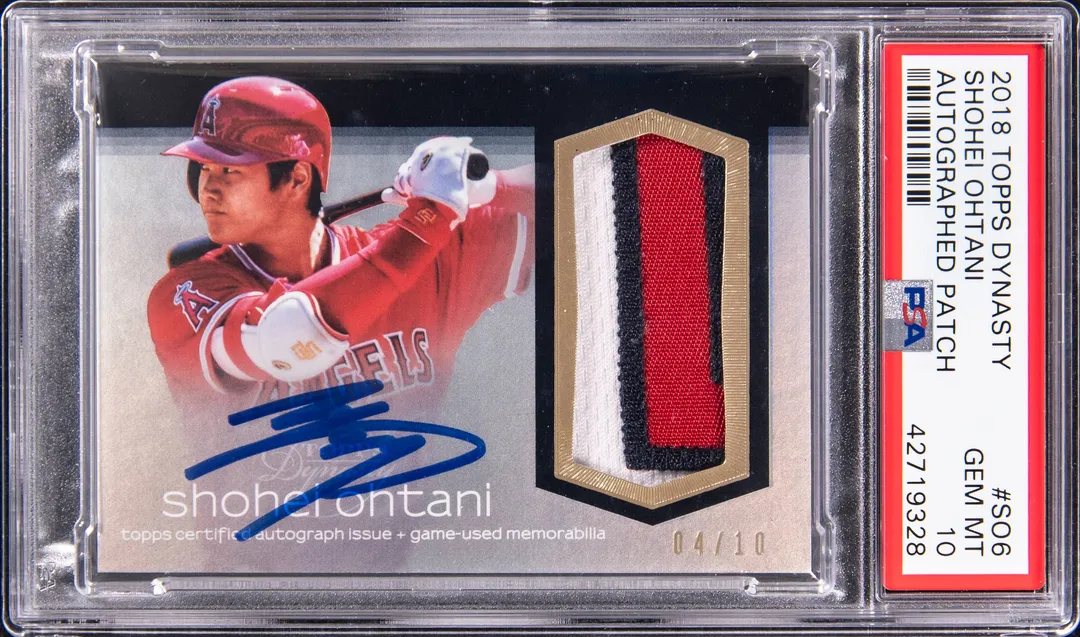
2018 Ohtani Dynasty RPA PSA 10 Pop 1 Sells for $158K
Goldin sold a 2018 Topps Dynasty Shohei Ohtani PSA 10 Pop 1 rookie patch auto /10 for $158,600. See how this six‑figure sale fits into the Ohtani market.
Sold Card
2018 Topps Dynasty Autographed Patch #AP-SO6 Shohei Ohtani Signed Game-Used Patch Rookie Card (#04/10) - PSA GEM MT 10 - Pop 1
Sale Price
Platform
Goldin2018 Topps Dynasty Shohei Ohtani Rookie Patch Auto Sells for $158,600
On December 7, 2025, Goldin sold a key modern baseball grail: a 2018 Topps Dynasty Autographed Patch #AP-SO6 Shohei Ohtani Signed Game-Used Patch Rookie Card, serial numbered 04/10, graded PSA GEM MT 10. This copy is a population 1 (“pop 1”) in PSA’s census, meaning it is the only example to receive a PSA 10 grade.
For collectors who follow high‑end Ohtani cards and modern patch autos, this sale is an important data point for both the player’s premium market and the 2018 Dynasty release in general.
Card overview: what exactly sold?
Let’s break down the details of this specific card:
- Year and set: 2018 Topps Dynasty Baseball
- Player: Shohei Ohtani
- Team: Los Angeles Angels (rookie year)
- Card: Autographed Patch #AP-SO6
- Serial number: 04/10 (only ten copies produced of this specific patch/auto variant)
- Attributes:
- On‑card autograph (signed directly on the card surface)
- Game‑used patch window
- Rookie card from his first MLB season
- High‑end, low‑print‑run product (Dynasty is one of Topps’ premium lines)
- Grading:
- Grading company: PSA
- Grade: GEM MT 10
- Population: 1 in PSA’s pop report (no other PSA 10s recorded for this card at the time of sale)
The realized price at Goldin was $158,600. For context, the original price figure provided was 15,860,000 cents; converted to dollars, that is $158,600.
Why 2018 Topps Dynasty matters for Ohtani collectors
2018 is Shohei Ohtani’s MLB rookie year, and that alone makes any premium, low‑numbered, authenticated autograph from that season significant. Topps Dynasty sits at the top of Topps’ baseball portfolio as a super‑premium, one‑card‑per‑box style product. Every card is serial numbered, and most headliners are on‑card autographs paired with either patches or multi‑relics.
For Ohtani specifically, 2018 Dynasty checks several boxes collectors look for:
- Ultra‑low print runs: Many Ohtani Dynasty cards are numbered to 10 or fewer copies.
- High‑quality designs: Larger patch windows, cleaner layouts, and thicker cardstock than typical base products.
- Early‑career imagery: It captures the novelty of his first MLB season as a true two‑way player.
Within modern baseball, Dynasty rookie‑year patch autos function as a kind of “luxury layer” above flagship rookies (like 2018 Topps Series 1/Update and 2018 Topps Chrome). These aren’t entry‑level cards; they are the high‑end chase items serious player collectors and long‑term Ohtani believers tend to track closely.
Grading and scarcity: why Pop 1 in PSA 10 matters
“Pop report” is hobby shorthand for population report: the grading company’s count of how many copies of a specific card have received each grade. A “Pop 1” PSA 10 means there is only one example at this highest grade, with none graded higher.
For thick premium patch autos like Dynasty, gem‑mint grades are not guaranteed. These cards are more prone to:
- Edge and corner wear from thick stock
- Surface issues around patch windows
- Chipping on colored borders
Because of that, even when a card is limited to 10 copies, not all 10 will grade out as PSA 10s. Some remain raw (ungraded), some grade 9 or lower, and a small number may meet gem‑mint standards.
In this case, the card is not only limited to 10 copies by print run, but it is also the lone PSA 10. For condition‑focused collectors, that combination of on‑card auto, game‑used patch, rookie year, and Pop 1 gem status is a strong reason this particular example drew attention at auction.
Market context and recent sales
When collectors talk about “comps,” they mean recent comparable sales of the same or very similar cards to help frame what a new sale might be worth. For a unique item like a Pop 1 PSA 10 from a low‑print‑run product, direct comps can be limited.
For context, recent years have seen high‑end Ohtani rookies and key autos do the following:
- Topps Dynasty Ohtani rookie patch autos in lower grades or ungraded form have generally traded well below the $158,600 level, but with a wide range depending on patch quality, autograph quality, and serial number.
- Other premium Ohtani rookie autographs from 2018 (for example, from Bowman Chrome and Topps Chrome high‑end parallels, especially color refractors and low‑serial issues) have occasionally reached six‑figure results, especially in gem‑mint grades.
This Goldin result sits toward the top end of known sales for Ohtani’s 2018 Dynasty autograph patch rookies, which makes sense given:
- The PSA GEM MT 10 grade
- The Pop 1 status
- The fact that this is an on‑card, game‑used patch, numbered out of just 10 copies
Because not many of these have crossed public auction at the same grade level, it’s more accurate to view this sale as a key reference point rather than a definitive long‑term “price” for the card.
Shohei Ohtani’s broader hobby significance
Shohei Ohtani is one of the defining players of the ultra‑modern era. As a legitimate two‑way star, he has already achieved a combination of milestones and awards that few modern players can match. That context matters when looking at a six‑figure result for a 2018 card.
Factors that typically influence interest in his high‑end market include:
- Awards: Multiple MVP seasons and major awards tend to support sustained collector interest.
- Team changes: High‑profile moves to large‑market teams traditionally bring more visibility, which can spill over into the card market.
- Historical comparisons: Ohtani’s statistical profile draws constant comparisons to both elite hitters and elite pitchers, a rare combination.
Modern and ultra‑modern high‑end cards (roughly mid‑2010s onward) tend to be more sensitive to performance narratives and news cycles than vintage. When a player like Ohtani hits new milestones, collectors often revisit their views on his earliest and best cards, including premium rookie autos like this Dynasty.
What this sale might mean for collectors
For active collectors and small sellers, here’s how this sale can be interpreted:
- A reference point for high‑end Ohtani rookies: While this is a top‑tier example, it helps frame how collectors value condition, scarcity, and brand.
- Condition still commands a premium: The difference between a raw or near‑mint example and a gem‑mint, Pop 1 example can be dramatic.
- Dynasty holds its place as a premier Ohtani chase: The sale reinforces 2018 Topps Dynasty as a key lane for serious Ohtani collectors alongside his flagship and chromium rookies.
At the same time, one auction result is not a guarantee of future pricing. The high‑end Ohtani market can move with performance, health, and broader hobby sentiment. It’s best to treat this sale as one important data point among many.
Key details at a glance
- Card: 2018 Topps Dynasty Autographed Patch #AP-SO6 Shohei Ohtani
- Type: Signed game‑used patch rookie card
- Serial: 04/10
- Grading: PSA GEM MT 10 (Pop 1)
- Sale price: $158,600
- Auction house: Goldin
- Sale date (UTC): December 7, 2025
For figoca users who track the trading card market, this Goldin sale stands out as a clean example of how rarity, condition, and player significance can intersect in a single card. Whether you are just returning to the hobby or you’re actively building an Ohtani PC (personal collection), understanding sales like this can help you interpret price ranges across the rest of his rookie‑year checklist.
As always, these figures are historical snapshots. They describe what one buyer was willing to pay on a specific day, under specific conditions—not a promise of what any card will do next.