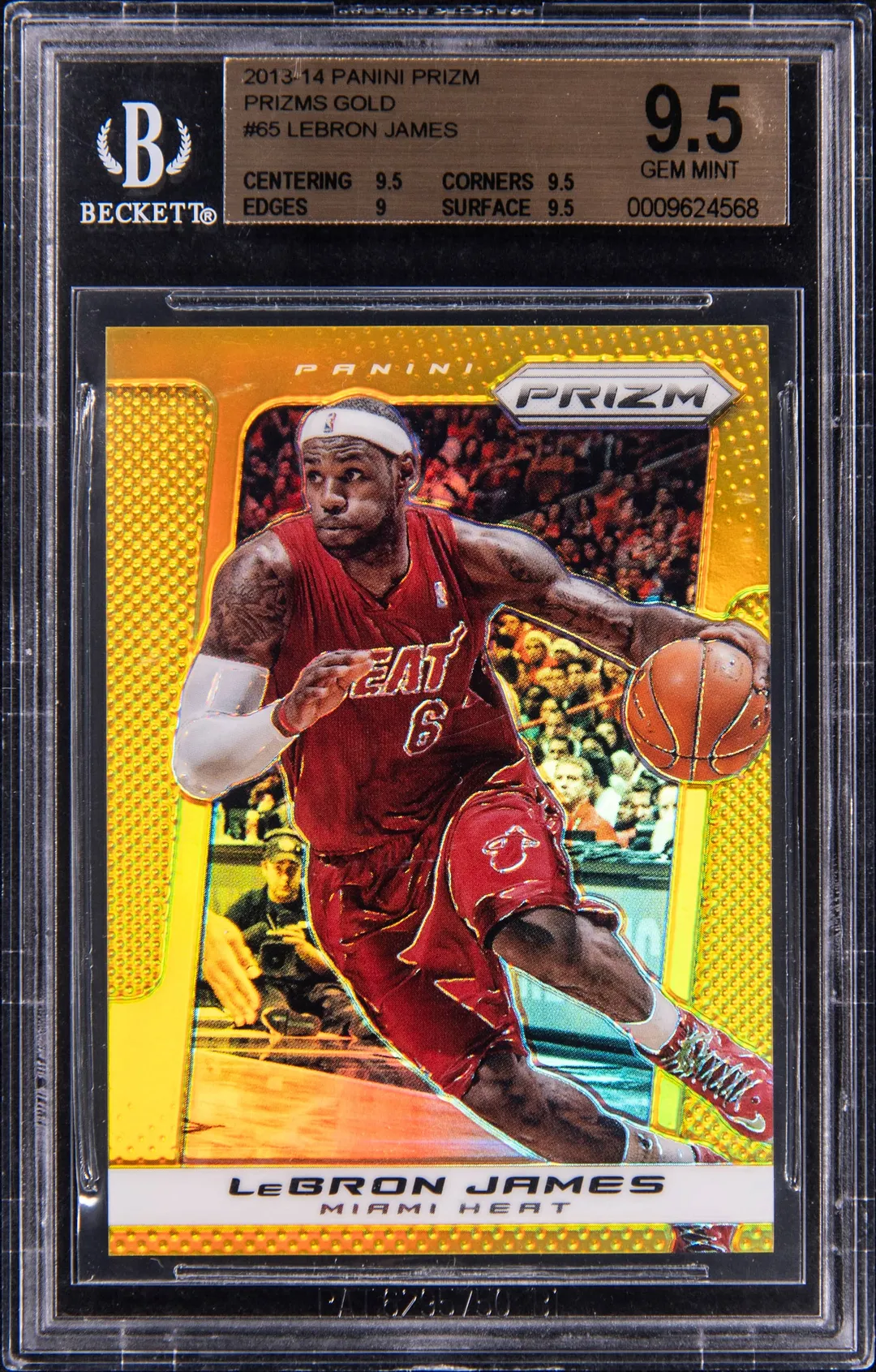
2013-14 Prizm Gold LeBron BGS 9.5 sells for $106K
Goldin sold a 2013-14 Panini Prizm Gold #65 LeBron James BGS 9.5 /10 for $106,140 on Dec 7, 2025. figoca breaks down the card, comps, and market context.
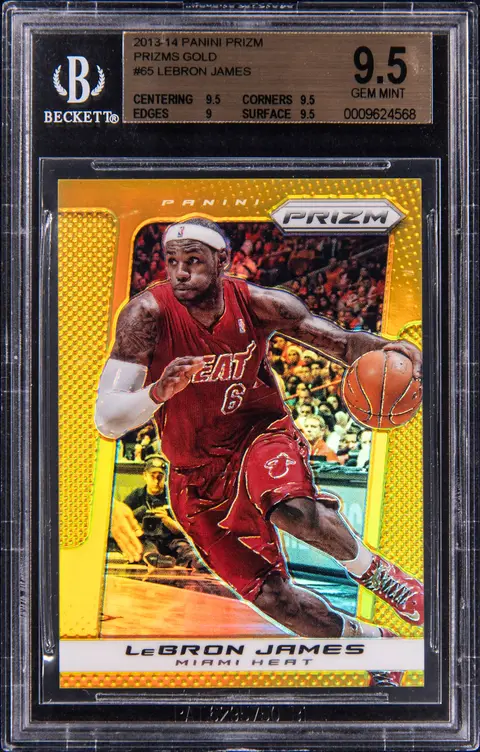
Sold Card
2013-14 Panini Prizm Gold Prizm #65 LeBron James (#01/10) - BGS GEM MINT 9.5
Sale Price
Platform
Goldin2013-14 Panini Prizm Gold LeBron #65 BGS 9.5 Sells for $106,140
On December 7, 2025, Goldin sold a key early LeBron James chromium parallel: a 2013-14 Panini Prizm Gold Prizm #65 LeBron James, serial-numbered 01/10, graded BGS GEM MINT 9.5, for $106,140.
For collectors who follow gold Prizms and early LeBron “heat-check” cards, this is an important data point. Below is a breakdown of why this card matters, how the sale fits into recent pricing, and what it may say about high-end LeBron markets.
Card breakdown: what exactly sold?
- Player: LeBron James
- Team on card: Miami Heat
- Season / year: 2013-14
- Set: Panini Prizm Basketball
- Card number: #65
- Parallel: Gold Prizm (serial-numbered to 10 copies)
- Serial number of this copy: 01/10
- Rookie card? No – this is an important early Prizm-era LeBron, not a rookie.
- Era: Modern / early “ultra-modern” chromium (second year of Prizm)
- Grading company: Beckett Grading Services (BGS)
- Grade: GEM MINT 9.5
There is no autograph or patch on this card. The appeal is driven by the combination of:
- Early Prizm brand status
- Gold Prizm parallel (out of 10)
- LeBron James in the heart of his Miami championship window
- High grade from BGS
- The desirable 01/10 serial number, which some collectors give a small premium as the first numbered copy in the print run
Why 2013-14 Prizm Gold matters to collectors
Panini Prizm is widely treated as the flagship chromium set of the modern NBA era. Flagship here simply means the main, most recognized brand for a given year.
2012-13 was the debut of Prizm basketball. The 2013-14 release, where this LeBron comes from, is therefore the second-year Prizm set and still part of the early print-run window before the brand’s popularity and production scaled up.
Within Prizm, the Gold Prizm parallel (numbered to 10) has become one of the most recognizable color/parallel tiers in the hobby. For many player collectors, “Gold /10” sits just below 1-of-1s in terms of desirability for non-autograph base parallels.
Add in the context:
- LeBron was with the Miami Heat, coming off back-to-back titles (2011-12 and 2012-13).
- By 2013-14, his legacy trajectory was clear, which kept high-end parallels from this period in strong demand.
For LeBron specifically, collectors often focus on three buckets:
- True rookies (2003-04), especially Topps Chrome and key Exquisite cards.
- Key early Panini-era issues, including early Prizm, Select, and high-end National Treasures/Flawless.
- Low-serial, visually iconic parallels (like Gold Prizm) across multiple years.
This 2013-14 Prizm Gold #65 checks boxes from the second and third buckets.
Grading context: BGS GEM MINT 9.5
This card is graded BGS GEM MINT 9.5 by Beckett, one of the major grading companies alongside PSA and SGC.
A BGS 9.5 typically signals:
- Very sharp corners
- Strong centering
- Clean edges and surface
For chromium cards like Prizm, surface issues, print lines, and centering can often hold cards back. High-grade copies of a Gold /10 parallel naturally become even more scarce within an already small print run.
BGS also tracks a population report (often called a “pop report”), which is simply a count of how many copies of a given card they’ve graded at each grade level. While exact, up-to-the-minute population numbers can change, LeBron Gold Prizms from this era generally show very low populations across the grading spectrum.
The sale: $106,140 at Goldin on December 7, 2025
- Auction house: Goldin
- Sale date (UTC): 2025-12-07
- Final price: $106,140 (buyer’s premium included if reported that way by the auction house)
For ease of comparison in this article, we’ll treat $106,140 as the total amount paid.
What are the relevant comps?
“Comps” is shorthand for comparable recent sales of the same card or very similar versions. For a rare, serial-numbered card like this, true one-to-one comps can be thin, so it’s useful to look at:
- The same card in different grades.
- Other LeBron Gold Prizms from 2012-14.
- Other key low-serial LeBron parallels of similar status.
Across public marketplaces and auction archives, you’ll see the following broad patterns (exact numbers shift as new sales occur):
- 2013-14 Prizm Gold LeBron #65 in lower grades or raw (ungraded) has historically sold at a material discount to top-graded copies. Exact prices vary, but the gap between GEM MINT and lower grades is significant due to how few copies exist.
- 2012-13 Prizm Gold LeBron, as a first-year Prizm gold, usually anchors the top of the early-Prizm LeBron hierarchy and can sell for more than later-year golds. That card provides helpful directional context but isn’t directly comparable.
- 2013-14 Prizm Gold stars and MVPs (Kobe, Durant, Curry, etc.) in high grades have often realized strong five-figure and, for top names, six-figure results.
Because this specific card is numbered 01/10, graded BGS 9.5, and has limited available public history, direct price history is thin. The $106,140 result therefore functions as a fresh reference point rather than something that can be precisely anchored to a long string of identical prior sales.
Is $106,140 high, low, or roughly in line?
Given the limited population and thin sales history, the most accurate way to frame this result is:
- It is consistent with the broader pattern of high-end LeBron parallels from the early Prizm years commanding strong five- to six-figure prices.
- Within that band, this result lands toward the higher end for non-rookie, non-autograph LeBron parallels from the mid-2010s, which is what many collectors would expect for a Gold /10 from early Prizm in GEM MINT condition.
Rather than calling it definitively “cheap” or “expensive,” it’s more useful to say that this sale reinforces where the market currently values:
- Early Prizm Gold for top-tier all-time players.
- BGS 9.5 grades in a market that has generally leaned PSA-heavy but still recognizes strong BGS GEM copies.
Market and hobby context
A few broader factors around the time of this sale help explain why interest in cards like this remains steady:
- LeBron’s career milestones: By late 2025, LeBron has long since claimed the all-time scoring record and continued to add to career totals, strengthening the “all-time great” narrative that underpins long-term collecting interest.
- Maturing ultra-modern market: The initial speculative wave around ultra-modern cards has cooled from its peak, but focused collectors have increasingly turned toward:
- Scarce parallels (especially numbered)
- Early print years of major brands (like 2012-13 and 2013-14 Prizm)
- Players with cemented Hall of Fame resumes.
- Supply reality: With only 10 serial-numbered copies, and a subset of those graded high by major services, the effective supply (what’s actually available for sale at any given time) is extremely low.
These dynamics help explain why a card like this can clear six figures even outside of a broad speculative bubble.
How collectors might interpret this sale
None of this is financial advice, and a single auction should never be treated as a guarantee of future prices. But there are a few reasonable, collection-focused takeaways:
Early Prizm remains a core lane.
This sale supports the idea that 2012-13 and 2013-14 Prizm are still viewed as foundational sets for modern basketball, especially for all-time greats.Gold /10 parallels hold a special status.
For many collectors, Gold Prizms are the visually and numerically sweet spot between accessibility and scarcity—recognizable, numbered, and limited.Grade separation matters even at low serial numbers.
Even within a small print run of 10, GEM MINT vs. lower grades can still generate meaningful price separation, especially for iconic players.BGS 9.5 remains relevant in the high-end lane.
While PSA has grown its share of the market, this result shows that BGS GEM MINT still carries significant weight for key Prizm-era parallels.
For newer collectors: how to think about a card like this
If you’re newer to the hobby or returning after time away, six-figure sales like this can feel distant. They can still be useful for understanding structure and priorities in the market:
Look at the pattern, not the price tag.
The specific dollar figure is less important than the underlying ingredients:- All-time player
- Recognized flagship set
- Scarce, numbered parallel
- High grade from a major grader
Use high-end sales as a map.
You may not be targeting a Gold /10 LeBron, but the same logic scales down to less expensive parallels and players.Learn the language.
When you see terms like comps (recent comparable sales), pop report (grading population data), and flagship (the main set for the year), they’re simply tools to help you judge how rare and how in-demand a card might be.
Summary
The December 7, 2025 Goldin sale of the 2013-14 Panini Prizm Gold Prizm #65 LeBron James (#01/10) in BGS GEM MINT 9.5 for $106,140 is another signal of how the hobby continues to value:
- Early-year Prizm releases
- Gold /10 parallels of generational players
- High-grade examples in an already tiny print run
For LeBron collectors and modern basketball specialists, this transaction adds a meaningful benchmark to a thin but closely watched set of sales. As always, it’s one data point—but a notable one in the evolving story of early Prizm and high-end LeBron cards.