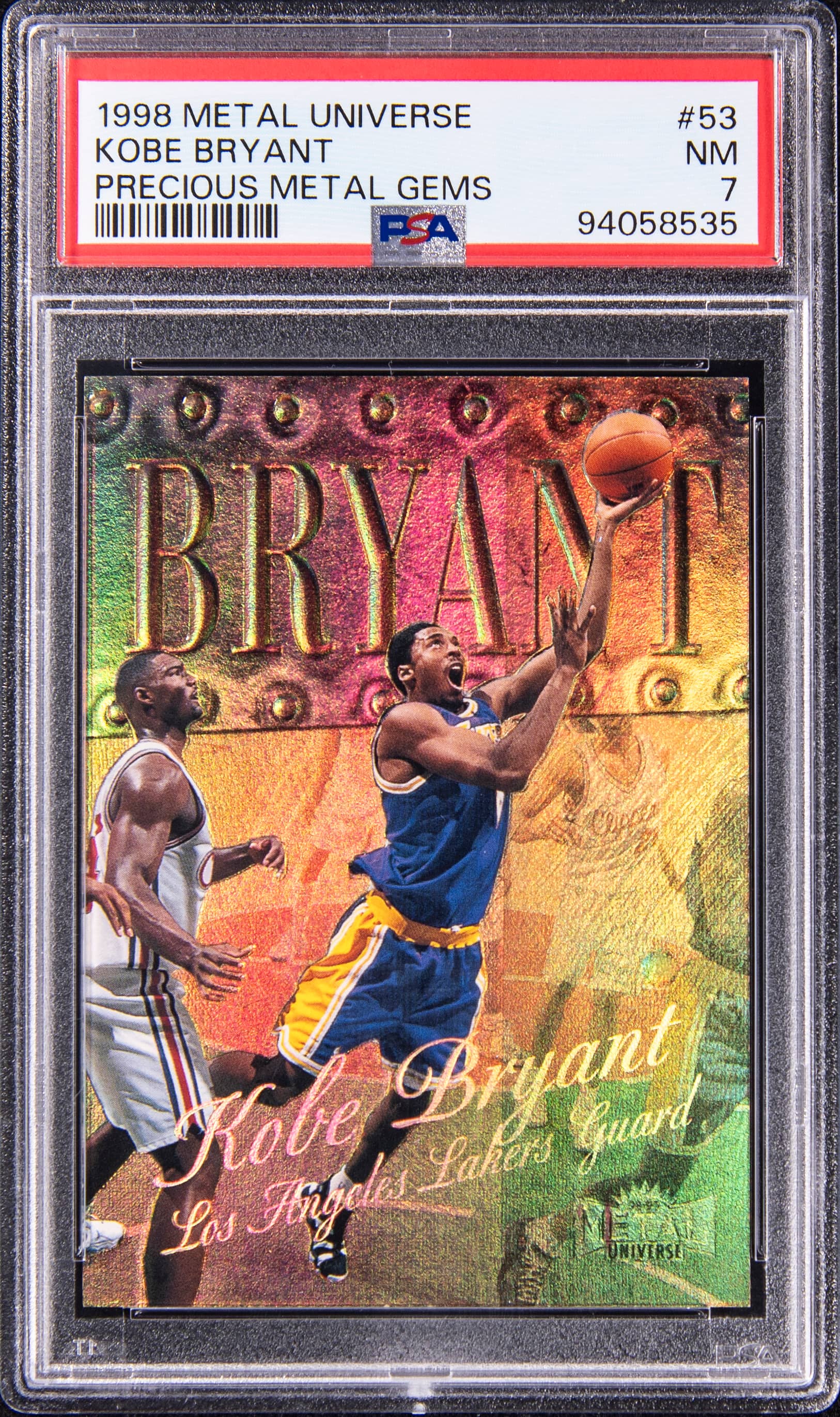
1998-99 Kobe PMG #53 PSA 7 sells for $95K
Market breakdown of the 1998-99 SkyBox Metal Universe PMG #53 Kobe Bryant PSA 7 that sold for $95,233 at Goldin on 12/07/25.
Sold Card
1998-99 SkyBox Metal Universe Precious Metal Gems (PMG) #53 Kobe Bryant (#20/50) - PSA NM 7
Sale Price
Platform
Goldin1998-99 SkyBox Metal Universe Precious Metal Gems (PMG) #53 Kobe Bryant (#20/50) - PSA NM 7 just changed hands at Goldin on 12/07/25 for $95,233. For a late‑90s insert, that number says a lot about how collectors view both Kobe and the PMG brand.
In this article, we’ll unpack what this card is, why it matters, and how this sale fits into the broader PMG and Kobe Bryant market.
The card at a glance
Card: 1998-99 SkyBox Metal Universe Precious Metal Gems (PMG) #53 Kobe Bryant
Serial number: #20/50
Player / team: Kobe Bryant, Los Angeles Lakers
Year / era: 1998-99 NBA season (late 1990s “insert boom” era)
Parallel: Precious Metal Gems (PMG), serial-numbered to 50
Rookie card? No – Kobe’s rookie year was 1996-97
Grading company: PSA
Grade: NM 7 (Near Mint)
Special attributes: low-serial numbered, premium parallel from a historically important insert line.
This isn’t a rookie, but it is a key issue for Kobe collectors because of the Precious Metal Gems name. PMGs are widely considered some of the most important parallels of the 1990s, and they helped shape the modern chase for rare, serial-numbered inserts.
Why PMGs matter so much
The Precious Metal Gems brand began in 1997-98 Metal Universe and quickly became a core part of the 1990s high-end insert story:
- Scarcity: While print runs in the 1990s were generally large, PMGs were the exception—strictly serial-numbered and difficult to pull from packs. The 1998-99 Kobe is numbered to 50, which is extremely low for that era.
- Design: PMGs are instantly recognizable, with bold metal backgrounds and color treatments that stand out even today.
- Influence: The concept of a rare, serial-numbered, visually distinct parallel paved the way for modern golds, greens, and other chase parallels.
Within that history, Kobe Bryant PMGs sit in the top tier of demand. They are not quite at the level of 1997-98 Jordan PMGs in terms of absolute pricing, but they share the same collector DNA: scarce, condition-sensitive, and culturally important.
Condition, grading, and why a PSA 7 matters
A PSA grade is a third-party condition assessment on a 1–10 scale, where 10 is Gem Mint and 7 is Near Mint. At first glance, a 7 might sound low for a five-figure card, but for PMGs that’s normal:
- Chipping and edges: Foil-heavy PMG designs are notorious for edge wear and surface issues straight from the pack.
- Late-90s handling: Many of these cards were pulled and stored long before grading was common, so early handling often left small flaws.
Because of this, collectors often treat a PSA 7 PMG as a solid, respectable grade rather than a low one. The real measure of desirability is the combination of:
- Being authentic and unaltered.
- Having strong overall eye appeal (centering, color, and front presentation) even if there are technical flaws.
Population reports (or “pop reports”) from PSA and other graders give counts of how many copies exist in each grade. Even without quoting specific numbers, PMG Kobe cards in any PSA holder remain genuinely scarce, especially given the /50 print run.
Market context: where this $95,233 sale sits
This copy sold at Goldin on 12/07/25 for $95,233. When we look at market context, we often compare:
- Exact card, different dates: Same year, same parallel, same serial run, same grade (or close).
- Nearby grades: For example, PSA 6 and PSA 8 versions of the same PMG.
- Closely related cards: Other Kobe PMGs from adjacent years, or similar metal-era key parallels.
Recent public auction data for 1998-99 Kobe PMGs is relatively thin compared with more frequently traded modern cards. That’s normal for a /50 card from the late 1990s—there simply are not many copies cycling through the market each year.
When you line this sale up alongside recent PMG results:
- Earlier Kobe PMGs, especially 1997-98, have sold for significantly more in top grades, reflecting their status as earlier and often more iconic issues.
- Later Kobe PMGs and other 1990s PMGs tend to fall into a tiered structure: earlier sets, better grades, and stronger color variations bring premiums; later issues and lower grades form the next layers down.
Within that landscape, a PSA 7 copy of the 1998-99 /50 Kobe closing at $95,233 fits the broader pattern of:
- PMGs remaining among the highest-valued 1990s Kobe parallels, and
- Condition being important but not the only driver—set prestige and print run matter just as much.
This sale does not look like an outlier in the sense of breaking a known record for Kobe PMGs, but it does reaffirm that even non-rookie PMGs in mid-to-strong grades command serious attention.
Comparing to other Kobe high-end cards
To put this in context for newer collectors:
- Flagship rookies (like 1996-97 Topps Chrome Refractor Kobe in high grade) are core long-term holds for many collectors. They trade more frequently and have more transparent price ladders.
- High-end inserts and parallels like PMGs sit in a different lane: fewer total copies, fewer public sales, and a strong focus on set history and design.
The 1998-99 PMG Kobe is firmly in that second lane. It appeals to:
- Kobe player collectors building deep PC (personal collection) runs across his key 1990s inserts.
- Set collectors who chase PMGs across multiple stars or the full checklist.
- 1990s insert specialists who value the Metal Universe and PMG lineage as much as the player.
As hobby attention continues to rediscover and re-evaluate 1990s inserts, results like this one help anchor expectations for what a mid-grade, low-serial, historically important parallel can realistically bring.
Why this card matters beyond the price
Beyond the headline number, this sale highlights a few ongoing trends:
Sustained demand for 1990s inserts
Even with more modern ultra-rare parallels on the market, collectors keep coming back to brands like PMG because they represent the roots of the chase.Kobe’s long-term hobby position
Kobe’s place in the hobby has been well established for years: five championships, global popularity, and a strong narrative of relentless work ethic. That has translated into stable demand for his higher-end, historically meaningful cards.Growing comfort with mid-grade high-end pieces
For cards that are genuinely tough to find, collectors are often willing to buy a PSA 6 or 7 if the card checks the boxes of authenticity, scarcity, and eye appeal. This sale is another data point in that direction.
Takeaways for collectors and small sellers
For anyone looking at this sale and wondering what it means for their own collecting:
- Expect a wide range of realized prices for PMGs depending on year, player, color, and grade. The PMG name alone doesn’t guarantee a particular value range.
- Use comps carefully. “Comps” are recent comparable sales used as a reference point. With a /50 card that sells only a few times a year (or less), the last comp may be months old and under different market conditions.
- Condition still matters, but for PMGs, a mid-grade with strong eye appeal can be very competitive.
- Set history is key. Before making decisions, it’s worth reading up on the specific PMG year, color pattern, and checklist to understand how collectors view that release.
This particular sale at Goldin on 12/07/25 reinforces the idea that:
- 1990s Kobe PMGs, even non-rookies, occupy a high-end lane.
- The market continues to recognize the combination of low serial numbering, iconic design, and a top-tier player.
As always, these sales are data points—not forecasts. For collectors, they can be useful guideposts when deciding what to chase, how to prioritize between rookies and inserts, and where a given Kobe PMG might sit within the broader hobby landscape.
If you’re tracking rare 1990s parallels or building a focused Kobe collection, sales like this one are worth bookmarking. They provide real-world evidence of how deep the demand runs for PMGs and how the hobby continues to value Kobe’s most important non-rookie issues.