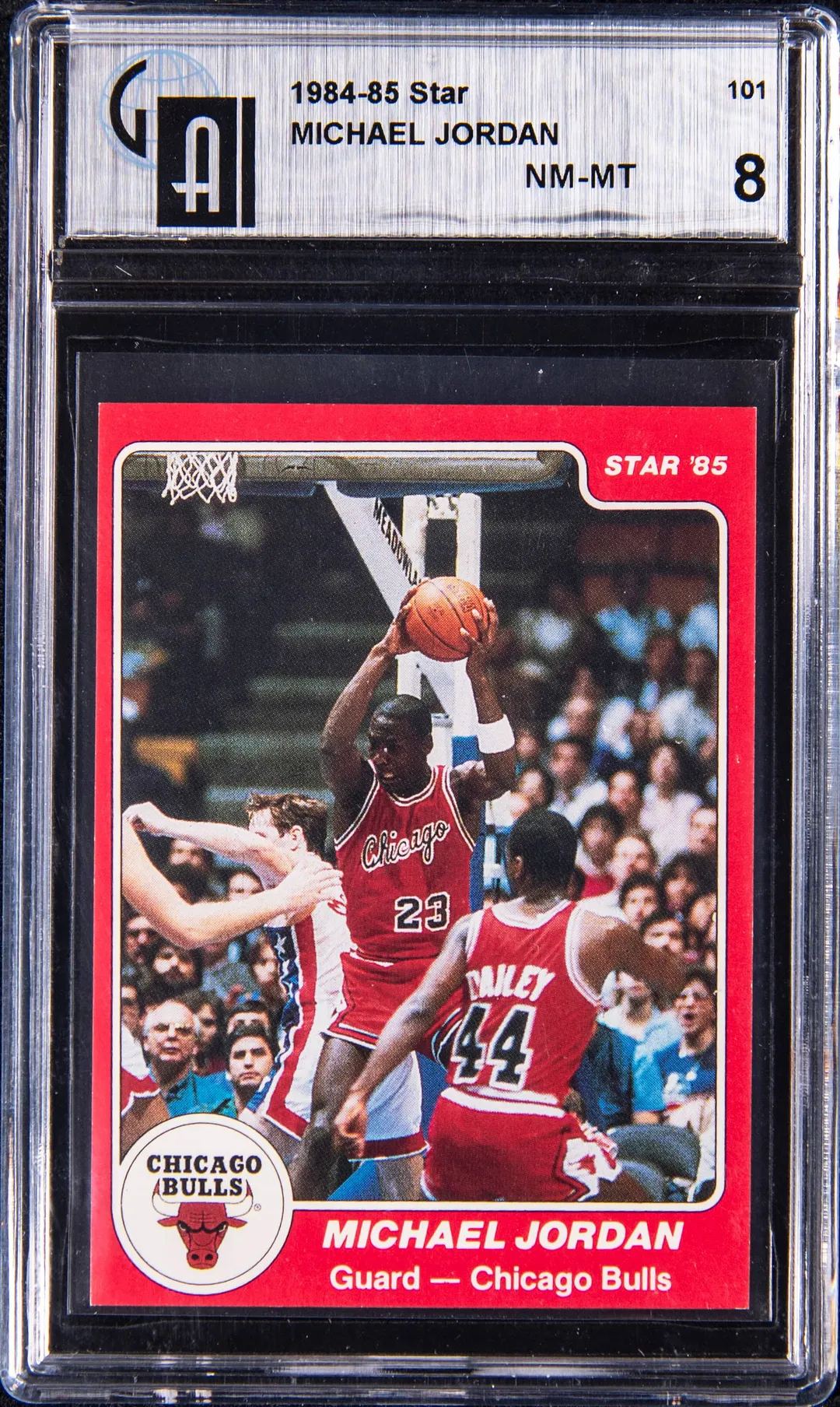
1984-85 Star #101 Michael Jordan Rookie Sells for $61K
Goldin sold a 1984-85 Star #101 Michael Jordan rookie, GAI NM-MT 8, for $61,000 on January 4, 2026. See how this sale fits current Jordan Star card comps.
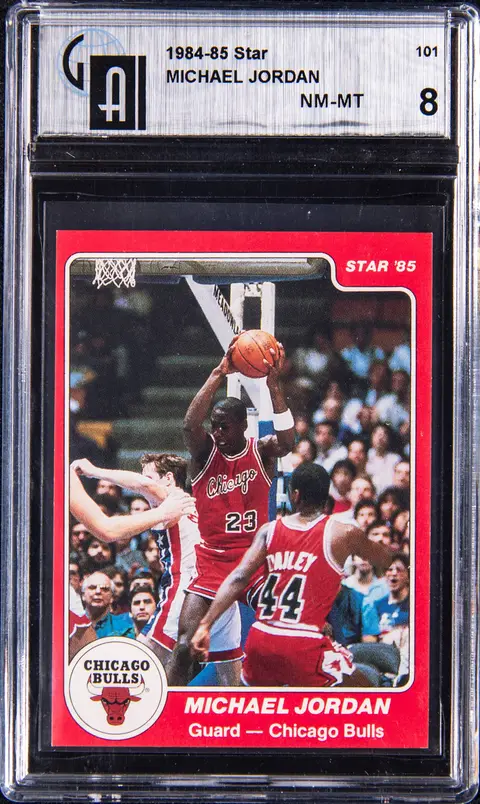
Sold Card
1984-85 Star #101 Michael Jordan Rookie Card - GAI NM-MT 8
Sale Price
Platform
Goldin1984-85 Star #101 Michael Jordan Rookie Card (GAI NM-MT 8) Sells for $61,000
On January 4, 2026, Goldin closed a sale that quietly matters to Michael Jordan and Star Company collectors: a 1984-85 Star #101 Michael Jordan rookie card, graded GAI NM-MT 8, sold for $61,000.
For a card that sits a little outside the mainstream PSA/BGS pipeline, this is a meaningful data point. Let’s break down what sold, why it matters, and how the price fits into the broader market.
The Card: 1984-85 Star #101 Michael Jordan
Key details:
- Player: Michael Jordan
- Team: Chicago Bulls
- Year: 1984-85
- Set: Star Company, 1984-85
- Card number: #101
- Type: Early Michael Jordan card, widely treated as his first NBA-licensed card
- Rookie status: Considered by many as his “true” first NBA card, though not his flagship rookie in the PSA/Topps/Fleer sense
- Grading company: GAI (Global Authentication Inc.)
- Grade: NM-MT 8 (Near Mint–Mint)
- Attributes: Standard base card (no autograph, patch, or serial numbering)
The 1984-85 Star #101 is often at the center of a long-running hobby discussion. Many collectors view it as Jordan’s earliest mainstream NBA-licensed card, issued a couple of years before the 1986-87 Fleer #57 that is typically called his flagship rookie. Because Star Company cards were distributed differently and have had authenticity and reprint concerns over the years, the way grading companies handle this card has a major impact on its market.
Why the Star #101 Matters to Collectors
The first NBA-licensed Jordan card
The 1984-85 Star #101 is Jordan’s first widely recognized NBA-licensed trading card. It pre-dates the 1986-87 Fleer Jordan by two seasons and captures him in a more early, raw stage of his Bulls career.
For collectors who value “firsts” over “flagship” status, #101 is a core piece of a Jordan PC (personal collection). It functions almost like a parallel timeline to the Fleer rookie: same player, different issue, different distribution story.
A different era of production and distribution
The mid-1980s Star Company releases sit between what many collectors consider vintage and the later “junk wax” era. The production print runs are not documented in the same transparent way as many modern sets, and Star’s choice of team bags and non-traditional distribution made condition-sensitive, fully vetted copies harder to come by.
Because of that, the population reports ("pop reports" – grading company counts of how many copies exist in each grade) for properly authenticated Star #101s have stayed modest compared to the 1986 Fleer Jordan. The card is not ultra-rare, but it’s not a mass-graded commodity in high grade either, especially when you filter for well-respected authentication.
Grading and authenticity: where GAI fits in
The grading angle is important. For years, different grading companies have taken different stances on Star cards due to concerns about counterfeits and later print runs. PSA, for example, long declined to grade Star Company issues and has only more recently begun engaging with certain Star cards.
GAI (Global Authentication Inc.) was more active with Star grading in the 2000s. Today, however, many collectors prefer crossovers into PSA, BGS, or SGC for long-term consistency, especially on higher-end cards. That context matters when evaluating a GAI 8 sale: some buyers see it as a candidate for review or crossover, while others price it more conservatively than an equivalent grade in a currently dominant grading brand.
Market Context: How Does $61,000 Fit In?
This Goldin sale closed at $61,000. To understand where that sits, it helps to look at a few layers of context:
1. Comparing to other Star #101 sales
When looking at recent sales data for the 1984-85 Star #101 across auction houses and marketplaces, a few patterns tend to emerge:
- Authenticated, high-grade copies from major grading companies (PSA, BGS, SGC) usually form the top of the market. Strong grades (for example, 8 and above) can reach well into five figures and, in select cases, higher, depending on the grader and subgrades.
- Mid-grade examples tend to offer a more accessible entry point, with pricing heavily influenced by which grading company authenticated the card.
- GAI slabs often trade at some discount to an equivalent numeric grade from the most trusted grading companies today, largely because of crossover risk and buyer preference.
Within that framework, a GAI NM-MT 8 at $61,000 on a major, visible platform like Goldin represents a strong but not outlandish result for a high-grade 101, especially given the continued interest in Jordan’s earliest NBA-licensed issues.
2. Relative to the 1986 Fleer Jordan market
While it’s not a 1:1 comparison, many collectors still benchmark Jordan prices against the 1986-87 Fleer #57 rookie:
- High-grade Fleer Jordan rookies (especially PSA 9 and PSA 10) have a well-documented history of price peaks and corrections.
- The Star #101 operates in a narrower, more specialized lane. It doesn’t see the same volume of transactions, so each notable sale can move expectations more noticeably.
At $61,000, this sale sits in a band where some collectors start comparing it mentally to strong 1986 Fleer copies, asking whether they’d prefer a more widely accepted flagship rookie or a rarer, earlier issue.
3. What this result does not signal
This sale is important as one data point, not a guarantee of where every other Star #101 or GAI 8 will land next. Conditions that might differ card to card include:
- Eye appeal (centering, print quality, color)
- Exact grading company and subgrades (if any)
- Auction timing, visibility, and competing lots
- Market sentiment around Star cards at the time of sale
For small sellers and collectors, this result is best used as part of a comp set, not a single price to rely on. In hobby language, “comps” (comparable sales) are recent, similar transactions used to estimate current value. It’s usually smart to look at:
- Recent sales of the same card in the same grade and slab
- Slightly different but comparable grades
- Other grading companies’ versions sold within a similar time window
Collector Significance Going Forward
Icon + early card = durable demand
Michael Jordan remains one of the most collected athletes in the hobby. His awards, championships, and global pop culture status keep demand for his key cards steady even when broader markets cool.
The Star #101 benefits from that long-term interest. It’s not just an early-80s Bulls card; it’s attached to one of the most important sports figures of the modern era. As collectors refine their Jordan PCs beyond the obvious Fleer rookie, the Star run — and especially #101 — often becomes a priority target.
A card for more experienced or research-driven collectors
Because of the grading and authenticity history around Star cards, the 101 tends to attract collectors willing to do homework:
- Understanding which grading companies are trusted for this issue
- Reviewing the card’s appearance carefully
- Checking recent sales across auction houses, not just one platform
That research barrier can limit casual participation but also creates a more informed, niche collector base. The $61,000 Goldin sale reflects that audience: buyers who know exactly what they are chasing.
Takeaways for New and Returning Collectors
If you are newer to the Star 101 conversation, here are a few practical points:
Learn the difference between “first NBA card” and “flagship rookie.”
- Star #101 is often considered Jordan’s first NBA-licensed card.
- 1986-87 Fleer #57 is typically called his flagship rookie, given Fleer’s distribution and long-standing presence in the graded card ecosystem.
Pay close attention to the grading label.
The same numeric grade can trade differently depending on whether it’s in a PSA, BGS, SGC, GAI, or other slab. For Star cards in particular, that difference matters a lot.Use multiple comps, not a single headline sale.
This $61,000 result on January 4, 2026, via Goldin is useful as a benchmark, but it should sit alongside other recent sales of Star #101s across grades and grading companies when you’re trying to understand current ranges.Think in terms of card history, not just price charts.
The Star #101 is part of a specific era and distribution story. Understanding why it was issued, how it was distributed, and how graders treat it will help you judge both risk and significance.
What This Goldin Sale Signals
The Goldin sale of a 1984-85 Star #101 Michael Jordan Rookie Card, GAI NM-MT 8, for $61,000 on January 4, 2026 reinforces a few key themes:
- There is steady, serious demand for high-grade copies of Jordan’s earliest NBA-licensed card.
- Even in a non-frontline grading holder, a strong numeric grade can still command a significant premium when the card itself is historically important.
- Star Company Jordans remain an advanced lane of the Jordan market, where understanding grading histories and comps is essential.
For figoca readers — whether you are just learning about Star cards or you’ve chased this issue for years — this sale is another data point to watch as the hobby continues to define how it values Jordan’s earliest Bulls appearances.
As always, none of this is a prediction or advice to buy or sell. It’s one sale, in one auction, of one specific copy — but it’s a useful signpost in the ongoing story of the 1984-85 Star #101 Michael Jordan.