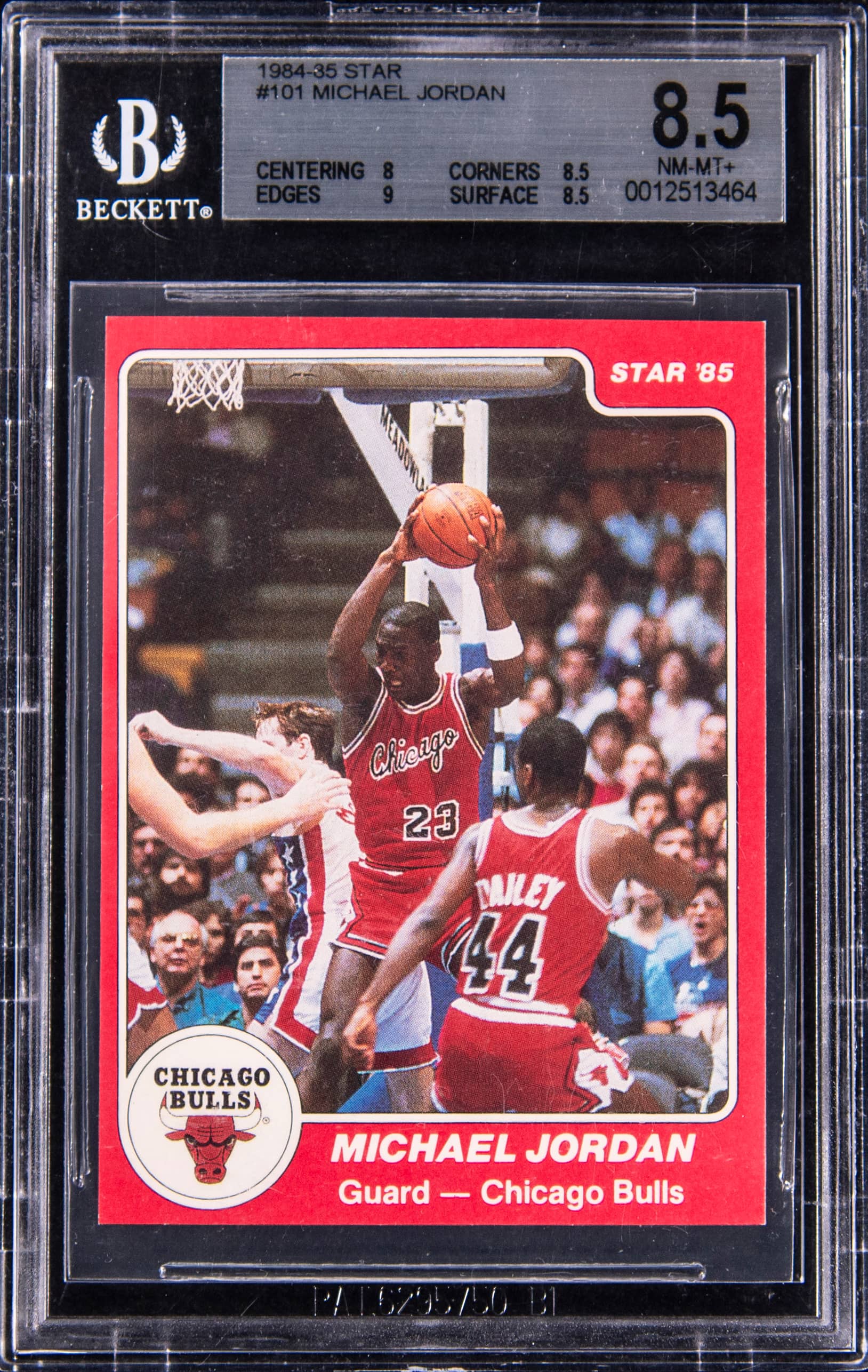
1984-85 Star #101 Michael Jordan BGS 8.5 at $55.9K
Goldin sold a 1984-85 Star #101 Michael Jordan BGS 8.5 for $55,974. See what this key early MJ card sale means for collectors and the market.
Sold Card
1984-85 Star #101 Michael Jordan Rookie Card - BGS NM-MT+ 8.5
Sale Price
Platform
Goldin1984-85 Star #101 Michael Jordan Rookie Card - BGS NM-MT+ 8.5 Sells for $55,974
On December 7, 2025, Goldin sold a 1984-85 Star Company #101 Michael Jordan Rookie Card graded BGS NM-MT+ 8.5 for $55,974. For collectors who track early Michael Jordan issues closely, this is a meaningful data point for one of the hobby’s most debated and studied MJ cards.
In this breakdown, we’ll walk through what this card is, why it matters, and how this sale fits into recent market context.
The card: 1984-85 Star #101 Michael Jordan Rookie, BGS 8.5
Key details
- Player: Michael Jordan
- Team: Chicago Bulls
- Year: 1984-85
- Set: Star Company 1984-85 Team Issue
- Card number: #101
- Card type: Widely regarded as Jordan’s first NBA-licensed pack-era card, often called his “Star rookie” or “XRC” (extended rookie card)
- Grading company: Beckett Grading Services (BGS)
- Grade: NM-MT+ 8.5
- Attributes: Standard base issue (no serial number, no autograph, no patch)
The 1984-85 Star #101 is Jordan’s first widely recognized NBA-licensed card, released by Star Company before Fleer obtained the NBA license and produced the well-known 1986-87 Fleer #57 Jordan rookie.
Collectors generally place this Star card and the Fleer #57 in different lanes:
- Star #101: Earlier, scarcer, team-issued distribution, long-time authentication challenges.
- Fleer #57: Mass-distributed, pack-pulled, considered the mainstream flagship rookie.
A BGS 8.5 (Near Mint-Mint Plus) is a high but not top-tier grade for a Star Jordan, which is notoriously condition-sensitive due to print quality, centering, and the way these cards were originally bagged and distributed.
Why the 1984-85 Star #101 Jordan matters
Early, licensed Michael Jordan card
For many collectors, this is Jordan’s true first NBA card. It pictures him in a red Bulls uniform from his rookie season and was issued several years before most global basketball collecting attention focused on his Fleer rookie.
Historically important set
Star Company held the NBA license in the mid-1980s. Their cards were distributed in team bags and via hobby channels rather than traditional wax packs at retail. That means:
- Smaller production compared to late-1980s “junk wax” issues.
- Less consistent handling and storage, which impacts condition today.
- A more complex authentication story, since unlicensed reprints and counterfeits entered the market in later years.
Because of this history, third-party grading and authentication by companies like BGS has become central to how the hobby values Star Jordan cards.
Condition and grading dynamics
Star cards often suffer from:
- Off-centering
- Print defects and color variation
- Edge and corner chipping from how bags were opened
This makes higher grades meaningfully scarcer. While exact population numbers can change over time, the general pattern is:
- Lower-grade examples (BGS 6–7.5) are more common and trade at lower price points.
- BGS 8–8.5 is a strong “collector grade” for this card.
- BGS 9 and above see much thinner supply and significant price jumps.
Market context: where does $55,974 fit?
This Goldin sale closed at $55,974 for a BGS 8.5 copy.
When we talk about “comps”, we mean recent comparable sales of the same or very similar cards and grades, usually from auction houses and major marketplaces. For a card like this, meaningful comps include:
- 1984-85 Star #101 Michael Jordan, same grade (BGS 8.5)
- The same card in BGS 8 and BGS 9, to understand the grade ladder
Across the last couple of years, public auction results and marketplace data for BGS 8.5 copies of this card have generally shown a wide range, influenced by:
- Confidence in authenticity and the grading company
- Subgrade distribution (centering, corners, edges, surface)
- Timing and visibility of the auction
- Broader hobby sentiment around Jordan and Star cards
Within that context, the $55,974 realized price sits in line with the idea that:
- The market still assigns a clear premium to authenticated, mid–high grade Star #101s.
- BGS remains one of the central grading standards for this specific issue.
- The card’s status as an early Jordan issue continues to be recognized, even as overall hobby prices have cooled from the 2020–2021 peak.
Because private sales and less-publicized transactions are not always visible, any single public result should be read as a data point rather than a final verdict on value. Still, this Goldin sale offers a useful, recent anchor for BGS 8.5 pricing.
Comparing to other grades and Jordan rookies
While exact numbers move over time, market behavior usually follows a few consistent patterns for this card:
- BGS 7–8 range: More accessible entry points for collectors who want the card but don’t require high grade.
- BGS 8.5: Solid collector sweet spot — noticeable quality without the extreme scarcity and cost of top grades.
- BGS 9 and above: Much thinner population. These often attract advanced Jordan and Star-focused collectors and can realize multiples of 8.5 pricing.
Against Jordan’s 1986 Fleer #57 rookie:
- The Fleer rookie is still the more widely known and traded issue, with deeper liquidity.
- The Star #101 is more niche but deeply respected among vintage and early-era basketball specialists.
This duality means some collectors treat the Star as a historical cornerstone, while others focus on Fleer as the primary "rookie." Many advanced MJ collections ultimately try to own both.
What could be driving interest right now?
A few steady factors tend to support interest in this card over time:
Jordan’s lasting legacy
Jordan’s playing days are long over, but his status in basketball history and in pop culture remains extremely strong. That gives his key early cards a persistent baseline of collector attention.Mature view of the Star brand
The hobby’s understanding of Star has evolved. While there were periods of skepticism due to counterfeits and reprints, clearer grading standards and verification by established grading companies have helped give collectors more confidence in specific, certified examples.Focus on significant, earlier-era pieces
In a landscape dominated by modern parallels, autos, and serial-numbered cards, some collectors deliberately gravitate back toward historically important, pre-modern issues with smaller print runs and strong stories — a description that fits the 1984-85 Star Jordan well.
None of these forces guarantee future prices, but they help explain why a strong result like $55,974 for a BGS 8.5 remains plausible even in a more measured market.
Takeaways for collectors and small sellers
For collectors considering this card or tracking it:
- Treat each grade band as its own mini-market. A BGS 8.5 sale does not automatically translate to other grades; always check recent comps by grade.
- Look closely at the grading company and, for BGS, at subgrades and visual appeal. Centering and color can create meaningful differences even within the same numeric grade.
- Understand the Star-specific history: not all raw copies on the market carry equal risk, and graded examples from established companies carry significant value in authentication.
For small sellers:
- If you have a raw Star Jordan, careful pre-screening before submission can matter a lot. Condition swings can significantly impact what grade you’re likely to see and, by extension, price expectations.
- When reviewing auction results like this Goldin sale, remember that high-profile houses often deliver strong visibility that many smaller venues can’t duplicate.
Summary
The December 7, 2025 Goldin auction of a 1984-85 Star #101 Michael Jordan Rookie Card graded BGS NM-MT+ 8.5 for $55,974 reinforces the card’s place as a key early Jordan issue.
For collectors, this sale is less about sudden spikes and more about confirmation: authenticated, high-quality examples of the Star #101 continue to command meaningful prices, and the market still recognizes this card as a foundational piece in advanced Michael Jordan and early basketball collections.
As always, any single sale is one data point. The most useful approach is to combine it with other recent comps, grading population data, and your own long-term collecting goals when deciding how this card fits into your collection or inventory.