Learn what Topps Tiffany cards are, how to identify them, and why they are so valuable. A complete guide to the glossy, limited-edition sets from 1984–1991.
What is Topps Tiffany? The Ultimate Collector’s Guide
If you collected baseball cards in the 1980s, you remember the "Junk Wax Era." Packs were everywhere, print runs were in the millions, and cards from that time are usually worth pennies today.
But there is a major exception: Topps Tiffany.
Topps Tiffany cards are premium, limited-edition versions of standard Topps baseball sets produced from 1984 to 1991. Unlike the mass-produced base cards found in wax packs, Tiffany cards were sold only in complete factory sets and feature a glossy front finish and bright white card stock on the back. Because they were printed in tiny numbers compared to regular Topps cards, they are highly valuable today.
In this guide, we’ll explain exactly what makes these cards special, how to spot them, and which years are the rarest.
The 3 Key Differences: Base vs. Tiffany
To the untrained eye, a Topps Tiffany card looks exactly like the regular version. They use the same photo, the same design, and the same player number.
However, three distinct features set them apart.
1. Glossy Front Finish
Regular Topps cards from the 80s were printed on standard cardboard with a dull, matte finish. Topps Tiffany cards have a thick, high-gloss coating on the front. They look shiny and polished, similar to a photograph or the "Topps Chrome" cards of today.
2. Bright White Back
This is the easiest way to identify a Tiffany card.
- Regular Topps: The back is usually gray or brownish cardboard (often called "chipboard"). The text can look a bit fuzzy.
- Topps Tiffany: The back is bright white. The red or blue text pops clearly against the white background.
3. Limited Print Runs
This is what drives the value. While regular 1987 Topps cards were printed in the millions (literally), the 1987 Topps Tiffany set had an estimated run of just 30,000. For other years, the numbers are even lower.

Topps Tiffany Print Runs by Year
Collectors love certainty, and while Topps rarely released official numbers, the hobby has accepted these estimated print runs for decades.
| Year | Estimated Print Run | Notes |
|---|---|---|
| 1984 | ~10,000 | The first year of Tiffany. |
| 1985 | ~5,000 | The rarest year (tied with 1986). |
| 1986 | ~5,000 | Extremely tough to find. |
| 1987 | ~30,000 | Higher print run, but very popular design. |
| 1988 | ~25,000 | - |
| 1989 | ~15,000 | - |
| 1990 | ~15,000 | - |
| 1991 | Unknown | The final year. Estimates vary wildly. |
Note: These numbers apply to the "Regular" Tiffany sets. Topps also released "Traded" Tiffany sets each year, which typically have similar or slightly different print runs.
How to Identify a Topps Tiffany Card
If you find an old card in a shoebox, how do you know if you’ve struck gold?
The "Flip It Over" Test The quickest method is to look at the back.
- Take a common card from the same year (one you know is base) and place it next to the card in question.
- Look at the card stock.
- If the back is gray/brown, it’s base.
- If the back is bright white, it’s likely Tiffany.
Visual Check Hold the card under a light. A Tiffany card will reflect the light with a glass-like shine. A base card will absorb the light with a dull, paper-like texture.
Why Are They So Valuable?
Scarcity is the main driver.
In the 1980s, you could buy a pack of Topps cards at any gas station or grocery store. Topps Tiffany sets, however, were only sold through hobby dealers (the "Hobby" distribution channel). You had to buy the entire boxed set at once; you couldn't pull them from packs.
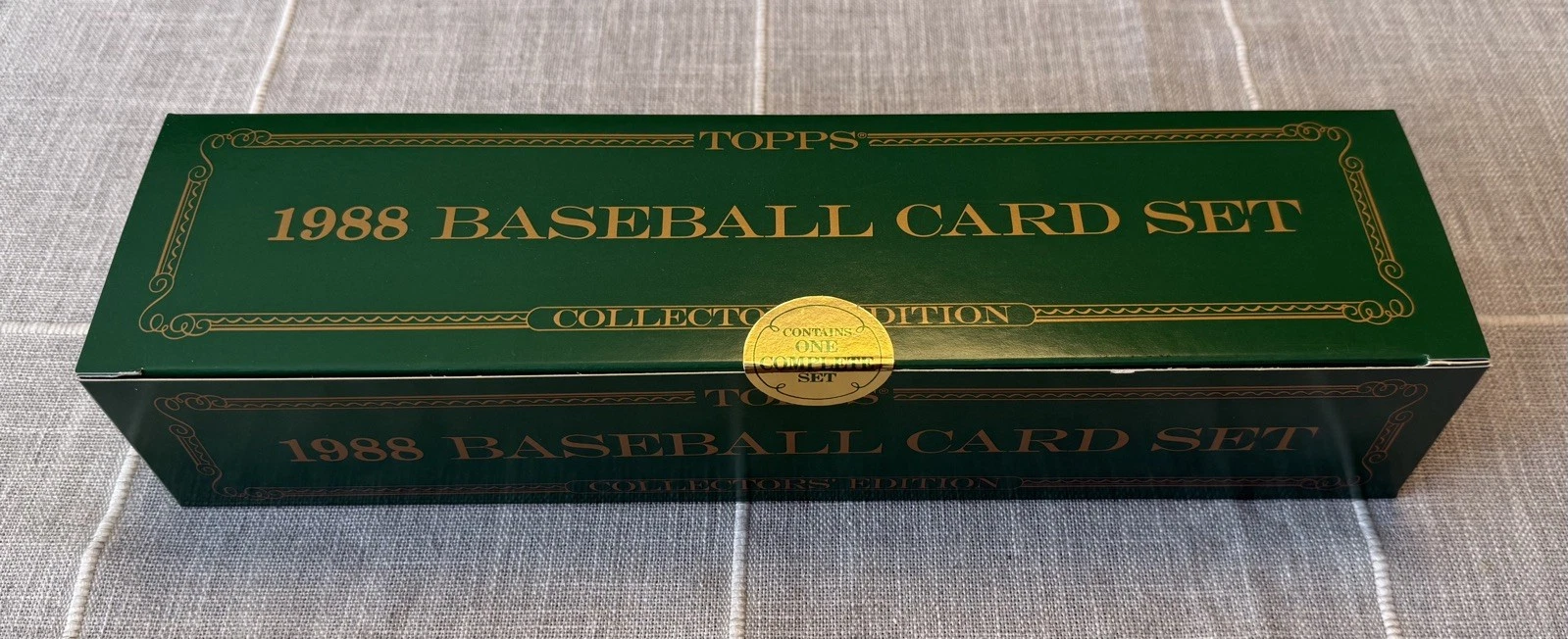

Because fewer were made and they were sold as premium items, they hold significant value today. A base 1985 Mark McGwire rookie card might sell for $10–$20 in top condition. A 1985 Topps Tiffany Mark McGwire in PSA 10 gem mint condition can sell for thousands.
Famous Topps Tiffany Cards to Chase
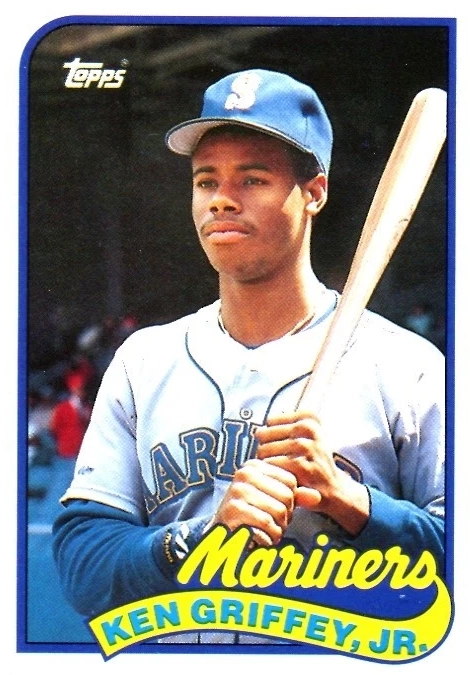
1989 Topps Traded Tiffany Ken Griffey Jr 41T
The 1989 Topps Traded Tiffany Griffey Jr. is one of the most iconic cards of the era. Look for the bright white back.
Show this card on eBay- 1984 Topps Tiffany Don Mattingly (Rookie Card)
- 1985 Topps Tiffany Mark McGwire (First USA Card)
- 1986 Topps Traded Tiffany Barry Bonds (Rookie Card)
- 1987 Topps Tiffany Barry Bonds
- 1990 Topps Tiffany Frank Thomas (Rookie Card)
Did Other Sports Have Tiffany Sets?
While baseball is the most famous, Topps did produce a distinct "glossy" parallel for football and hockey in certain years, though the "Tiffany" branding is primarily associated with baseball.
- Topps Football: There isn't a direct "Tiffany" line for 80s football in the same way, but there are "Topps Glossy" inserts and "1000 Yard Club" glossy cards. However, the famous 1980s football rookies (Rice, Marino, Elway) do not have Tiffany parallels.
- Bowman: When Topps revived the Bowman brand in 1989, they also produced "Bowman Tiffany" sets for 1989 and 1990.
Summary
Topps Tiffany cards are the hidden gems of the Junk Wax Era. They offer the iconic designs of the 80s with the scarcity and quality of modern collectibles.
If you are hunting through dollar bins or old collections, always check the backs of the cards. If you see bright white stock instead of gray cardboard, you might have found a card worth hundreds of dollars.
Sources
- Beckett Media
- PSA Card Facts
- Traditional hobby estimates for print runs.
- Last updated: December 2024

Card enthusiast, figoca founder, and independent software developer
Nico is a card enthusiast who built figoca after running into the same problems many collectors face: uncertain pre-grading decisions, too much tab switching for comps, and no fast way to price cards on the go. He is also a big Kansas City Chiefs fan (❤️💛), follows the Kansas City Royals (💙), and enjoys Formula 1 and Golf.
- Sports Card enthusiast
- Founder of figoca
- Independent software developer with a TypeScript and AWS background