How to Store Trading Cards Long Term (Avoid Warping and Damage)
Store trading cards long term without warping or damage. Use proper storage, humidity control, and protection to keep your collection safe and in top condition.
That shoebox tucked away in your closet might hold more than just childhood memories, it could contain a small fortune. However, paper and ink have enemies you cannot see, often turning once-pristine treasures into damaged goods before you realize it. Most of us have experienced the disappointment of opening an old photo album only to find a favorite Charizard or baseball rookie card that looks cloudy or yellowed, usually a victim of the chemicals found in cheap, standard storage materials.
Unlike digital assets, physical trading cards are organic items that react to their environment in surprising ways. Professional archivists often explain that paper collectibles essentially "breathe," absorbing moisture from the air or reacting to acids in improper packaging. If you leave a $100 bill out in the rain, you expect immediate ruin, but even subtle humidity changes in an attic or basement can cause cards to warp and curl like a potato chip over time.
Protecting your collection requires a strategy known in the hobby as "layering." This approach places specific barriers between your cards and the outside world to maintain what experts call "archival integrity" a fancy term for simply keeping the card in its original, unaltered state. Properly shielding your cards from light, heat, and friction ensures they remain as crisp and vibrant as the day you pulled them from the pack.
The 'Second Skin': Why Penny Sleeves are Your First Line of Defense
Handling your collection is part of the fun, but your fingertips are actually a card surface's worst nightmare. Human skin naturally produces slightly acidic oils that, while invisible to the naked eye, slowly eat away at the glossy finish of a card over time. The humble "penny sleeve" acts as a vital second skin. For less than a cent, this soft polypropylene layer creates a permanent barrier against these oils, dust, and minor scratches.
Material matters just as much as physical protection. Many older storage products were made with Polyvinyl Chloride (PVC), a material that degrades and releases chemical gases that turn paper yellow, often recognizable by a distinct "pool float" smell. To avoid this chemical damage, always look for packaging labeled as archival quality card sleeves or PVC-free plastic card protectors. These are made from polypropylene, a chemically inert plastic that won't react with your vintage ink, keeping the card image stable for decades.
Even with the right supplies, the physical act of sleeving requires a gentle touch to avoid snagging a corner. A raw cardboard edge is fragile, and forcing it into a tight plastic opening often results in immediate "whitening" or peeling. Follow this simple routine to keep those corners sharp:
- Prep the Opening: Gently pinch the sides of the sleeve to bow the opening outward, creating a target that is wider than the card.
- Angle the Entry: Insert one bottom corner of the card first, followed quickly by the other, rather than trying to push the flat bottom edge in all at once.
- The Slide: Use the flat of your thumb to push the card down from the center surface, never pushing from the fragile top edge.
With your card safely wrapped in its soft archival layer, it is ready for structural support to prevent bending.
The 'Jacket' Layer: Choosing Between Toploaders and Magnetic Holders
While a penny sleeve acts as a protective shirt against oils, it offers zero defense against a fold or a crease. To prevent your valuable cards from bending, you need a structural "jacket." The industry standard for this is the toploader, a rigid plastic pouch that keeps the card flat during storage or shipping. However, you must always keep the card in its penny sleeve before sliding it into the hard plastic. Without that soft buffer, the hard plastic walls can scratch the surface of chrome or holographic cards just as easily as sandpaper, defeating the purpose of protection.
Selecting the correct size is just as critical as the holder itself because modern cards vary wildly in thickness. A standard base card is roughly 35 points (pt) thick, but memorabilia cards containing pieces of jersey or patches can range from 55pt up to 360pt. Forcing a thick memorabilia card into a standard 35pt holder acts like a vice, crushing the corners and flattening the relic. If you are unsure of a card's dimensions, resources like the Rookie Cards Database often list specific thickness requirements for popular sets to help you buy the right gear.
When deciding between toploaders vs magnetic card holders, consider your end goal for the collection:
- Magnetic "one-touch" cases look premium and provide UV protection for the display, but they are expensive for bulk storage.
- Card Savers (semi-rigid holders) are specifically requested by grading companies like PSA , flexible enough to allow graders to safely remove the card for inspection without damage, whereas removing a card from a tight toploader can often result in an accidental fingernail dent.
Once your cards are physically armored against bends and scratches, they face a silent, invisible threat that no plastic holder can fully stop. Even inside a rigid case, changes in the air around the card can cause the paper fibers to swell and distort.
The Science of 'The Curl': How Humidity Warps Your Best Cards
Have you ever opened a deckbox to find your favorite holographic cards curved like a potato chip? This phenomenon occurs because cardstock is hygroscopic, meaning it acts like a slow-motion sponge that drinks moisture from the air. When the air gets heavy with water, the paper layer swells, but the plastic or metallic foil layer stays the same size. This tension forces the card to bow, creating that dreaded "Pringles" effect. While plastic sleeves stop oils, they cannot stop humidity from penetrating the sides of the card.
Maintaining the ideal humidity for collectible cards is the only way to stop this physics experiment from happening in your closet. You do not need a museum-grade vault, but you should aim for a Relative Humidity (RH) sweet spot between 45% and 55%. If the air is too wet (above 60%), mold spores can bloom inside the paper; if it is too dry (below 40%), the card becomes brittle. A simple, inexpensive digital hygrometer placed in your storage area will tell you instantly if your collection is in the danger zone.
Preventing trading card warping usually leads collectors to rely on silica gel packs for card collections. These packets regulate the micro-environment inside storage bins by absorbing excess moisture, essentially helping cards relax back to a flat state. However, moderation is key , using too many desiccant packs in a small airtight container can strip too much moisture, causing paper fibers to snap. Keep an eye out for these environmental warning signs:
- Convex/Concave Curling: The card rocks back and forth when placed on a flat table.
- Bricking: Glossy cards sticking together in a solid block, often causing surface damage when pulled apart.
- Foxing: Small reddish-brown spots appearing on white borders due to early mold or oxidation.
Once you have the climate controlled, you need to look at how you are physically organizing the bulk of your set, specifically regarding the metal hardware in your albums.
Are Your Binders Killing Your Cards? The 'D-Ring' vs 'O-Ring' Debate
While climate control handles the invisible threats, the physical hardware you choose is just as critical. Many collectors instinctively grab standard office binders to organize their sets, but these circular "O-rings" are notoriously dangerous for collectibles. Because the rings curve directly into the stack of pages, the cards closest to the metal hinge often suffer from ring dent, a permanent impression left by the metal pressing against the cardboard whenever the album is closed or stacked.
To avoid this mechanical damage, always opt for D-ring binders where the mechanism sits on the back cover rather than the spine. This shape allows your pages to stack flush against each other like a true book, ensuring the weight is distributed evenly without pinching. Furthermore, consider swapping standard clear sheets for side-loading vs top-loading binder pages. Side-loading pockets usually feature a textured backing that grips the card gently, and because the opening is on the inner edge facing the spine, cards cannot accidentally slide out if you hold the album upside down.
Beyond the metal rings, the chemistry of the plastic pages is vital for long-term preservation. When upgrading your library, look for acid-free storage binders that check these safety boxes:
- D-Ring Mechanism: Prevents ring dent by allowing pages to lie flat.
- Side-Loading Pockets: Reduces dust entry and keeps cards secure.
- Zippered Closure: Seals the binder against light and debris.
- Archival Safe Material: Polypropylene pages (no PVC) to prevent chemical yellowing.
With your display pieces safely secured in albums, you now need a strategy for the thousands of "bulk" cards that don't make the binder cut.
Organizing the Vault: Moving from Shoeboxes to Professional Storage
For the bulk of your collection, tossing cards into a standard shoe box is a risky move. Stacking cards flat causes the accumulated weight to crush the bottom layers, damaging corners and fusing surfaces over time. Instead, focus on organizing cards in storage boxes designed to hold them vertically, standing upright like files in a cabinet. This ensures no single card bears the heavy weight of the others, keeping your everyday cards just as crisp as your rare finds.
Once upright, ensure the cards aren't packed so tightly that they bend, nor so loosely that they lean and warp. Standard white archival boxes provide the necessary structure, but you should use foam spacers to fill any empty gaps in the rows. This setup prevents physical distortion and creates a systematic filing method, allowing you to label rows by set or year rather than digging through a chaotic pile when looking for a specific trade.
While boxes shield your stored inventory, your displayed favorites face a silent enemy: the sun. Leaving a prized card on a desk exposes the ink to ultraviolet rays, rapidly fading vibrant colors into a ghostly wash. Always use magnetic holders with built-in UV protection for display cases to act as sunglasses for your hits, protecting cards from sunlight damage. For the ultimate combination of security and prestige, however, many collectors graduate to professional encapsulation.
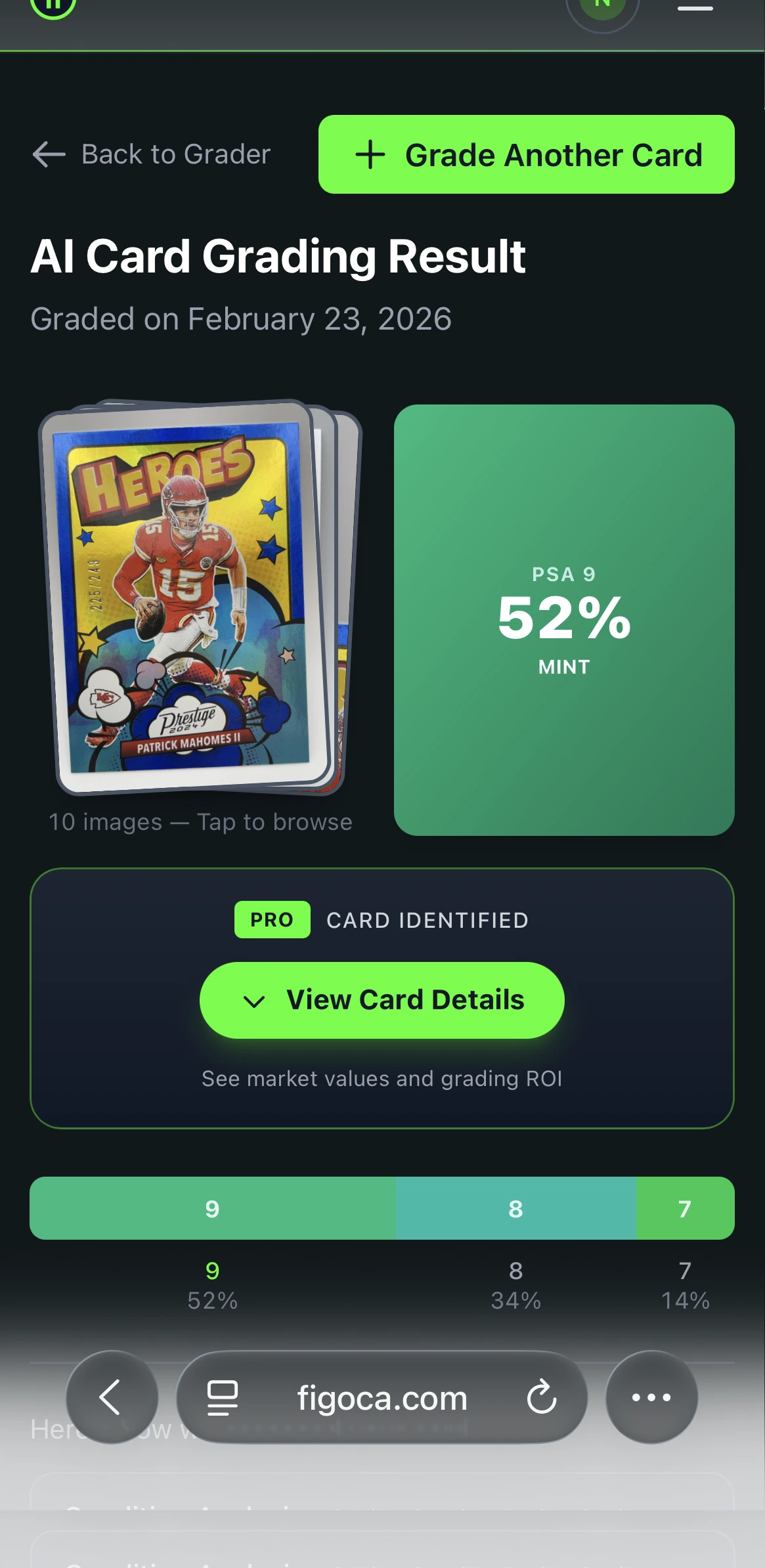
AI Card Grader
Know your card's grade before you submit
Snap a photo with your phone and get an instant AI-powered grade estimate. Check centering, corners, edges, and surface — just like the pros.
- Instant grade estimate
- Sub-grades for all 4 pillars
- Built-in ROI calculator
- Free to use
The 'Slab' Sanctuary: Preserving Graded Cards for the Long Term
When you send items to Grading Companies, they return permanently sealed in hard plastic shells known as "slabs." While these heavy-duty cases are designed to prevent bends, the plastic surface itself is surprisingly prone to scuffing, which makes the pristine card inside look cloudy. The practical solution is using a " slab sleeve", a clear, fitted bag that acts as a dust jacket for the hard case. This simple addition protects the plastic from scratches when slabs rub against each other, keeping the viewing window crystal clear for future display.
Don't mistake this sturdy plastic armor for a submarine, however. Most grading services seal their holders using ultrasonic welding, a process that uses sound waves to fuse the plastic layers. While this creates a strong barrier, it does not make the card waterproof. If submerged during a flood or exposed to extreme humidity, moisture can eventually penetrate the seam. Therefore, temperature-controlled storage for collectibles remains essential to prevent condensation from forming inside the case where you can't wipe it away.
Storing these encapsulated treasures requires upgraded equipment because standard boxes are often too narrow for the wider plastic shells. You need graded card slab storage boxes, which are specifically dimensioned to hold the extra width and height without forcing the cases in at an angle. With your investment structurally secure and organized, the final challenge is tracking the ongoing condition of your collection without constantly handling the physical cards.
Modern Auditing: Using AI to Monitor Your Collection's Health
Even with perfect storage, frequently handling your cards to check their condition adds unnecessary risk. Fortunately, your smartphone offers a safer way to inspect your inventory without laying a finger on the cardboard. Modern technology allows you to create a "digital twin" of your collection, acting as a permanent record of its health while the physical items stay safely tucked away in their sleeves.
Conducting this digital audit is surprisingly simple using a modern AI card grading app. These tools use artificial intelligence to analyze surface wear and centering much faster than the human eye. To get the best results:
- Place the raw card on a plain, dark background to help the AI trading card grading tool detect the edges clearly.
- Take a photo directly from above, ensuring there is no glare from overhead lights hiding surface details.
- Save the scan to your digital portfolio to establish a baseline for the card's condition.
Beyond monitoring physical health, these applications usually include a Card Price Search feature that helps you identify which items deserve your most expensive protection methods. Knowing the current market value is crucial for insurance purposes, especially if your childhood collection has quietly appreciated into a serious asset. Once you have a documented inventory of your high-value items, you must prepare for the worst-case scenarios that no app can prevent.
Disaster Proofing: Safeguarding Your Investment from Fire and Flood
Many collectors instinctively lock their prized rookie cards in a heavy-duty home safe, but this can actually destroy paper collectibles. To block heat, many safes release moisture during a fire, creating a damp micro-climate that warps cardboard over time even without an external blaze. When storing rare cards in fireproof safes, you must place a desiccant pack inside to absorb that trapped humidity and prevent your "mint" investments from curling.
Water damage is statistically much more likely than fire, yet it is often easier to avoid. A finished basement might feel secure, but a burst pipe or heavy rain can instantly ruin a collection stored directly on the floor. Treat your storage boxes like expensive electronics by keeping them elevated on shelving units to provide a critical buffer zone against minor flooding.
For the ultimate layer of defense, adopt a strategy known as double-containment. This means placing your cardboard storage boxes inside a larger, sealable plastic bin to create a watertight barrier against overhead leaks. While professional temperature-controlled storage for collectibles is the gold standard, this "box-within-a-box" method offers robust protection at home. With your defenses established, it is time to consolidate these steps into a manageable routine.
Your 30-Minute Preservation Plan
You are no longer just keeping cardboard in a box; you are preserving a tangible history that can last for decades. Whether you are safeguarding a childhood Pokémon collection or securing a high-value rookie card, the difference between a damaged relic and a pristine gem often comes down to consistent habits rather than a big budget. You now possess the knowledge to recognize the invisible enemies, humidity, light, and acids, and the practical tools to stop them before they compromise your collection.
Turn this knowledge into immediate protection with this "Daily Collector" workflow:
- Wash and Dry: Always handle cards with clean, oil-free hands before touching them.
- Layer Up: Place the card in a soft penny sleeve first, then slide that into a rigid toploader for structure.
- Audit Materials: Check old binders for "sticky" pages or PVC (smells like a pool float) and replace them with acid-free supplies.
- Control the Climate: Store boxes in a cool, dark interior closet, and remember to refresh your silica gel packs every few months to manage moisture.
Preservation is a marathon, not a sprint. You don't need a museum-grade vault to master How to Store Trading Cards Long Term, you just need a routine. By sticking to these standards, you ensure that when you open these boxes years from now, the memories inside will be just as bright and sharp as they are today. If you encounter new acronyms as you upgrade your setup, keep a Trading Card Glossary handy to navigate the hobby with confidence.
Conclusion
To stay ahead in the hobby, it’s just as important to follow Sales & Market News as it is to protect your cards physically. Tracking trends, auction results, and breakout players helps collectors make smarter decisions about what to hold, sell, or upgrade. At Figoca, founder Nico Meyer emphasizes combining proper storage techniques with real-time market awareness, ensuring collectors not only preserve their cards in pristine condition but also maximize their long-term value in an ever-evolving marketplace.

Card enthusiast, figoca founder, and independent software developer
Nico is a card enthusiast who built figoca after running into the same problems many collectors face: uncertain pre-grading decisions, too much tab switching for comps, and no fast way to price cards on the go. He is also a big Kansas City Chiefs fan (❤️💛), follows the Kansas City Royals (💙), and enjoys Formula 1 and Golf.
- Sports Card enthusiast
- Founder of figoca
- Independent software developer with a TypeScript and AWS background